
What Was Soviet Ideology?
A Theoretical Inquiry
Inbunden, Engelska, 2023
1 589 kr
Beställningsvara. Skickas inom 10-15 vardagar. Fri frakt för medlemmar vid köp för minst 249 kr.
Because the Soviet Union loudly proclaimed to be an ideological state, its scholars have rarely scrutinized ideology as a concept. Instead, they have treated it as a self-evident fact and proceeded to deliberate the importance of the Marxist-Leninist creed in social life or political decision-making. In the context of the Cold War, such theoretical neglect was exacerbated by political investments that often outweighed—and deformed—intellectual priorities. This has left us today with a notion that is both worn out and opaque, over-used but under-thought. In What Was Soviet Ideology? Petre Petrov stakes a new theoretical ground beyond prevalent misconceptions, ready-made definitions, and popular stereotypes. Drawing on continental philosophy and critical theory, this book presents ideology as a dynamic form with its own inner dialectic, in which the Soviet ideological regime figures as an original moment, a sui generis phenomenon. Petrov argues that Soviet ideology should be seen not as a member of an existing species but as a qualitative transformation of the species, ideology, and itself.
Produktinformation
- Utgivningsdatum2023-10-30
- Mått158 x 239 x 22 mm
- Vikt576 g
- FormatInbunden
- SpråkEngelska
- Antal sidor282
- FörlagBloomsbury Publishing Plc
- ISBN9781666937374
Tillhör följande kategorier
Hoppa över listan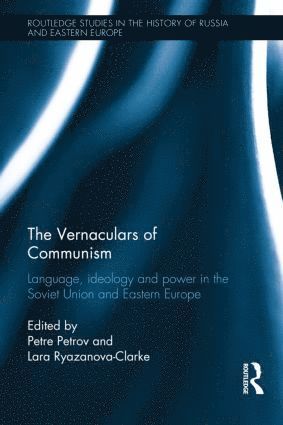


Du kanske också är intresserad av
- Nyhet
Del 3
- Nyhet
Del 11
Del 1
Del 2
- Nyhet
Del 6
- Nyhet
- Nyhet
Del 4
- Nyhet
Del 4