
Del i serien Studies in the History and Culture of the Persianate World of The British Institute of Persian Studies
Urban Histories of Rajasthan
Religion, Politics and Society (1550 –1800)
Inbunden, Engelska, 2022
889 kr
Tillfälligt slut
Descriptions in literature of premodern Indian cities have included a diversity of peoples found in the streets and markets, evoking a sense of wealth and abundance, and connection to regional and global networks of trade and production. But they also raise questions on how the residents lived together and negotiated their differences: which differences mattered, when and to whom? How did state actions and policies affect urban society and the lives of various communities? How and why did conflict occur in urban spaces? In considering these questions, this book explores the histories of urban communities in the three cities of Ajmer, Nagaur and Pushkar in Rajasthan, between the sixteenth and eighteenth centuries. The focus of this study is on everyday life and contextualising religious practices and conflicts by considering patterns of patronage and looking at conflict more broadly within society. Various archival documents are examined, from family and institutional records to state registers, and the findings demonstrate the complex and sometimes contradictory ways religion intersected with the political, economic and social realms. Negotiations and shared norms meant that many patronage patterns and processes persisted, albeit in altered forms, and it was the robustness of these structures that contributed to the resilience of urban spaces and society in precolonial Rajasthan.
Produktinformation
- Utgivningsdatum2022-05-09
- Mått153 x 234 x 30 mm
- Vikt466 g
- FormatInbunden
- SpråkEngelska
- SerieStudies in the History and Culture of the Persianate World of The British Institute of Persian Studies
- Antal sidor260
- FörlagGINGKO
- ISBN9781909942660
Tillhör följande kategorier
Hoppa över listan
Mer från samma serie
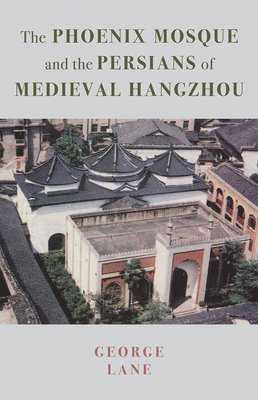
Phoenix Mosque and the Persians of Medieval Hangzhou
George A. Lane, Qing Chen, Alexander Morton, Florence Hodous, Charles Meville, George A. Lane
Inbunden, 2018
909 kr
Hoppa över listan

Du kanske också är intresserad av
Phoenix Mosque and the Persians of Medieval Hangzhou
George A. Lane, Qing Chen, Alexander Morton, Florence Hodous, Charles Meville, George A. Lane
Inbunden, 2018
909 kr
Del 1
