
United Nations and the Maintenance of International Security
A Challenge to be Met
Häftad, Engelska, 2003
659 kr
Beställningsvara. Skickas inom 10-15 vardagar. Fri frakt för medlemmar vid köp för minst 249 kr.
Finns i fler format (1)
International security must be understood in much broader terms in the aftermath of the Cold War. This extensively revised edition retains the valuable descriptions and analyses of the United Nations' achievements and failures, while placing them in the context of the ever-broadening definition of international security and of changing attitudes toward national sovereignty and humanitarian intervention. In order to deal with the internal struggles that are now the prevalent form of conflict, it is necessary to allay the root causes of tensions within societies. Means of enforcement must be applied to prevent gross violations of human rights, including genocide.Sutterlin describes the background of innovations that recent crises have imposed on the UN. He analyzes how recent reforms have affected the UN's capacity to deal with the security problems of the new century. Peacekeeping, peace-enforcement, peace-building, and the application of sanctions all bring new challenges. In one chapter, Sutterlin focuses on the UN's experience in enforcing disarmament in Iraq. A new chapter details the impact of terrorism and weapons of mass destruction on UN policies and actions. This systematic presentation, using scholarly analysis and a practitioner's inside knowledge, provides a readable and challenging text for courses on the United Nations.
Produktinformation
- Utgivningsdatum2003-09-30
- Mått156 x 235 x 11 mm
- Vikt312 g
- FormatHäftad
- SpråkEngelska
- Antal sidor192
- Upplaga2
- FörlagBloomsbury Publishing Plc
- ISBN9780275973049
Tillhör följande kategorier
Hoppa över listan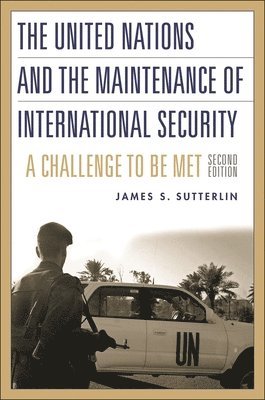








Du kanske också är intresserad av
United Nations and the Maintenance of International Security
James S. Sutterlin
Inbunden, 2003
1 549 kr
- Nyhet
Del 3
- Nyhet
Del 4
- Nyhet
Del 6
- Nyhet
Del 1
Del 3