
Turkic-Turkish Theme in Traditional Malay Literature
Imagining the Other to Empower the Self
Inbunden, Engelska, 2015
1 889 kr
Beställningsvara. Skickas inom 5-8 vardagar. Fri frakt för medlemmar vid köp för minst 249 kr.
The Turkic-Turkish Theme in Traditional Malay Literature is the first detailed study of the representation of the Turkic peoples and Ottoman Turks in Malay literature between the 14th–19th centuries. Drawing on a wide range of texts, Vladimir Braginsky uncovers manifold metamorphoses and diverse forms of localisation of this Turkic-Turkish theme. This theme has strongly influenced the religious and political ideals and political mythology of Malay society. By creating fictional rather than realistic portrayals of the Turks and Turkey, imagining the king of Rum as the origin point of Malay dynasties, and dreaming of Ottoman assistance in the jihad against the colonial powers, Malay literati ultimately sought to empower the Malay ‘self’ by bringing it closer to the Turkish ‘other’.
Produktinformation
- Utgivningsdatum2015-10-30
- Mått155 x 235 x 23 mm
- Vikt628 g
- FormatInbunden
- SpråkEngelska
- SerieVerhandelingen van het Koninklijk Instituut voor Taal-, Land- en Volkenkunde
- Antal sidor304
- FörlagBrill
- ISBN9789004290709
Tillhör följande kategorier
Hoppa över listan

Mer från samma serie
Del 142
Del 51
Del 284
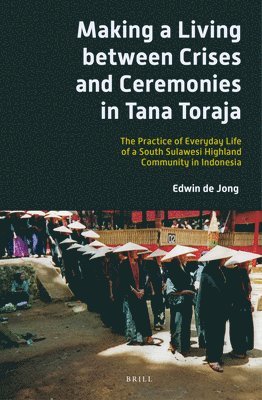
Making a Living between Crises and Ceremonies in Tana Toraja
Edwin B.P. de Jong
Inbunden, 2013
2 119 kr
Del 291
Del 246
Del 294
Del 295
Del 298
Del 300
Del 302
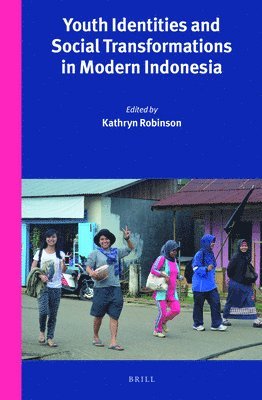
Youth Identities and Social Transformations in Modern Indonesia
Kathryn Robinson
Inbunden, 2015
1 729 kr
Hoppa över listan



Du kanske också är intresserad av
- Nyhet
Del 3
- Nyhet
Del 11
- Nyhet
Del 4
- Nyhet
Del 6
Del 1
Del 3