
Tradition and the Deliberative Turn
A Critique of Contemporary Democratic Theory
Inbunden, Engelska, 2023
1 639 kr
Beställningsvara. Skickas inom 5-8 vardagar. Fri frakt för medlemmar vid köp för minst 249 kr.
Finns i fler format (1)
Reframes the discussion of deliberative democracy in a unique fashion, approaching the debate as a historical conversation.This book changes the narrative regarding democratic deliberation. It does so by bringing to bear insights into the nature of morality and discourse associated with one of the twentieth century's foremost philosophers of history, Hans-Georg Gadamer. Tradition and the Deliberative Turn thus reframes the discussion about deliberative democracy with a robust historical sensibility, which has largely been missing from this conversation. Gadamer's "rehabilitation" of tradition shows how the concrete ethical life does not merely occlude but also facilitates moral understanding, providing a particular vantage point from which we perceive the world. What other scholars have overlooked is that such a perspective is therefore always limited. Drawing on Gadamer's practical philosophy, an underappreciated element in his corpus, Ryan R. Holston argues for the need to cultivate these historically-rooted and local relationships and the shared meanings to which they give life.
Produktinformation
- Utgivningsdatum2023-03-01
- Mått152 x 229 x 18 mm
- Vikt408 g
- FormatInbunden
- SpråkEngelska
- Antal sidor218
- FörlagState University of New York Press
- ISBN9781438492094
Tillhör följande kategorier
Hoppa över listan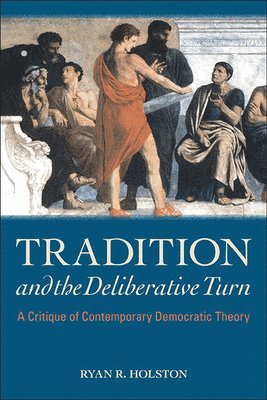




Du kanske också är intresserad av
- Nyhet
Del 3
- Nyhet
- Nyhet
Del 6
- Nyhet
Del 7
- Nyhet
Del 11
- Nyhet
Del 4