
Del i serien Routledge Studies in Applied Linguistics
Theory and Practice in Vocabulary Research in Digital Environments
Häftad, Engelska, 2026
949 kr
Beställningsvara. Skickas inom 10-15 vardagar. Fri frakt för medlemmar vid köp för minst 249 kr.
Finns i fler format (1)
This collection is a comprehensive resource on the state of second language vocabulary learning today, building on earlier studies to spotlight the diversity of issues and foci in the field toward encouraging further advancements in both research and practice.The volume foregrounds the importance of vocabulary learning in language teaching and learning and in effective written and verbal communication, charting the range of approaches and theories used to address the unique challenges of vocabulary instruction. While there exists a well-established body of vocabulary research, this book takes those lines of inquiry in new directions by exploring how technology has shifted the focus from teacher-led delivery to more activity-driven experiences. Chapters from prominent researchers and rising scholars feature studies on emergent approaches in virtual environments such as interactive whiteboards, CMC, virtual world learning, and mobile-assisted language learning. In offering a holistic portrait of technology-enhanced vocabulary learning the volume makes the case for the power of technological tools in fostering optimal environments for encouraging vocabulary acquisition and in turn, the potential opportunities for future research and pedagogical applications.This book will be of interest to students and scholars in second language acquisition, language education, TESOL, and applied linguistics.
Produktinformation
- Utgivningsdatum2026-05-21
- Mått152 x 229 x 15 mm
- Vikt510 g
- FormatHäftad
- SpråkEngelska
- SerieRoutledge Studies in Applied Linguistics
- Antal sidor260
- FörlagTaylor & Francis Ltd
- ISBN9781032434865
Tillhör följande kategorier
Hoppa över listan






Mer från samma författare
Researching Incidental Vocabulary Learning in a Second Language
Mark Feng Teng, Barry Lee Reynolds
Häftad, 2024
799 kr
Researching Incidental Vocabulary Learning in a Second Language
Mark Feng Teng, Barry Lee Reynolds
Inbunden, 2024
2 709 kr
Theories and Methodologies of Individual Differences in Reading
Mark Feng Teng, Jing Zhou
Inbunden, 2026
3 379 kr
Identity, Motivation, and Multilingual Education in Asian Contexts
Mark Feng Teng, Wang Lixun
Inbunden, 2020
2 289 kr
Identity, Motivation, and Multilingual Education in Asian Contexts
Mark Feng Teng, Wang Lixun
Häftad, 2021
639 kr
Innovative Approaches in Teaching English Writing to Chinese Speakers
Barry Lee Reynolds, Mark Feng Teng
Inbunden, 2021
2 229 kr
Hoppa över listan

Mer från samma serie
Online Education for Teachers of English as a Global Language
Hyun-Sook Kang, Dong-shin Shin, Tony Cimasko
Inbunden, 2020
3 189 kr
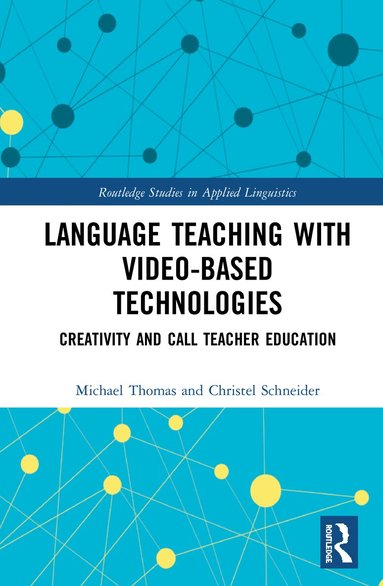
Language Teaching with Video-Based Technologies
Michael Thomas, Christel Schneider
Inbunden, 2020
3 189 kr
Hoppa över listan
Du kanske också är intresserad av
Theory and Practice in Vocabulary Research in Digital Environments
Mark Feng Teng, Agnes Kukulska-Hulme, Junjie Gavin Wu
Inbunden, 2024
3 189 kr
Del 15589
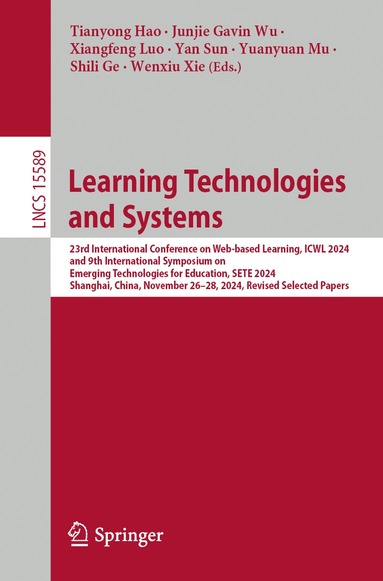
Learning Technologies and Systems
Tianyong Hao, Junjie Gavin Wu, Xiangfeng Luo, Yan Sun, Yuanyuan Mu, Shili Ge, Wenxiu Xie
Häftad, 2025
2 239 kr
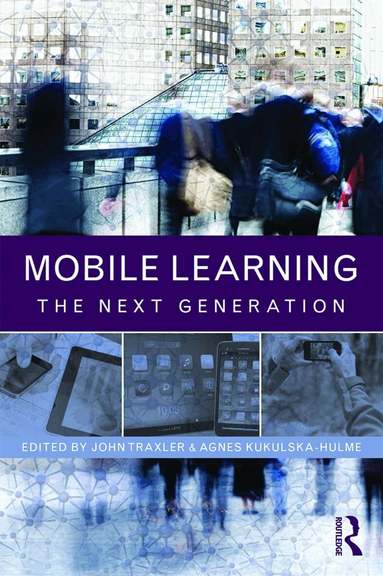
Mobile Assisted Language Learning Across Educational Contexts
Valentina Morgana, Agnes Kukulska-Hulme
Inbunden, 2021
1 269 kr
Mobile Assisted Language Learning Across Educational Contexts
Valentina Morgana, Agnes Kukulska-Hulme
Häftad, 2022
469 kr