
Del i serien Oxford Legal Philosophy
The Nature of Legislative Intent
Häftad, Engelska, 2016
889 kr
Skickas . Fri frakt för medlemmar vid köp för minst 249 kr.
Finns i fler format (1)
Are legislatures able to form and act on intentions? The question matters because the interpretation of statutes is often thought to centre on the intention of the legislature and because the way in which the legislature acts is relevant to the authority it does or should enjoy. Many scholars argue that legislative intent is a fiction: the legislative assembly is a large, diverse group rather than a single person and it seems a mystery how the intentions of the individual legislators might somehow add up to a coherent group intention. This book argues that in enacting a statute the well-formed legislature forms and acts on a detailed intention, which is the legislative intent. The foundation of the argument is an analysis of how the members of purposive groups act together by way of common plans, sometimes forming complex group agents. The book extends this analysis to the legislature, considering what it is to legislate and how members of the assembly cooperate to legislate. The book argues that to legislate is to choose to change the law for some reason: the well-formed legislature has the capacity to consider what should be done and to act to that end. This argument is supported by reflection on the centrality of intention to the nature of language use. The book then explains in detail how members of the assembly form and act on joint intentions, which do not reduce to the intentions of each member, before outlining some implications of this account for the practice of statutory interpretation. Developing a robust account of the nature and importance of legislative intention, the book represents a significant contribution to the literature on deliberative democracy that will be of interest to all those thinking about legal interpretation and constitutional theory.
Produktinformation
- Utgivningsdatum2016-02-11
- Mått156 x 234 x 17 mm
- Vikt445 g
- FormatHäftad
- SpråkEngelska
- SerieOxford Legal Philosophy
- Antal sidor318
- FörlagOUP OXFORD
- ISBN9780198766209
Tillhör följande kategorier
Hoppa över listan




Mer från samma författare
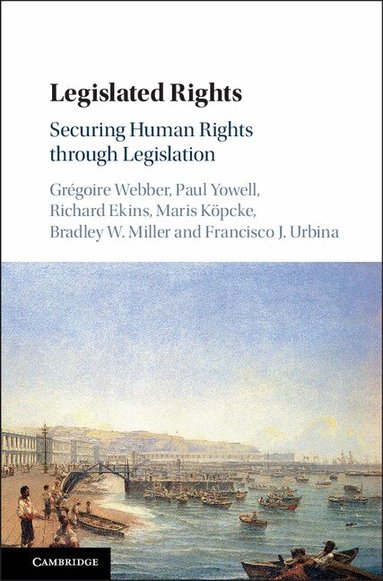
Legislated Rights
Grégoire Webber, Paul Yowell, Richard Ekins, Maris Köpcke, Bradley W. Miller, Francisco J. Urbina
Inbunden, 2018
2 279 kr
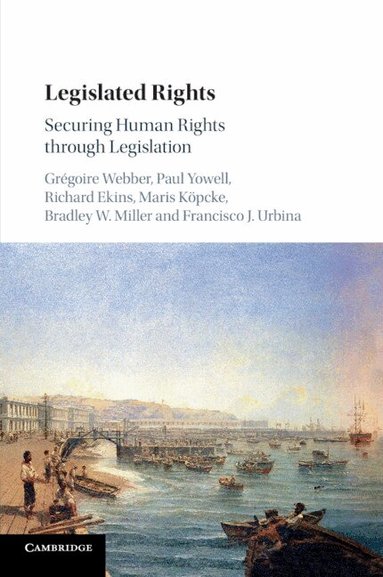
Legislated Rights
Grégoire Webber, Paul Yowell, Richard Ekins, Maris Köpcke, Bradley W. Miller, Francisco J. Urbina
Häftad, 2019
569 kr
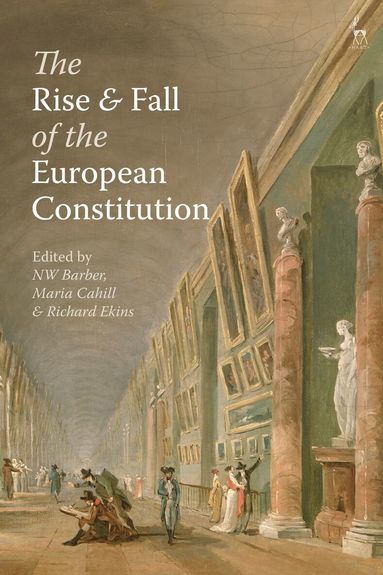
Rise and Fall of the European Constitution
NW Barber, Maria Cahill, Richard Ekins
Inbunden, 2019
1 449 kr
Hoppa över listan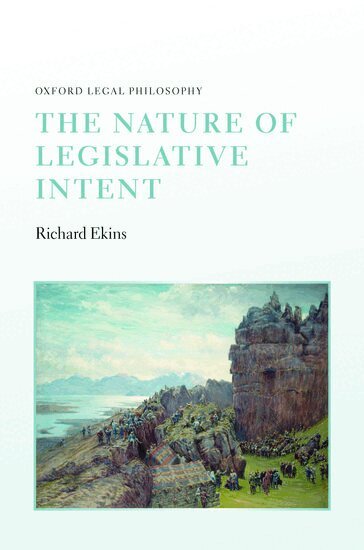

Du kanske också är intresserad av
Legislated Rights
Grégoire Webber, Paul Yowell, Richard Ekins, Maris Köpcke, Bradley W. Miller, Francisco J. Urbina
Häftad, 2019
569 kr
Legislated Rights
Grégoire Webber, Paul Yowell, Richard Ekins, Maris Köpcke, Bradley W. Miller, Francisco J. Urbina
Inbunden, 2018
2 279 kr