
The Human Illnesses
Inbunden, Engelska, 2011
1 799 kr
Beställningsvara. Skickas inom 7-10 vardagar. Fri frakt för medlemmar vid köp för minst 249 kr.
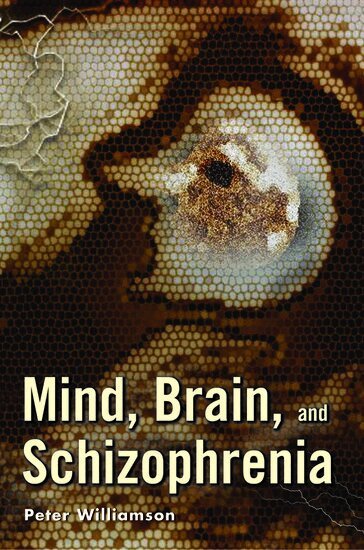
The genetic correlates of neuropsychiatric disorders are now known, but none have come close to explaining the great variety of human psychiatric illnesses. This volume, written by a neuropsychiatrist and an evolutionary biologist, offers a new paradigm for understanding these disorders. Proposing that neuronal pathways which underlie neuropsychiatric conditions mirror unique human capabilities, the authors iterate a new paradigm by which to understand human psychiatric illnesses. Human capabilities such as theory of mind, language, and complex social behaviors are explored through their histological, neuroanatomical and functional brain imaging correlates.The capacity for representation, the authors suggest, is central to the understanding of the human brain. Brain structures such as the frontal pole, temporal pole, and fronto-insular cortex are highly developed in humans and are associated with representation. Other brain regions, including the dorsal anterior cingulate cortex, auditory cortex, and hippocampus, are linked with directed effort while the ventral anterior cingulate cortex, orbital frontal cortex, and amygdala are related to emotional encoding. Both networks interact with representional regions and the dorsolateral prefrontal cortex. Conditions like schizophrenia may result, in part, from a failure of the networks associated with directed effort while bipolar disorders may arise from a failure of networks associated with emotional encoding. Similarly, autism may result from a failure of representational brain regions; frontotemporal dementia may be associated with failure of several discrete networks in later life. From this perspective, neuropsychiatric disorders are selective failures of brain networks involved in the integration of cognition, affect and perception. A better understanding of these brain networks will assist psychiatric and mental health researchers in the search for environmental factors and genetic correlates of disorders as well as aid in the development of more effective treatments for these diseases. This volume will be of interest to psychiatrists, neurologists, psychologists, biologists, and imaging scientists--anyone who has ever wondered what makes the human brain human.
Produktinformation
- Utgivningsdatum2011-02-03
- Mått236 x 157 x 20 mm
- Vikt499 g
- FormatInbunden
- SpråkEngelska
- Antal sidor256
- FörlagOUP USA
- ISBN9780195368567
Tillhör följande kategorier
Hoppa över listan








Mer från samma författare
First and Second Timothy, Titus
George T. Montague, Peter Williamson, Mary Healy, Peter S. Williamson, Peter S Williamson, Mary Healy
Häftad, 2008
289 kr
Second Corinthians
Thomas D. Sj Stegman, Peter Williamson, Mary Healy, Peter S. Williamson, Peter S Williamson, Mary Healy
Häftad, 2010
309 kr
Ephesians
Peter S. Williamson, Peter Williamson, Mary Healy, Peter S. Williamson, Peter S Williamson, Mary Healy
Häftad, 2010
279 kr
Gospel of Mark
Mary Healy, Peter Williamson, Peter S. Williamson, Peter S Williamson, Mary Healy
Häftad, 2008
299 kr
Gospel of Matthew
Edward Sri, Curtis Mitch, Peter Williamson, Mary Healy, Peter S Williamson, Mary Healy
Häftad, 2010
349 kr
Hebrews
Mary Healy, Peter Williamson, Peter S. Williamson, Peter S Williamson, Mary Healy
Häftad, 2016
289 kr
Hoppa över listan









Du kanske också är intresserad av
State of the process, poor Peter Williamson, against Alexander Cushnie, and others.
Peter Williamson
Häftad, 2010
259 kr