
Del i serien Routledge Studies in Sustainability
Sustainable Communities and Green Lifestyles
Consumption and Environmentalism
Inbunden, Engelska, 2017
3 219 kr
Beställningsvara. Skickas inom 10-15 vardagar. Fri frakt för medlemmar vid köp för minst 249 kr.
Finns i fler format (1)
Sustainable communities raise questions about the compatibility of capitalism and environmentalism and how we can green our way of life in a capitalist economy that values short-term production and consumption over long-term conservation and simple living. If capitalism and its drive towards consumption has produced social and environmental degradation, is it the best medium to identify solutions? Sustainable Communities and Green Lifestyles examines one ecovillage as it attempts to create a sense of community while reducing its impact on the natural environment. Through extensive participant observation, the book demonstrates how ecovillages are immersed within a larger discourse of class, race, and lifestyle choices, highlighting the inseparability of environmental sustainability and social justice. Sustainable communities are confronted by the contradictions of green consumption and must address social inequality or risk focusing inward on personal green consumerism, creating mere green havens for the few who can afford to live in them. This book, cautious of redirecting environmentalist efforts away from structural solutions and onto personal environmentalism, offers a critical perspective on the challenges of an emerging green lifestyle. This book offers a critical perspective on the direction of US environmentalism and contributes to debates in environmental studies, anthropology, and urban planning.
Produktinformation
- Utgivningsdatum2017-08-10
- Mått156 x 234 x 15 mm
- Vikt453 g
- FormatInbunden
- SpråkEngelska
- SerieRoutledge Studies in Sustainability
- Antal sidor160
- FörlagTaylor & Francis Ltd
- ISBN9781138775404
Tillhör följande kategorier
Hoppa över listan
Mer från samma serie
Managing Complexity: Earth Systems and Strategies for the Future
Walter R. Erdelen, Jacques G. Richardson
Inbunden, 2018
3 219 kr
Green Skills Research in South Africa
Eureta Rosenberg, Presha Ramsarup, Heila Lotz-Sisitka
Inbunden, 2019
3 219 kr
Hoppa över listan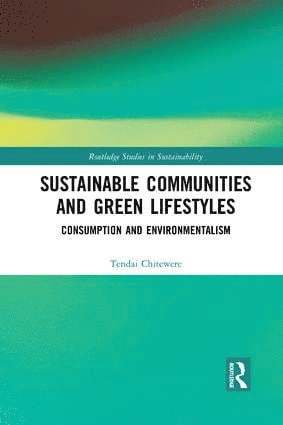








Du kanske också är intresserad av
- Nyhet
Del 3
- Nyhet
Del 11
- Nyhet
- Nyhet
Del 1
- Nyhet
Del 4
- Nyhet
Del 6
- Nyhet
Del 4
Del 3