Beställningsvara. Skickas inom 7-10 vardagar. Fri frakt för medlemmar vid köp för minst 249 kr.
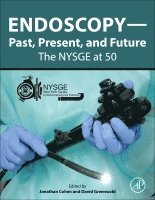
Successful Training in Gastrointestinal Endoscopy Teaches trainee gastroenterologists the endoscopic skills needed to meet the medical training requirements to practice gastroenterology and helps clinical specialists refresh their skills to pass their recertification This book provides all gastroenterologists with the exact set of skills required to perform endoscopy at the highest level. Featuring contributions from internationally recognized leaders in endoscopy education and an endorsement by the World Organization of Digestive Endoscopy, it examines the specific skill sets and procedure-related tasks that must be mastered when learning a particular technique, including: specific descriptions of accessories required; standard training methods for the procedure; optimal utilization of novel learning modalities such as simulators; quality measures and objective parameters for competency; and available tools for assessing competency once training has been completed. Successful Training in Gastrointestinal Endoscopy, Second Edition features 400 high-quality, outstanding color photos to assist with comprehension. It is also complemented by a website containing over 130 annotated teaching videos of both actual procedures and ex-vivo animal model simulations. These videos illustrate, step by step, the proper techniques to be followed, highlighting clinical pearls of wisdom from the experts and the most common mistakes to avoid. Offers comprehensive and practical training guidelines in all the endoscopy procedures and techniques trainee gastroenterologists are required to learnProvides trainees with the skills required to perform endoscopy to the level required by the ACGME in order to practice gastroenterologyPresents seasoned gastroenterologists with an outstanding tool to brush up their endoscopy skills and to familiarize them with new trends in safety and competenceIncludes website with video clips visually demonstrating all the endoscopic procedures step-by-step highlighting common mistakesEndorsed by the World Organization of Digestive EndoscopySuccessful Training in Gastrointestinal Endoscopy, Second Edition is an excellent book for all trainee gastroenterologists (particularly endoscopists and colonoscopists) training for board exams. It will also greatly benefit gastroenterology specialists (especially those training for re-certification), as well as internal medicine physicians and trainees.
Jonathan Cohen, MD, FASGE, is Clinical Professor of Medicine at New York University Grossman School of Medicine.
List of Contributors, viiiForeword, xiiPreface, xiiiAcknowledgments, xvAbout the Companion Website, xviPart I The Evolution of Basic Principles and Practice, 11 Training in Endoscopy: A Historical Background, 3Jonathan Cohen and David A. Greenwald2 How Endoscopy is Learned: Deconstructing Skill Sets, 20Kevin A. Waschke, Catharine M. Walsh, and Gerald M. Fried3 Training to Become a High‐Quality Endoscopist: Mastering the Nonprocedural Aspects, 27Sahar Ghassemi and Douglas O. Faigel 4 Training the Endoscopic Trainer, 33Catharine M. Walsh and Kevin A. WaschkePart II Training in the Major Endoscopic Procedures, 435 Esophagogastroduodenoscopy (EGD), 45Susan Y. Quan, Lauren B. Gerson, Thomas E. Kowalski, and Shai Friedland6 Colonoscopy, 57Robert E. Sedlack7 Endoscopic Ultrasound, 88Thomas J. Savides and Frank G. Gress8 ERCP, 99Brian S. Lim, Joseph Leung, and Wei‐Chih Liao9 Capsule Endoscopy, 113Mindy W. Lee and Felice Schnoll‐Sussman10 Deep Enteroscopy, 125Jorge D. Machicado, Jonathan M. Buscaglia, and Patrick I. Okolo11 Cholangioscopy and Pancreatoscopy, 133Amrita Sethi and Raj J. Shah12 Principles of Electrosurgery, 143David L. Carr‐Locke and John Day13 Training in the Use of Fluoroscopy for Gastrointestinal Endoscopy, 153Douglas G. Adler and Gandhi Lanke14 Training in Pediatric Endoscopy, 164Michael A. Manfredi and Jenifer R. LightdalePart III Training in Specific Techniques, 17715 Contrast‐Enhanced Endoscopy: Chromo and Optical Contrast Techniques, 179Anna M. Buchner, Prateek Sharma, and Michael B. Wallace16 Training in GI Hemostasis, 195Dennis M. Jensen17 Luminal Dilation Techniques (Strictures, Achalasia, Anastomotic, IBD), 215Yi Jia, Syed M. Abbas Fehmi, and Michael L. Kochman18 Management of Foreign Body Ingestion and Esophageal Food Bolus Obstruction, 224Michael S. Green, Wendell K. Clarkston, and Sreenivasa S. Jonnalagadda19 Endoscopic Mucosal Resection, Submucosal Dissection, and Full Thickness Resection Techniques, 233Juergen Hochberger, Edris Wedi, Peter Koehler, SongSa Dammer, and Thomas Brunk20 Mucosal Ablation Techniques, 273Fariha H. Ramay, Bruce D. Greenwald, Virender K. Sharma, and John A. Dumot21 Complicated Polypectomy, 284Neal Shahidi, Michael J. Bourke, Yasushi Sano, and Jerome D. Waye22 Training and Credentialing in Natural Orifice Transluminal Endoscopic Surgery (NOTES), 303David J. Desilets23 Training in Bariatric Endoscopy, 306Diogo Turiani Hourneaux de Moura, Pichamol Jirapinyo, and Christopher C. Thompson24 Repair of Mucosal Defects: A Primer on Endoscopic Closure of Gastrointestinal Perforations, 323Sergey V. Kantsevoy and Gottumukkala S. Raju25 Esophageal, Gastroduodenal, and Colorectal Stenting, 331Peter D. Siersema26 ERCP Management of Complicated Stone Disease of the Bile Duct and Pancreas, 343Nithin Karanth, Ashley A. Vareedayah, Jonathan Cohen, and Gregory B. Haber27 ERCP Management of Malignancy: Tissue Sampling, Metal Stent Placement, and Ampullectomy, 356Douglas A. Howell28 Sphincter of Oddi Manometry, 366Mark A. Gromski, Stuart Sherman, Glen A. Lehman, and Evan L. Fogel29 Training for Pseudocyst Management, 375Todd H. Baron30 Enteral Access Techniques: Percutaneous Endoscopic Gastrostomy and Jejunostomy, 384Lauren K. Schwartz and James A. DiSario31 Training in GI Upper Motility Techniques, 395Anthony Lembo and Raxitkumar Patel32 Training in the Endoscopic Management of Anorectal Disorders, 410Waqar Qureshi33 The Endoscopic Management of Immediate Complications of Therapeutic Endoscopy, 417David A. Greenwald and Martin L. FreemanPart IV Challenges for the Future, 42334 Assessing Manpower Needs in Gastroenterology and Digestive Endoscopy: Lessons from the Past and Implications for the Future of Endoscopic Training, 425Mihir S. Wagh and Alan Barkun35 International Opportunities for Obtaining Endoscopy Training, 434Mostafa Ibrahim, Fabian Emura, Amerah Taleb, Noran Roshdy, Ryan Law, and Todd H. Baron36 Virtual Tools for Training: The Spectrum of Apps and Virtual Aids for Learning GastrointestinalEndoscopy, 440Gene Ma, Alejandra Domínguez, Roque Saenz, and Sarah McGill37 Providing Resources and Opportunities for Retraining for Practicing Endoscopists, 443John Petrini and Klaus Mergener38 Evolving Role of GI Societies and Industry in Training Endoscopists to Perform New Techniques: Supporting the Process and Setting the Standards, 449John A. Martin and Christopher J. Gostout39 The Importance of Skills Assessment and Recording Personal Outcomes in the Future of Training, 460Peter B. Cotton, Sachin Wani, Roland M. Valori, and Jonathan CohenIndex, 470
Jonathan Cohen, Betram J. Cohler, U.S.A.) Cohen, Jonathan, Ph.D. (Columbia University and The New York Freudian Society, New York, U.S.A.) Cohler, Betram J. (The University of Chicago and The Institute for Psychoanalysis, Chicago, Illinois, Bertram J. Cohler