Beställningsvara. Skickas inom 7-10 vardagar. Fri frakt för medlemmar vid köp för minst 249 kr.
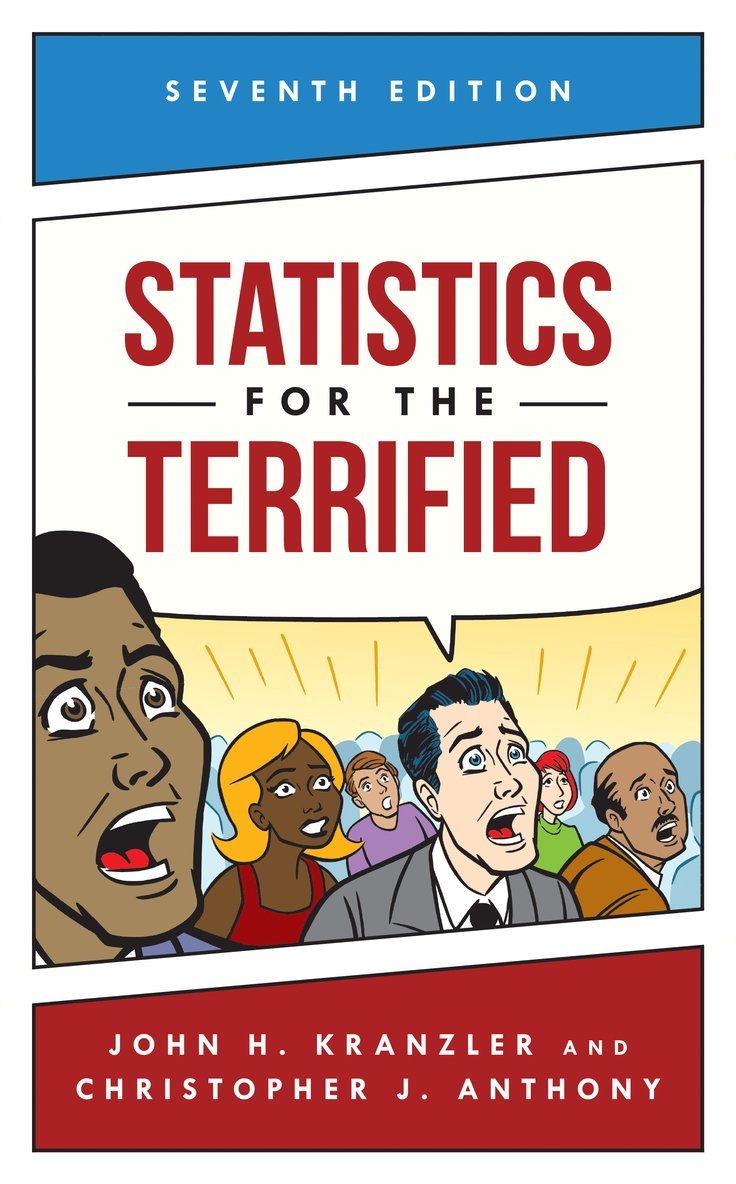
Statistics for the Terrified Criminologist is a user-friendly introduction to elementary statistics, intended primarily for the reluctant, math-anxious/avoidant criminology student. Written in a personal and informal style, with healthy doses of humor and encouragement, the aim of this book is to help readers make the leap from apprehension to comprehension of elementary statistics. Statisticsfor the Terrified Criminologist includes step-by-step instructions on how to run basic statistical tests in SPSS (Statistical Package for the Social Sciences) and is intended to serve as a comprehensive text for criminology courses in statistics and research methods; as a refresher for criminology students who have already taken a statistics course; and as a primer for new students of elementary statistics. Millions of people have math anxiety; yet this fact is rarely taken into consideration in textbooks on statistics. This book also presents self-help strategies (based on the cognitive behavioral techniques of rational emotive therapy) that help people manage their math anxiety so they can relax and build confidence while learning statistics. Statistics for theTerrified Criminologist makes statistics accessible to people by helping them manage their anxiety and presenting them with other essential materials for learning statistics before jumping into statistics.
John H. Kranzler is professor and director of the School Psychology Program in the School of Special Education, School Psychology, and Early Childhood Studies at the University of Florida.Marissa P. Levy is a professor of criminal justice and interim dean in the School of Social and Behavioral Sciences at Stockton University.
PrefaceAcknowledgments Section IEssentials for Statistics1 Effective Strategies for Studying StatisticsSelf-assessmentAssumptions about the ReaderEffective Strategies for Studying Statistics2 Overcoming Math AnxietyWhat Causes Math Anxiety?Overview of Rational Emotive TherapyIrrational BeliefsHow to Deal with Math Anxiety3 How to Use SPSSWhat is SPSS?Starting SPSSBasic Steps in SPSS Data AnalysisEntering DataSelecting an AnalysisRunning an Analysis and Examining ResultsFinding Help in SPSSSection IIDescribing Univariate Data4 Frequency DistributionsWhat are statistics?VariablesLevels of MeasurementFrequency DistributionsGrouped Frequency DistributionsGraphing DataFrequency PolygonHistogramCumulative Frequency PolygonNormal CurveSkewed and Multimodal DistributionsProblemsAnswers to Problems5 Descriptive StatisticsWhat are statistics?Measures of Central TendencySelecting a Measure of Central TendencyMeasures of variabilityProblemsAnswers to Problems6 The Normal CurveWhat is the Normal Curve?The Normal Curve as a ModelProportions of Scores Under the Normal CurveProblemsAnswers to Problems7 Percentiles and Standard ScoresPercentilesStandard Scores (Z score)Other Standard ScoresT ScoresConverting Standard Scores to PercentilesA Word of WarningProblemsAnswers to ProblemsSection IIIInferential Statistics8 Introduction to Inferential StatisticsProbabilityThe Sampling ExperimentSample Values (Statistics) and Population Values (Parameters)The Null HypothesisType I and Type II ErrorsStatistical Significance and Type I ErrorEffect Size and PowerProblemsAnswers to Problems9 The t TestThe t Test for Independent SamplesAssumptions for Using the t Test for Independent SamplesFormula for the t Test for Independent SamplesThe Critical Value of t: tcritEffect Size for the t Test for Independent SamplesThe t Test for Dependent (Matched/Paired) SamplesDirectional Versus Nondirectional TestsProblemsAnswers to Problems10 Analysis of Variance (ANOVA)Analysis of VarianceAssumptions for using ANOVAConducting an ANOVA in SPSSStrength of AssociationPost hoc AnalysisThe Scheffé Method of Post-Hoc AnalysisProblemsAnswers to Problems11 Nonparametric Statistics: Chi-squareNonparametric Statistical TestsThe One-way Test of Chi-square ()The Two-way Test of Chi-square ()Effect Size for Chi-Square Tests of IndependenceA Bit MoreProblemsAnswers to ProblemsSection IVCorrelation Coefficients and Linear Regression12 Correlation CoefficientsCorrelation CoefficientsPearson Product-Moment Correlation CoefficientInterpreting Correlation CoefficientsSources of Misleading Correlation CoefficientsCreating a ScatterplotOther Methods of CorrelationSpearman Rank Correlation CoefficientProblemsAnswers to Problems13 Linear RegressionRegression EquationsStandard Error of the EstimateProblemsAnswers to Problems14 PostscriptCongratulations!Review of BookAppendicesA Basic Math ReviewB Proportions of Area Under the Standard Normal CurveC Critical Values of tD Glossary of FormulasIndex