
Del i serien Contemporary Theological Explorations in Mysticism
Semiotic Theory and Sacramentality in Hugh of Saint Victor
Inbunden, Engelska, 2019
3 279 kr
Beställningsvara. Skickas inom 10-15 vardagar. Fri frakt för medlemmar vid köp för minst 249 kr.
Finns i fler format (1)
This book offers Hugh of Saint Victor’s early scholastic thoughts on sacrament in order to re-discover the pre-modern theological understanding of ontological signification. The Christian understanding of sacrament through the category of ‘signs’ results in a theology that inherently shares in the philosophical notion of semiotics. Yet, through the advent of post-structuralism, current sign-theory is effectively shaped by post-Kantian, ontological foundations. This can lead to misinterpretations of the sacramental theology that predates this intellectual turn.The book works within a context of Christological, realist mysticism. Such an approach allows mutually informing debates in semiotic development and studies on sacramental theology to sit side-by-side. In addition, as a work of ressourcement, influenced by the methodology and concerns of the historical, French Ressourcement, this study seeks to continue an engagement with some of the most promising sacramental positions that have emerged throughout twentieth-century theology, particularly with the revival of interest in Victorine theology.By providing an examination of sacramentality and theories of signification in the early scholastic theology of Hugh of Saint Victor, this book gives fresh impetus to the theology surrounding sacrament. As such, it will be of great interest to scholars of mysticism, theologians of sacrament, philosophical theologians, and philosophers of religion.
Produktinformation
- Utgivningsdatum2019-08-21
- Mått156 x 234 x 19 mm
- Vikt430 g
- FormatInbunden
- SpråkEngelska
- SerieContemporary Theological Explorations in Mysticism
- Antal sidor264
- FörlagTaylor & Francis Ltd
- ISBN9781138033481
Tillhör följande kategorier
Hoppa över listan


Mer från samma serie
Mysticism and Materialism in the Wake of German Idealism
W. Ezekiel Goggin, Sean Hannan
Inbunden, 2022
3 279 kr
Mysticism and Materialism in the Wake of German Idealism
W. Ezekiel Goggin, Sean Hannan
Häftad, 2023
849 kr
Mystical Theology and Contemporary Spiritual Practice
Christopher C. H. Cook, Julienne McLean, Peter Tyler
Häftad, 2019
919 kr
Mystical Theology and Continental Philosophy
David Lewin, Simon D. Podmore, Duane Williams
Häftad, 2019
919 kr
Hoppa över listan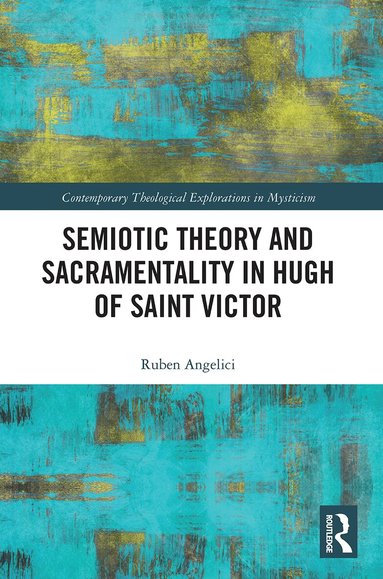
Du kanske också är intresserad av
Exploring Lost Dimensions in Christian Mysticism
Louise Nelstrop, Simon D. Podmore
Inbunden, 2013
3 589 kr
Mystical Theology and Contemporary Spiritual Practice
Christopher C. H. Cook, Julienne McLean, Peter Tyler
Häftad, 2019
919 kr