
Seljuks of Anatolia
Court and Society in the Medieval Middle East
Häftad, Engelska, 2015
499 kr
Beställningsvara. Skickas inom 10-15 vardagar. Fri frakt för medlemmar vid köp för minst 249 kr.
Under Seljuk rule (c. 1081-1308) the formerly Christian Byzantine territories of Anatolia were transformed by the development of Muslim culture, society and politics, and it was then - well before the arrival of the Ottomans - that a Turkish population became firmly established in these lands. But these developments are little understood, and the Seljuk dynasty remains little studied. Yet the Seljuks of Anatolia were one of the most influential dynasties of the thirteenth-century Middle East, controlling some of the major trade routes of the period, playing a crucial role in linking East and West of the medieval world. This volume examines Seljuk culture and history by looking at developments both at court and in society at large and shed new light on Seljuk political culture and dynastic ideology, the engagement of politics with religion, and Christian-Muslim interaction. The Seljuks of Anatolia will be of great interest to researchers with interests in Byzantium as well as the material culture and society of the medieval Islamic world.
Produktinformation
- Utgivningsdatum2015-04-30
- Mått138 x 216 x 25 mm
- Vikt454 g
- FormatHäftad
- SpråkEngelska
- Antal sidor328
- FörlagBloomsbury Publishing PLC
- ISBN9781784531652
Tillhör följande kategorier
Hoppa över listan

Mer från samma författare
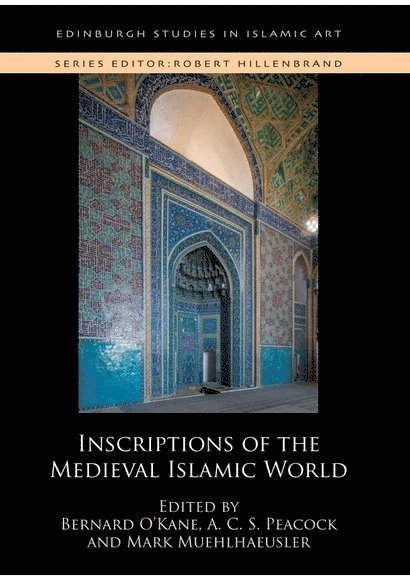
Inscriptions of the Medieval Islamic World
Bernard O'Kane, A. C. S. Peacock, Mark Muehlhaeusler
Inbunden, 2023
2 329 kr
Hoppa över listan

Du kanske också är intresserad av
Inscriptions of the Medieval Islamic World
Bernard O'Kane, A. C. S. Peacock, Mark Muehlhaeusler
Inbunden, 2023
2 329 kr
- Nyhet
- Nyhet
Del 4