
Scythe and the City
A Social History of Death in Shanghai
Inbunden, Engelska, 2016
1 219 kr
Beställningsvara. Skickas inom 5-8 vardagar. Fri frakt för medlemmar vid köp för minst 249 kr.
The issue of death has loomed large in Chinese cities in the modern era. Throughout the Republican period, Shanghai swallowed up lives by the thousands. Exposed bodies strewn around in public spaces were a threat to social order as well as to public health. In a place where every group had its own beliefs and set of death and funeral practices, how did they adapt to a modern, urbanized environment? How did the interactions of social organizations and state authorities manage these new ways of thinking and acting? Recent historiography has almost completely ignored the ways in which death created such immense social change in China. Now, Scythe and the City corrects this problem. Christian Henriot's pioneering and original study of Shanghai between 1865 and 1965 offers new insights into this crucial aspect of modern society in a global commercial hub and guides readers through this tumultuous era that radically redefined the Chinese relationship with death.
Produktinformation
- Utgivningsdatum2016-05-18
- Mått152 x 229 x 32 mm
- Vikt781 g
- FormatInbunden
- SpråkEngelska
- Antal sidor496
- FörlagStanford University Press
- ISBN9780804797467
Tillhör följande kategorier
Hoppa över listan


Mer från samma författare
Del 37
Del 23
Del 3
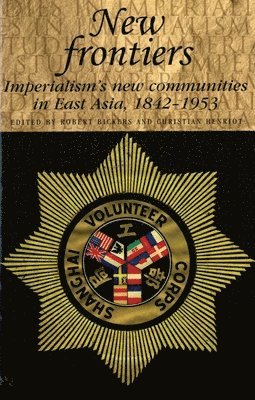
New Frontiers: Imperialism's New Communities in East Asia, 1842-1953
Robert A. Bickers, Christian Henriot
Inbunden
1 019 kr
Hoppa över listan
Du kanske också är intresserad av
Del 23
Del 3
New Frontiers: Imperialism's New Communities in East Asia, 1842-1953
Robert A. Bickers, Christian Henriot
Inbunden
1 019 kr
Del 37