
Del i serien Human Rights Law in Perspective
Rethinking Human Rights
Critical Insights from Palestinian Youth
Häftad, Engelska, 2026
709 kr
Beställningsvara. Skickas inom 10-15 vardagar. Fri frakt för medlemmar vid köp för minst 249 kr.
Finns i fler format (1)
Palestinians have used the language of human rights to articulate their struggle against the Israeli occupation and internationalise the injustices they face. Palestinian young people learning about human rights at school experience a dissonance between the aspirational and internationalised framework of those norms and the layers of injustice of their own lived experience. Drawing on research in the occupied West Bank, this book explores the three layers of marginalisation faced by Palestinian young people – the Israeli occupation that denies them their humanity; the Palestinian pseudo-state that denies them a voice; and patriarchal structures that deny them agency – to show how these barriers influence their understanding of, and scepticism towards, human rights. Influenced by decolonial theories, this book illuminates how space needs to be created for the counter-narratives of the oppressed in human rights discourse, which may not align with more conventional representations of human rights. It contends that human rights and, by extension, human rights education in the Palestinian context (and beyond) needs to be critiqued, decolonised and ultimately transformed.
Produktinformation
- Utgivningsdatum2026-04-23
- Mått152 x 232 x 16 mm
- Vikt360 g
- FormatHäftad
- SpråkEngelska
- SerieHuman Rights Law in Perspective
- Antal sidor248
- FörlagBloomsbury Publishing PLC
- ISBN9781509954865
Tillhör följande kategorier
Hoppa över listan
Mer från samma serie
Article 8 ECHR, Family Reunification and the UK’s Supreme Court
Helena Wray, Colin Harvey
Inbunden, 2023
1 509 kr
Protecting Human Rights and Building Peace in Post-Violence Societies
Nasia Hadjigeorgiou, Colin Harvey
Inbunden, 2020
1 589 kr
Specifying and Securing a Social Minimum in the Battle Against Poverty
Toomas Kotkas, Ingrid Leijten, Frans Pennings
Inbunden, 2019
1 669 kr
Hoppa över listan

Du kanske också är intresserad av
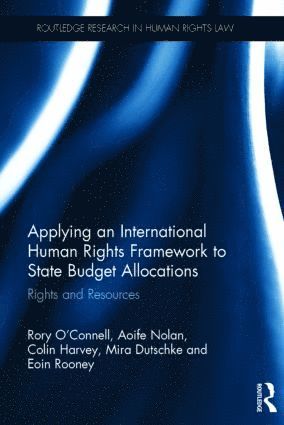
Applying an International Human Rights Framework to State Budget Allocations
Rory O'Connell, Aoife Nolan, Colin Harvey, Mira Dutschke, Eoin Rooney
Inbunden, 2014
2 899 kr
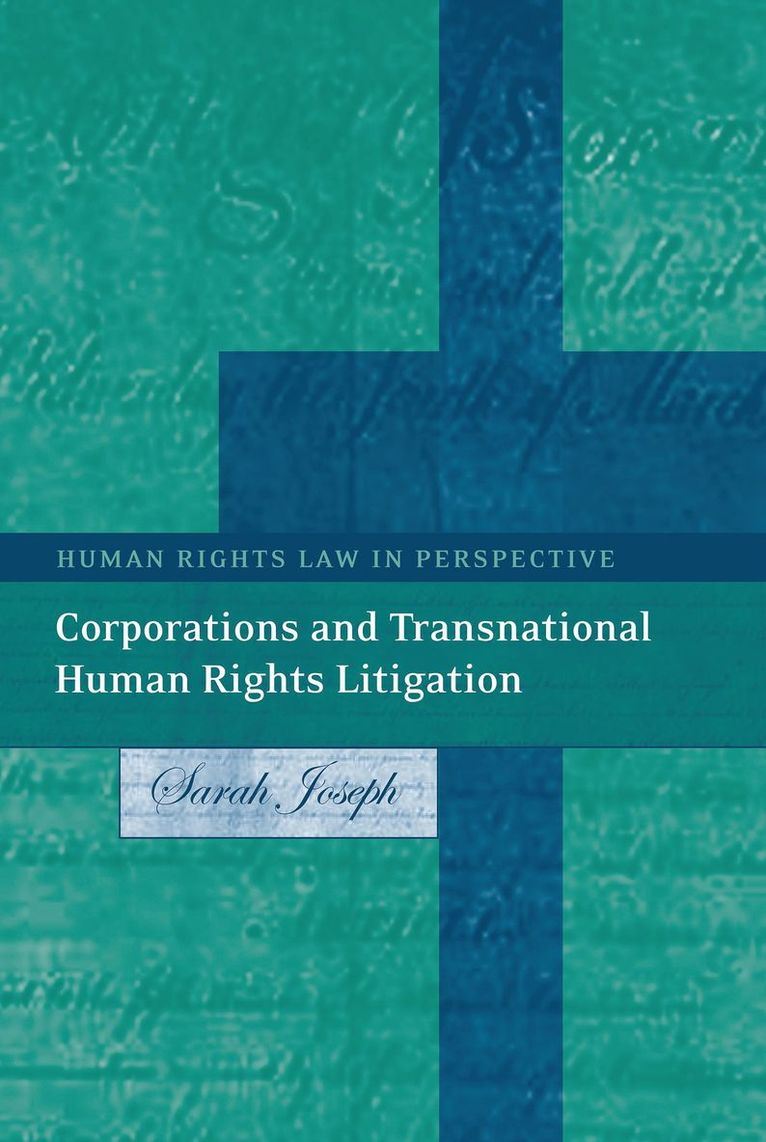
Corporations and Transnational Human Rights Litigation
Sarah Joseph, Colin Harvey
Inbunden, 2004
1 339 kr