
Del i serien Brill
Ranks of the Divine Seekers
A Parallel English-Arabic Text. Volume 1
Häftad, Arabiska, 2022
1 089 kr
Beställningsvara. Skickas inom 5-8 vardagar. Fri frakt för medlemmar vid köp för minst 249 kr.
Finns i fler format (1)
Winner of the 2021 Sheikh Hamad Award for Translation and International Understanding (category: translation from Arabic into English)This is an unabridged, annotated, translation of the great Damascene savant and saint Ibn Qayyim al-Jawziyya’s (d. 751/1350) Madārij al-Sālikīn. Conceived as a critical commentary on an earlier Sufi classic by the great Hanbalite scholar Abū Ismāʿīl of Herat, Madārij aims to rejuvenate Sufism’s Qurʾanic foundations. The original work was a key text for the Sufi initiates, composed in terse, rhyming prose as a master’s instruction to the aspiring seeker on the path to God, in a journey of a hundred stations whose ultimate purpose was to be lost to one’s self (fanāʾ) and subsist (baqāʾ) in God. The translator, Ovamir (ʿUwaymir) Anjum, provides an extensive introduction and annotation to this English-Arabic face-to-face presentation of this masterpiece of Islamic psychology.
Produktinformation
- Utgivningsdatum2022-01-27
- Mått155 x 235 x 52 mm
- Vikt1 540 g
- FormatHäftad
- SpråkArabiska, Engelska
- SerieBrill
- Antal sidor910
- FörlagBrill
- ISBN9789004510968
- ÖversättareOvamir Anjum
Tillhör följande kategorier
Hoppa över listan




Mer från samma författare
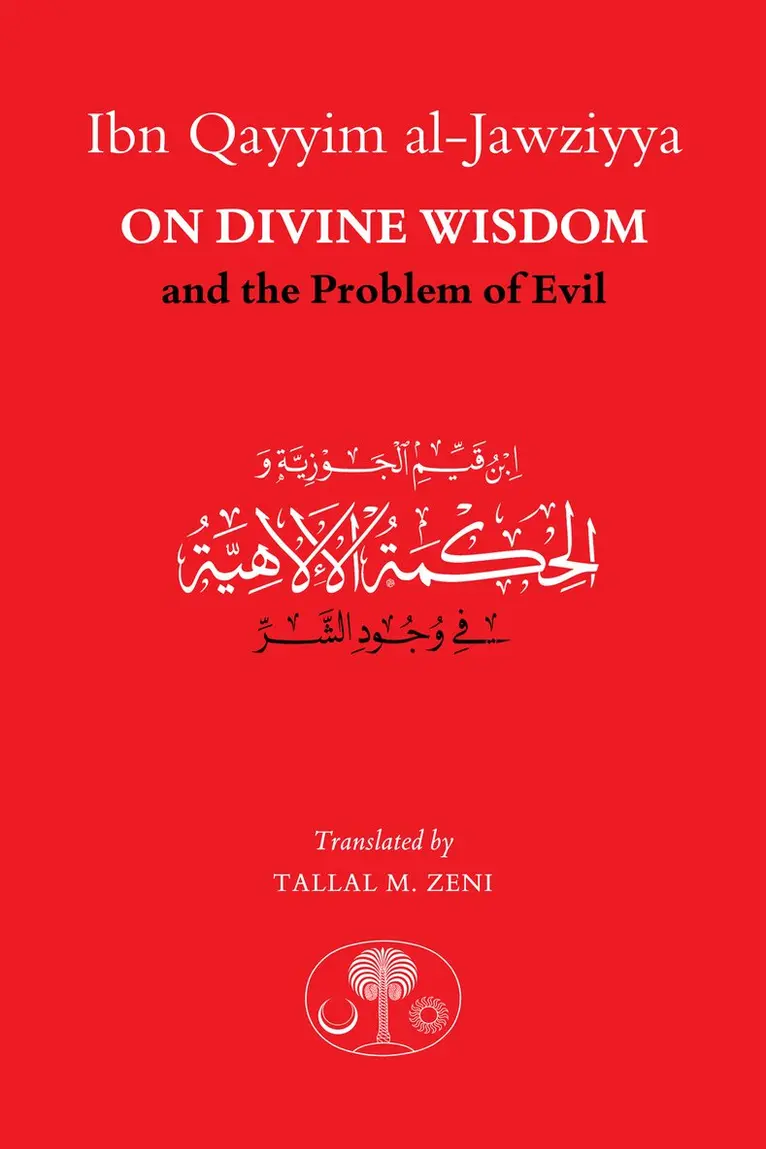
Ibn Qayyim al-Jawziyya on Divine Wisdom and the Problem of Evil
Ibn Qayyim al-Jawziyya
Häftad, 2017
289 kr
Ranks of the Divine Seekers: A Parallel English-Arabic Text. Volume 3
Ibn Qayyim Al-Jawziyya
Inbunden, 2026
3 409 kr
Hoppa över listan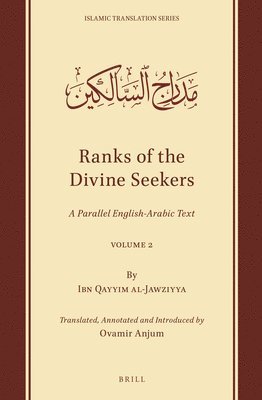


Du kanske också är intresserad av
Ibn Qayyim al-Jawziyya on Divine Wisdom and the Problem of Evil
Ibn Qayyim al-Jawziyya
Häftad, 2017
289 kr
Ranks of the Divine Seekers: A Parallel English-Arabic Text. Volume 4
Ibn Qayyim Al-Jawziyya
Inbunden, 2026
3 349 kr
Ranks of the Divine Seekers: A Parallel English-Arabic Text. Volume 3
Ibn Qayyim Al-Jawziyya
Inbunden, 2026
3 409 kr
Ranks of the Divine Seekers: A Parallel English-Arabic Text. Volume 3
Ibn Qayyim Al-Jawziyya
Häftad, 2026
1 079 kr