
Del i serien SUNY series in Contemporary Continental Philosophy
Philosophy-Screens
From Cinema to the Digital Revolution
Inbunden, Engelska, 2019
1 409 kr
Beställningsvara. Skickas inom 5-8 vardagar. Fri frakt för medlemmar vid köp för minst 249 kr.
Finns i fler format (1)
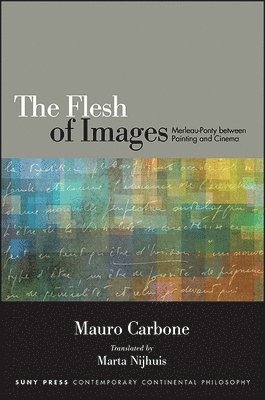
Draws from twentieth-century French thought on film and aesthetics to address the philosophical significance of the pervasiveness of screens in contemporary technological life as well as the mutation of philosophy that such a pervasiveness seems to require.In The Flesh of Images, Mauro Carbone analyzed Merleau-Ponty's interest in film and modern painting as it relates to his aesthetic theory and as it illuminates our contemporary relationship to images. Philosophy-Screens broadens the work undertaken in this earlier book, looking at the ideas of other twentieth-century thinkers concerning the relationship between philosophy and film, and extending that analysis to address our experience of electronic and digital screens in the twenty-first century. In the first part of the book, Carbone examines the ways that Sartre, Merleau-Ponty, Lyotard, and Deleuze grappled with the philosophical significance of cinema as a novel aesthetic medium unfolding in the twentieth century. He then considers the significance of this philosophical framework for understanding the digital revolution, in particular the extent to which we are increasingly and comprehensively connected with screens. Smartphones, tablets, and computers have become a primary referential optical apparatus for everyday life in ways that influence the experience not only of seeing but also of thinking and desiring. Carbone's Philosophy-Screens follows Deleuze's call for "a philosophy-cinema" that can account for these fundamental changes in perception and aesthetic production, and adapts it to twenty-first-century concerns.
Produktinformation
- Utgivningsdatum2019-07-01
- Mått152 x 229 x 18 mm
- Vikt386 g
- FormatInbunden
- SpråkEngelska
- SerieSUNY series in Contemporary Continental Philosophy
- Antal sidor166
- FörlagState University of New York Press
- ISBN9781438474656
- ÖversättareMarta Nijhuis
Tillhör följande kategorier
Hoppa över listan


Mer från samma författare
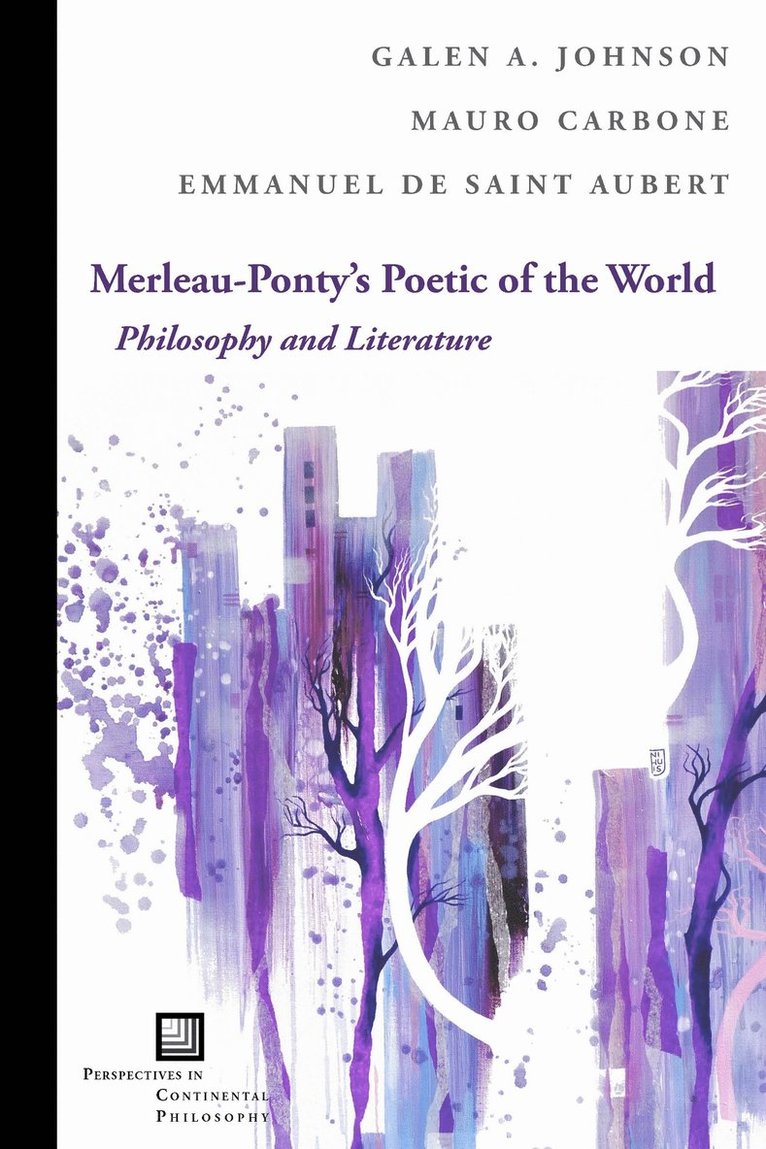
Merleau-Ponty's Poetic of the World
Galen A. Johnson, Mauro Carbone, Emmanuel de Saint Aubert
Häftad, 2020
629 kr
Merleau-Ponty's Poetic of the World
Galen A. Johnson, Mauro Carbone, Emmanuel de Saint Aubert
Inbunden, 2020
2 009 kr
Chiasmi International n. 12
Mauro Carbone, Leonard Lawlor, Federico Leoni, Pierre Rodrigo
Häftad, 2014
679 kr
Chiasmi International 24
Mauro Carbone, Mauro Carbone, Galen Johnson, Federico Leoni, Ted Toadvine
Häftad, 2024
189 kr
Hoppa över listan

Mer från samma serie
Heidegger and the Project of Fundamental Ontology
Jacques Taminiaux, Michael Gendre
Häftad, 1991
469 kr
Hans-Georg Gadamer on Education, Poetry, and History
Dieter Misgeld, Graeme Nicholson
Inbunden, 1992
1 639 kr
Hoppa över listan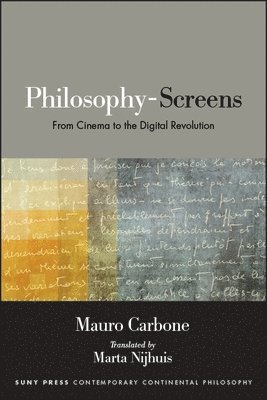

Du kanske också är intresserad av
Merleau-Ponty's Poetic of the World
Galen A. Johnson, Mauro Carbone, Emmanuel de Saint Aubert
Inbunden, 2020
2 009 kr
Merleau-Ponty's Poetic of the World
Galen A. Johnson, Mauro Carbone, Emmanuel de Saint Aubert
Häftad, 2020
629 kr