
Del 997
Del 997 i serien Advances in Experimental Medicine and Biology
Organelle Contact Sites
From Molecular Mechanism to Disease
Häftad, Engelska, 2018
1 779 kr
Beställningsvara. Skickas inom 10-15 vardagar. Fri frakt för medlemmar vid köp för minst 249 kr.
This book provides the first comprehensive coverage of the quickly evolving research field of membrane contact sites (MCS). A total of 16 chapters explain their organization and role and unveil the significance of MCS for various diseases.MCS, the intracellular structures where organellar membranes come in close contact with one another, mediate the exchange of proteins, lipids, and ions. Via these functions, MCS are critical for the survival and the growth of the cell. Owing to that central role in the functioning of cells, MCS dysfunctions lead to important defects of human physiology, influence viral and bacterial infection, and cause disease such as inflammation, type II diabetes, neurodegenerative disorders, and cancer. To approach such a multifaceted topic, this volume assembles a series of chapters dealing with the full array of research about MCS and their respective roles for diseases. Most chapters also introduce the history and the state of the art ofMCS research, which will initiate discussion points for the respective types of MCS for years to come.This work will appeal to all cell biologists as well as researchers on diseases that are impacted by MCS dysfunction. Additionally, it will stimulate graduate students and postdocs who will energize, drive, and develop the research field in the near future.
Produktinformation
- Utgivningsdatum2018-12-12
- Mått178 x 254 x 14 mm
- Vikt571 g
- FormatHäftad
- SpråkEngelska
- SerieAdvances in Experimental Medicine and Biology
- Antal sidor257
- FörlagSpringer Verlag, Singapore
- ISBN9789811351709
Tillhör följande kategorier
Hoppa över listan






Du kanske också är intresserad av
Del 997
Del 997
Del 997
Computer Vision, Imaging and Computer Graphics Theory and Applications
Dominique Bechmann, Manuela Chessa, Ana Paula Cláudio, Francisco Imai, Andreas Kerren, Paul Richard, Alexandru Telea, Alain Tremeau
Häftad, 2019
1 129 kr
Del 997
Del 997
Del 997
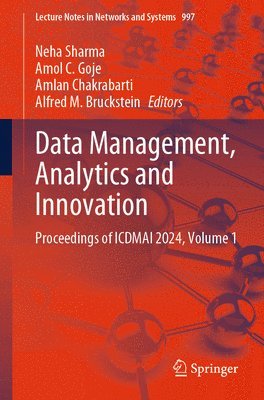
Data Management, Analytics and Innovation
Neha Sharma, Amol C. Goje, Amlan Chakrabarti, Alfred M. Bruckstein
Häftad, 2024
3 259 kr
Del 997
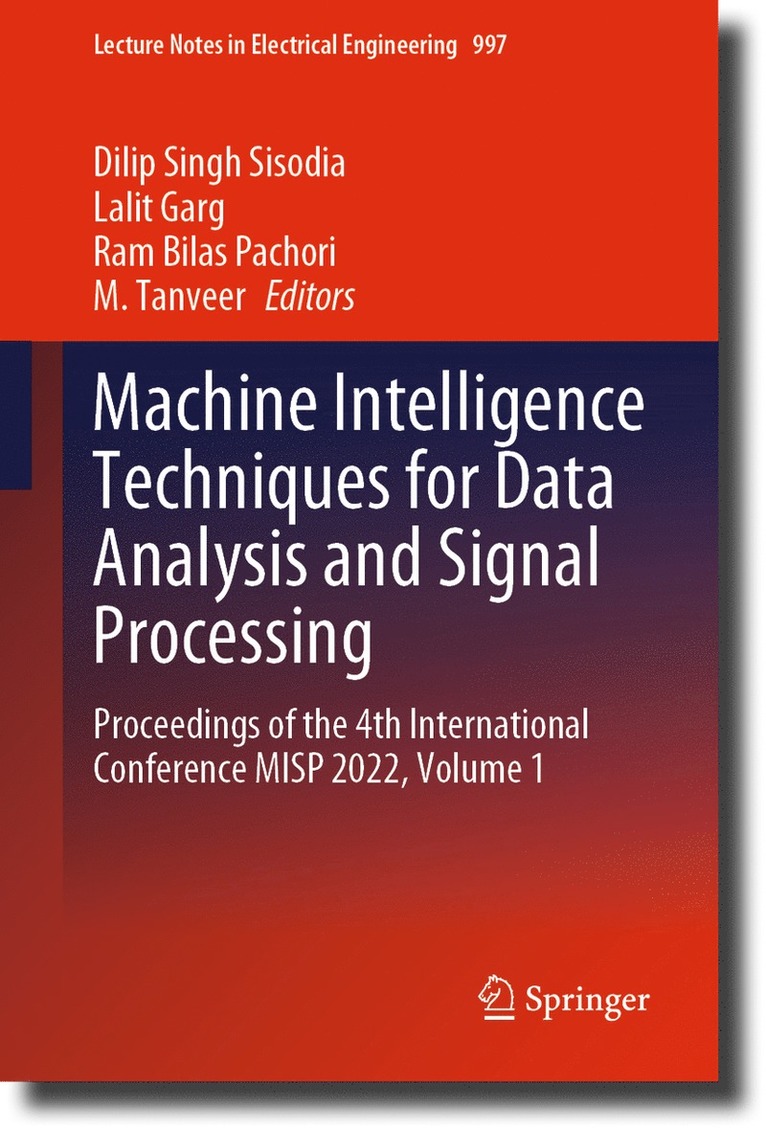
Machine Intelligence Techniques for Data Analysis and Signal Processing
Dilip Singh Sisodia, Lalit Garg, Ram Bilas Pachori, M. Tanveer
Inbunden, 2023
5 629 kr
Del 997
Theoretical Foundations of Functional Data Analysis, with an Introduction to Linear Operators
Tailen Hsing, Randall Eubank
Inbunden, 2015
1 219 kr
Del 997
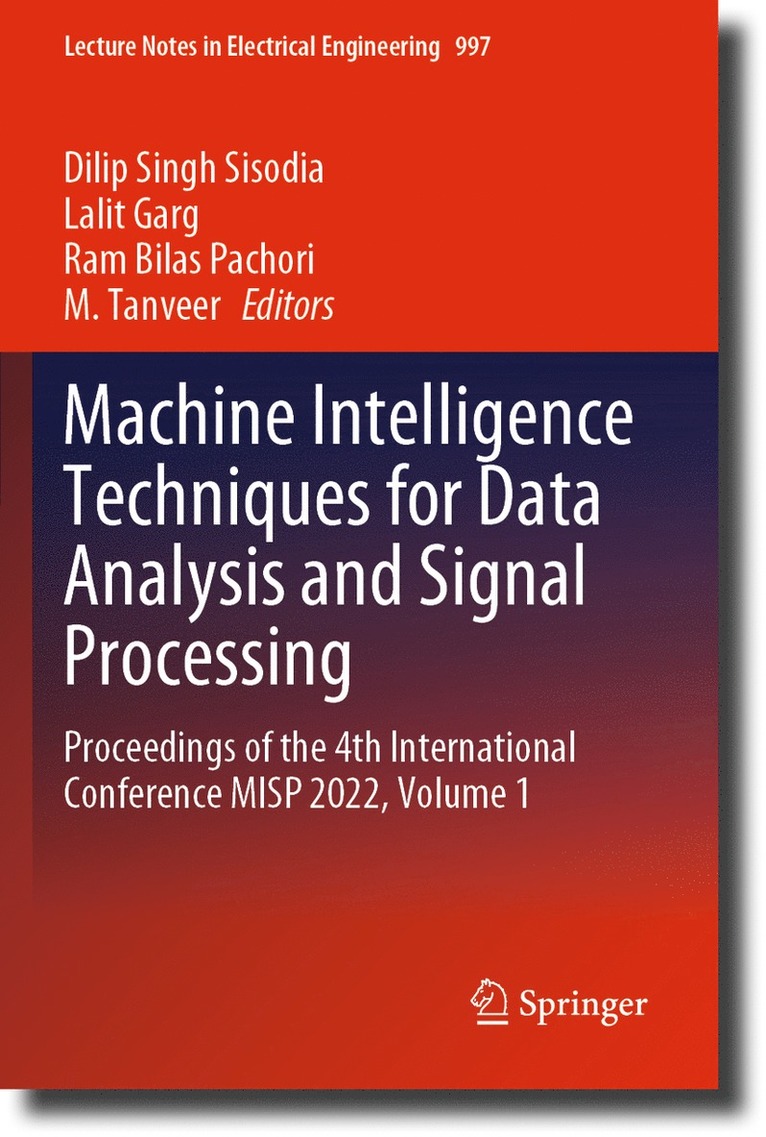
Machine Intelligence Techniques for Data Analysis and Signal Processing
Dilip Singh Sisodia, Lalit Garg, Ram Bilas Pachori, M. Tanveer
Häftad, 2024
5 629 kr