
Natural Resource-Based Development in Africa
Panacea or Pandora's Box?
Inbunden, Engelska, 2022
919 kr
Beställningsvara. Skickas inom 5-8 vardagar. Fri frakt för medlemmar vid köp för minst 249 kr.
There is no question that Africa is endowed with abundant natural resources of different magnitudes. However, more than a decade of high commodity prices and new hydrocarbon discoveries across the continent has led countless international organizations, donor agencies, and non-governmental organizations to devote considerable attention to the potential of natural resource–based development. Natural Resource–Based Development in Africa places a particular emphasis on the actors that help us understand the extent to which resources could be transformed into broader developmental outcomes. Based on a wide variety of primary sources and fieldwork, including in-person interviews and participant observations, this collection contributes to both scholarly and policy discussions around the governance and economic development roles of local entrepreneurs, transnational firms, civil society groups, local communities, and government agencies in Africa’s natural resource sectors. Natural Resource–Based Development in Africa explores the impact that these actors have on regional trends such as resource nationalism and local procurement policies as well as grassroots-related issues such as poverty, livelihoods, gender equity, development, and human security.
Produktinformation
- Utgivningsdatum2022-04-07
- Mått160 x 236 x 36 mm
- Vikt680 g
- FormatInbunden
- SpråkEngelska
- Antal sidor392
- FörlagUniversity of Toronto Press
- ISBN9781487505219
Tillhör följande kategorier
Hoppa över listan


Mer från samma författare
Routledge Handbook on Meaningful Stakeholder Engagement
Karin Buhmann, Alberto Fonseca, Nathan Andrews, Giuseppe Amatulli
Inbunden, 2024
4 949 kr
Routledge Handbook on Meaningful Stakeholder Engagement
Karin Buhmann, Alberto Fonseca, Nathan Andrews, Giuseppe Amatulli
Häftad, 2026
1 039 kr
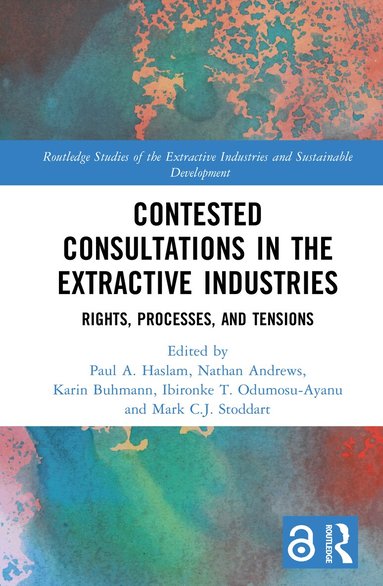
Contested Consultations in the Extractive Industries
Paul A. Haslam, Nathan Andrews, Karin Buhmann, Ibironke T. Odumosu-Ayanu, Mark Stoddart
Inbunden, 2025
3 019 kr
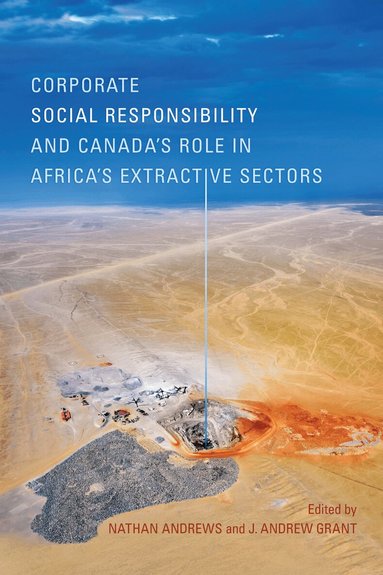
Corporate Social Responsibility and Canada's Role in Africa's Extractive Sectors
Nathan Andrews, j. Andrew Grant
Inbunden, 2020
1 069 kr
Corporate Social Responsibility and Canada's Role in Africa's Extractive Sectors
Nathan Andrews, j. Andrew Grant
Häftad, 2020
499 kr
Hoppa över listan
Du kanske också är intresserad av
Corporate Social Responsibility and Canada's Role in Africa's Extractive Sectors
Nathan Andrews, j. Andrew Grant
Inbunden, 2020
1 069 kr
Corporate Social Responsibility and Canada's Role in Africa's Extractive Sectors
Nathan Andrews, j. Andrew Grant
Häftad, 2020
499 kr
Developmental States beyond East Asia
Jewellord T. Nem Singh, Jesse Salah Ovadia
Inbunden, 2019
3 279 kr
Routledge Handbook on Meaningful Stakeholder Engagement
Karin Buhmann, Alberto Fonseca, Nathan Andrews, Giuseppe Amatulli
Häftad, 2026
1 039 kr