Beställningsvara. Skickas inom 10-15 vardagar. Fri frakt för medlemmar vid köp för minst 249 kr.
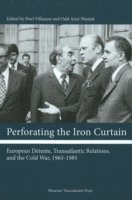
This book presents pieces of evidence, which – taken together – lead to an argument that goes against the grain of the established Cold War narrative. The argument is that a “long détente” existed between East and West from the 1950s to the 1980s, that it existed and lasted for good (economic, national security, societal) reasons, and that it had a profound impact on the outcome of the conflict between East and West and the quintessentially peaceful framework in which this “endgame” was played. New, Euro-centered narratives are offered, including both West and East European perspectives. These contributions point to critical inconsistencies and inherent problems in the traditional U.S. dominated narrative of the “Victory in the Cold War.” The argument of a “long détente” does not need to replace the ruling American narrative. Rather, it can and needs to be augmented with European experiences and perceptions. After all, it was Europe – its peoples, societies, and states – that stood both at the ideological and military frontline of the conflict between East and West, and it was here that the struggle between liberalism and communism was eventually decided.
Oliver Bange is senior historian at the Centre for Military History and Social Sciences, German Armed Forces, in Potsdam and lecturer at the University of Mannheim.Poul Villaume is professor of contemporary history at the Saxo Institute, University of Copenhagen.
Acronyms and AbbreviationsIntroductionOliver Bange and Poul VillaumePART I: Long Perspectives On Détente1 East-West Conflict: Short Cold War and Long DétenteAn Essay on Terminology and PeriodizationGottfried Niedhart2 The Long Détente and the Soviet Bloc, 1953–1983Csaba BékésPART II: East-West Trade1 Soviet Snowdrops in the Ice Age?The Surprising Attempt of an Early Economic Détente in 1952Mikhail Lipkin2 European Long-Term Investments in DétenteThe Implications of East-West Economic CooperationWerner LippertPART III: The Inextractability of External and Domestic Security1 No End to “Political Ideological Diversion”The Stasi Perspective as Circumstantial Evidence for a Long DétenteOliver Bange2 New Security Concepts and Transnational Party Networks, 1976–1983.The Socialist International, Scandilux, and the Overcoming of the Crisis of DétenteRasmus MariagerPART IV: Détente in Europe: Change in Perceptions1 Continuity and TransformationAlternate Visions of Italy’s Three Decades of DétenteLaura Fasanaro2 Perception of the Other: “Kremlinologists” and “Westerners”East and West German Analysts and Their Mutual Perceptions, 1977–1985Sabine Loewe-HannatzschPART V: Détente in Europe: Change in Diplomatic Framings1 Pathfinders and Perpetuators of DétenteSmall States of NATO and the Long Détente: The Case of Denmark, 1969–1989Poul Villaume2 Overcoming the Crisis of Détente, 1979−1983Coordinating Eastern Policies between Paris, Bonn, and LondonChristian WenkelPART VI: The U.S. Story: from Cooperation to Confrontation and Back1 Lyndon B. Johnson and the Building of East-West BridgesCatching Up with Détente in Europe, 1963–1966Gry Thomasen2 Between Power Politics and MoralityThe United States, the Long Détente, and the Transformation of Europe, 1969–1985Stephan KieningerSelect BibliographyIndexAbout the Editors and Contributors
"The volume offers a corrective via a Eurocentric narrative that examines economic and political overtures dating to the early 1950s between European countries and the Eastern bloc. Chapters dealing with these matters are well researched and offer insight into episodes (like the Moscow International Economic Conference) that are little studied. As a volume on European diplomacy from the 1950s to the 1980s it is a fine contribution to the literature."