
Del 25 i serien Boydell Studies in Medieval Art and Architecture
Late Medieval Lodging Ranges
The Architecture of Identity, Power and Space
Inbunden, Engelska, 2023
1 129 kr
Beställningsvara. Skickas inom 5-8 vardagar. Fri frakt för medlemmar vid köp för minst 249 kr.
This book draws on architectural and archaeological analysis to consider the form, function, use and meaning of late medieval lodging ranges.While we know a great deal about most elements of the late medieval great house, we understand very little about their lodging ranges, and even less on their contributions to the lived experience of the household and wider society. Why were lodging ranges built, for example, and how were they used? It is this gap in our knowledge which the present book aims to fill. It draws on archaeological and architectural analysis of lodging ranges to show that they were some of the finest living spaces within the great house, built as accommodation for high-ranking members of the household. Their low-, even single-, occupancy rooms, accessible via individual doors, were innovatory, showing how the idea of privacy developed. The explicit displays of uniformity upon the lodging ranges' symmetrical facades were juxtaposed with variations within.Surviving lodging ranges (including Wingfield Manor, Middleham Castle and Dartington Hall) are examined, alongside the lost example of Caister Castle, demonstrating how lodging ranges simultaneously reflected and shaped medieval life; the author argues that their very form and stones, and their manipulation of space, enabled them to have multi-faceted functions, including the representation of multiple and even conflicting identities.
Produktinformation
- Utgivningsdatum2023-10-03
- Mått156 x 234 x 19 mm
- Vikt573 g
- FormatInbunden
- SpråkEngelska
- SerieBoydell Studies in Medieval Art and Architecture
- Antal sidor278
- FörlagBoydell & Brewer Ltd
- ISBN9781783277575
Tillhör följande kategorier
Hoppa över listan
Mer från samma serie
Del 6
Del 7
Del 8
Del 24
Del 3
Del 1
Del 11
Graphic Devices and the Early Decorated Book
Michelle Brown, Ildar Garipzanov, Benjamin C Tilghman
Inbunden, 2017
949 kr
Del 5
Marvellous and the Monstrous in the Sculpture of Twelfth-Century Europe
Kirk Ambrose
Häftad, 2017
399 kr
Del 10
Del 12
Hoppa över listan


Du kanske också är intresserad av
Del 30
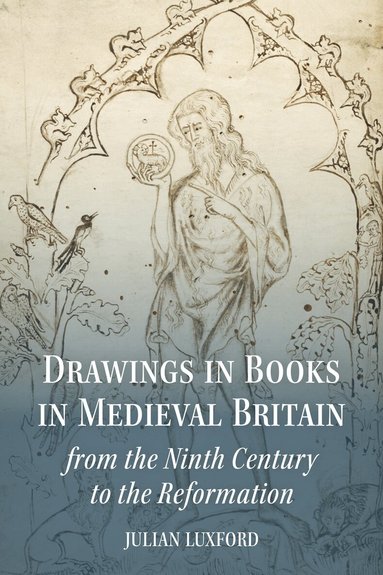
Drawings in Books in Medieval Britain from the Ninth Century to the Reformation
Julian Luxford
Inbunden, 2026
2 789 kr
Del 26
Images of Thomas Becket in the Middle Ages and Beyond
Alyce A Jordan, Kay Brainerd Slocum
Inbunden, 2025
2 199 kr
Del 29
Del 28
Del 2
- Nyhet
Del 3