
Del 98
Del i serien Routledge Studies in Sociolinguistics
Language Diversity in the Sinophone World
Historical Trajectories, Language Planning, and Multilingual Practices
Häftad, Engelska, 2022
949 kr
Beställningsvara. Skickas inom 10-15 vardagar. Fri frakt för medlemmar vid köp för minst 249 kr.
Finns i fler format (1)
Language Diversity in the Sinophone World offers interdisciplinary insights into social, cultural, and linguistic aspects of multilingualism in the Sinophone world, highlighting language diversity and opening up the burgeoning field of Sinophone studies to new perspectives from sociolinguistics.The book begins by charting historical trajectories in Sinophone multilingualism, beginning with late imperial China through to the emergence of English in the mid-19th century. The volume uses this foundation as a jumping off point from which to provide an in-depth comparison of modern language planning and policies throughout the Sinophone world, with the final section examining multilingual practices not readily captured by planning frameworks and the ideologies, identities, repertoires, and competences intertwined within these different multilingual configurations. Taken together, the collection makes a unique sociolinguistic-focused intervention into emerging research in Sinophone studies and will be of interest to students and scholars within the discipline.
Produktinformation
- Utgivningsdatum2022-05-06
- Mått156 x 234 x 26 mm
- Vikt610 g
- FormatHäftad
- SpråkEngelska
- SerieRoutledge Studies in Sociolinguistics
- Antal sidor330
- FörlagTaylor & Francis Ltd
- ISBN9780367562656
Tillhör följande kategorier
Hoppa över listan




Mer från samma serie
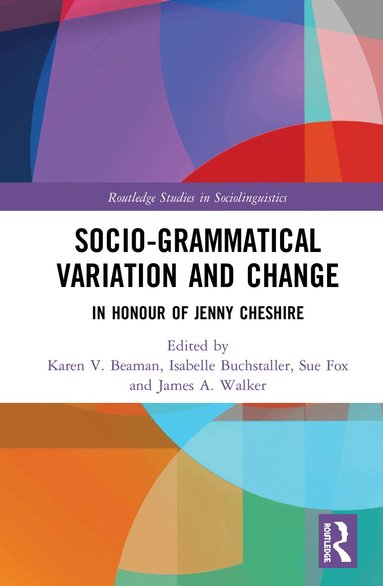
Advancing Socio-grammatical Variation and Change
Karen V. Beaman, Isabelle Buchstaller, Susan Fox, James A. Walker
Inbunden, 2020
3 379 kr
Ageing Identities and Women’s Everyday Talk in a Hair Salon
Rachel Heinrichsmeier
Inbunden, 2020
3 189 kr
Hoppa över listan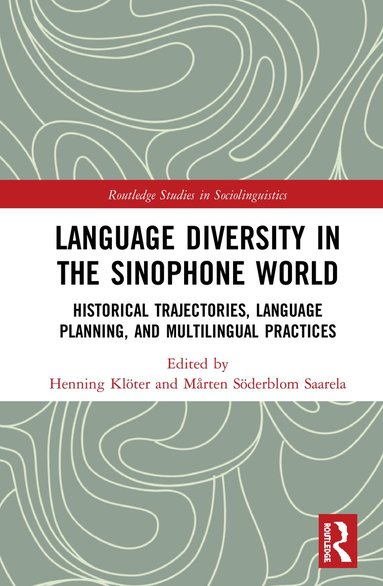






Du kanske också är intresserad av
Language Diversity in the Sinophone World
Henning Klöter, Mårten Söderblom Saarela
Inbunden, 2020
3 689 kr
Del 98
Del 162
Manchu Language at Court and in the Bureaucracy under the Qianlong Emperor
Mårten Söderblom Saarela
Inbunden, 2024
2 189 kr
- Nyhet
A History of the Romanisation Interdialectique Transcription System for Chinese, 1931-1952
Mårten Söderblom Saarela
Inbunden, 2026
999 kr
Del 143
Manchu Mirrors and the Knowledge of Plants and Animals in High Qing China
He Bian, Mårten Söderblom Saarela
Inbunden, 2025
739 kr
- Nyhet
Del 7
- Nyhet
Del 6
- Nyhet
Del 4
- Nyhet