
Del i serien Bloomsbury Studies in Modern German Philosophy
Kant’s Rational Religion and the Radical Enlightenment
From Spinoza to Contemporary Debates
Inbunden, Engelska, 2022
1 729 kr
Skickas . Fri frakt för medlemmar vid köp för minst 249 kr.
Finns i fler format (1)
Kant’s defence of religion and attempts to reconcile faith with reason position him as a moderate Enlightenment thinker in existing scholarship. Challenging this view and reconceptualising Kant’s religion along rationalist lines, Anna Tomaszewska sheds light on its affinities with the ideas of the radical Enlightenment, originating in the work of Baruch Spinoza and understood as a critique of divine revelation. Distinguishing the epistemological, ethical and political aspects of such a critique, Tomaszewska shows how Kant’s defence of religion consists of rationalizing its core tenets and establishing morality as the essence of religious faith. She aligns him with other early modern rationalists and German Spinozists and reveals the significance for contemporary political philosophy. Providing reasons for prioritizing freedom of thought, and hence religious criticism, over an unqualified freedom of belief, Kant's theology approximates the secularising tendency of the radical Enlightenment. Here is an understanding of how the shift towards a secular outlook in Western culture was shaped by attempts to rationalize rather than uproot Christianity.
Produktinformation
- Utgivningsdatum2022-08-25
- Mått156 x 234 x 20 mm
- Vikt510 g
- FormatInbunden
- SpråkEngelska
- SerieBloomsbury Studies in Modern German Philosophy
- Antal sidor232
- FörlagBloomsbury Publishing PLC
- ISBN9781350195844
Tillhör följande kategorier
Hoppa över listan

Mer från samma författare
Legacy of Kant in Contemporary Philosophy
Piotr Kozak, Anna Tomaszewska, Bartosz Dzialoszynski
Inbunden, 2026
1 579 kr
Practical and Theoretical Reason in Modern Philosophy
Paniel Reyes Cárdenas, Evelyn Vargas, Leonardo Ruiz Gómez, Roberto Casales García, Laura Benítez Grobet, Anna Tomaszewska, Stéfano Straulino, Jimena Portilla González, Daniel R. Herbert, Tom O'Shea, Paniel Reyes Cárdenas, Roberto Casales García, Daniel R. Herbert
Inbunden, 2024
1 679 kr
Practical and Theoretical Reason in Modern Philosophy
Paniel Reyes Cárdenas, Evelyn Vargas, Leonardo Ruiz Gómez, Roberto Casales García, Laura Benítez Grobet, Anna Tomaszewska, Stéfano Straulino, Jimena Portilla González, Daniel R. Herbert, Tom O'Shea, Paniel Reyes Cárdenas, Roberto Casales García, Daniel R. Herbert
Häftad, 2024
929 kr
Hoppa över listan
Mer från samma serie
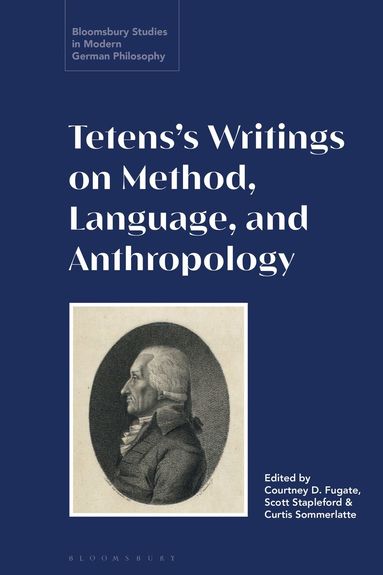
Tetens’s Writings on Method, Language, and Anthropology
Courtney D. Fugate, Curtis Sommerlatte, Scott Stapleford
Inbunden, 2022
2 779 kr
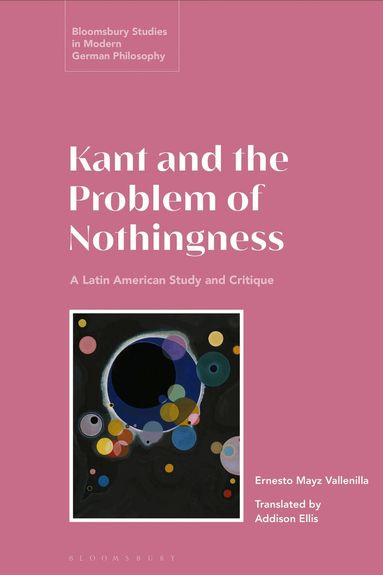
Kant and the Problem of Nothingness
Ernesto Mayz Vallenilla, Courtney D. Fugate
Inbunden, 2024
1 669 kr
Tetens’s Writings on Method, Language, and Anthropology
Courtney D. Fugate, Curtis Sommerlatte, Scott Stapleford
Häftad, 2024
779 kr
Hoppa över listan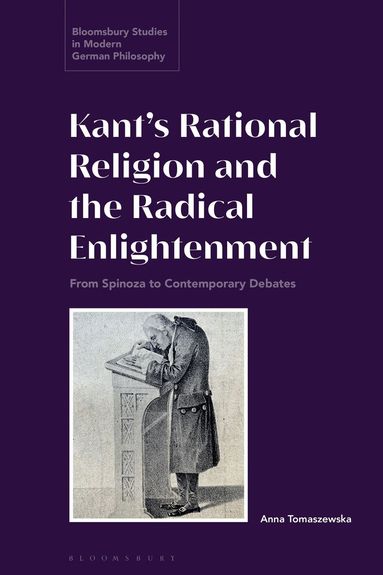


Du kanske också är intresserad av
Kant’s Rational Religion and the Radical Enlightenment
Anna Tomaszewska, Courtney D. Fugate
Häftad, 2024
559 kr
Practical and Theoretical Reason in Modern Philosophy
Paniel Reyes Cárdenas, Evelyn Vargas, Leonardo Ruiz Gómez, Roberto Casales García, Laura Benítez Grobet, Anna Tomaszewska, Stéfano Straulino, Jimena Portilla González, Daniel R. Herbert, Tom O'Shea, Paniel Reyes Cárdenas, Roberto Casales García, Daniel R. Herbert
Inbunden, 2024
1 679 kr
Legacy of Kant in Contemporary Philosophy
Piotr Kozak, Anna Tomaszewska, Bartosz Dzialoszynski
Inbunden, 2026
1 579 kr
Del 32
Women Philosophers of the 18th Century, 2 Volume Set
Anne Pollok, Laura-Anna Macor, Joanna Raisbeck
Inbunden, 2029
5 739 kr