
Del i serien Routledge Studies in Gender and Global Politics
International Women’s Rights Law and Gender Equality
Making the Law Work for Women
Inbunden, Engelska, 2021
3 019 kr
Beställningsvara. Skickas inom 10-15 vardagar. Fri frakt för medlemmar vid köp för minst 249 kr.
Finns i fler format (1)
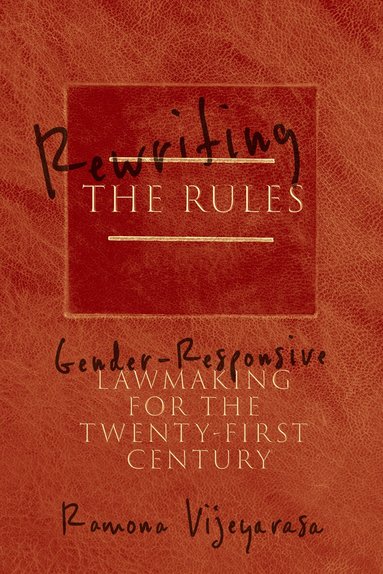
The law is a well-known tool in fighting gender inequality, but which laws actually advance women’s rights? This book unpacks the complex nuances behind gender-responsive domestic legislation, from several of the world’s leading experts on gender equality.Drawing on domestic examples and international law, it provides a primer of theory alongside tangible and practical solutions to fulfil the promise of the law to deliver equality between men and women. Part I outlines what progress has been made to date on eradicating gender inequality, and insights into the law’s potential as one lever in the global struggle for equality. Parts II and III go on to explore concrete areas of law, with case studies from multiple jurisdictions that examine how well domestic legislation is working for women. The authors bring their critical lens to areas of law often considered from a gender perspective – gender-based violence, women’s reproductive health, labour and gender equality quotas – while bringing much-needed analysis to issues often ignored in gender debates, such as taxation, environmental justice and good governance. Part IV seeks to move from a theoretical goal of greater accountability to a practical one. It explores both accountability for international women’s rights norms at the domestic level and the potential of feminist approaches to legislation to deliver laws that work for women.Written for students, academics, legislators and policymakers engaged in international women’s rights law, gender equality, government accountability and feminist legal theory, this book has tremendous transformative potential to drive forward legal change towards the eradication of gender inequality.
Produktinformation
- Utgivningsdatum2021-07-23
- Mått156 x 234 x undefined mm
- Vikt562 g
- FormatInbunden
- SpråkEngelska
- SerieRoutledge Studies in Gender and Global Politics
- Antal sidor260
- FörlagTaylor & Francis Ltd
- ISBN9780367549428
Tillhör följande kategorier
Hoppa över listan
Mer från samma författare
Gender and Politics Reimagined
Tanya Jakimow, Margaret Jolly, Sonia Palmieri, Ramona Vijeyarasa
Inbunden, 2025
679 kr
Hoppa över listan



Mer från samma serie
Women, Global Protest Movements, and Political Agency
Sarah Colvin, Katharina Karcher
Häftad, 2020
939 kr
Hoppa över listan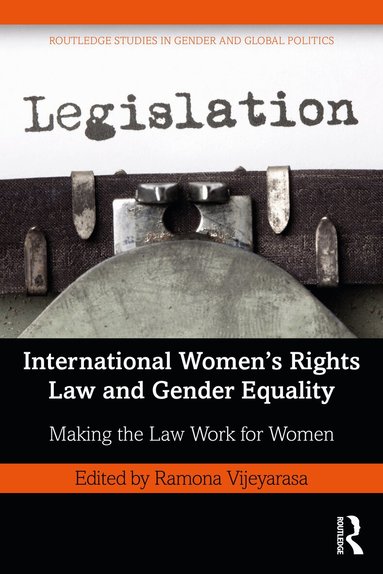
Du kanske också är intresserad av
Gender and Politics Reimagined
Tanya Jakimow, Margaret Jolly, Sonia Palmieri, Ramona Vijeyarasa
Inbunden, 2025
679 kr
Civil Society, Care Labour, and the Women, Peace and Security Agenda
Caitlin Hamilton, Anuradha Mundkur, Laura J. Shepherd
Inbunden, 2021
1 299 kr