
Del i serien Haney Foundation Series
Holy War, Martyrdom, and Terror
Christianity, Violence, and the West
Häftad, Engelska, 2017
569 kr
Beställningsvara. Skickas inom 5-8 vardagar. Fri frakt för medlemmar vid köp för minst 249 kr.
Holy War, Martyrdom, and Terror examines the ways that Christian theology has shaped centuries of conflict from the Jewish-Roman War of late antiquity through the First Crusade, the French Revolution, and up to the Iraq War. By isolating one factor among the many forces that converge in war-the essential tenets of Christian theology-Philippe Buc locates continuities in major episodes of violence perpetrated over the course of two millennia. Even in secularized or explicitly non-Christian societies, such as the Soviet Union of the Stalinist purges, social and political projects are tied to religious violence, and religious conceptual structures have influenced the ways violence is imagined, inhibited, perceived, and perpetrated.The patterns that emerge from this sweeping history upend commonplace assumptions about historical violence, while contextualizing and explaining some of its peculiarities. Buc addresses the culturally sanctioned logic that might lead a sane person to kill or die on principle, traces the circuitous reasoning that permits contradictory political actions, such as coercing freedom or pardoning war atrocities, and locates religious faith at the backbone of nationalist conflict. He reflects on the contemporary American ideology of war-one that wages violence in the name of abstract notions such as liberty and world peace and that he reveals to be deeply rooted in biblical notions. A work of extraordinary breadth, Holy War, Martyrdom, and Terror connects the ancient past to the troubled present, showing how religious ideals of sacrifice and purification made violence meaningful throughout history.
Produktinformation
- Utgivningsdatum2017-08-10
- Mått152 x 229 x 30 mm
- Vikt687 g
- FormatHäftad
- SpråkEngelska
- SerieHaney Foundation Series
- Antal sidor456
- FörlagUniversity of Pennsylvania Press
- ISBN9780812224016
Tillhör följande kategorier
Hoppa över listan





Mer från samma serie
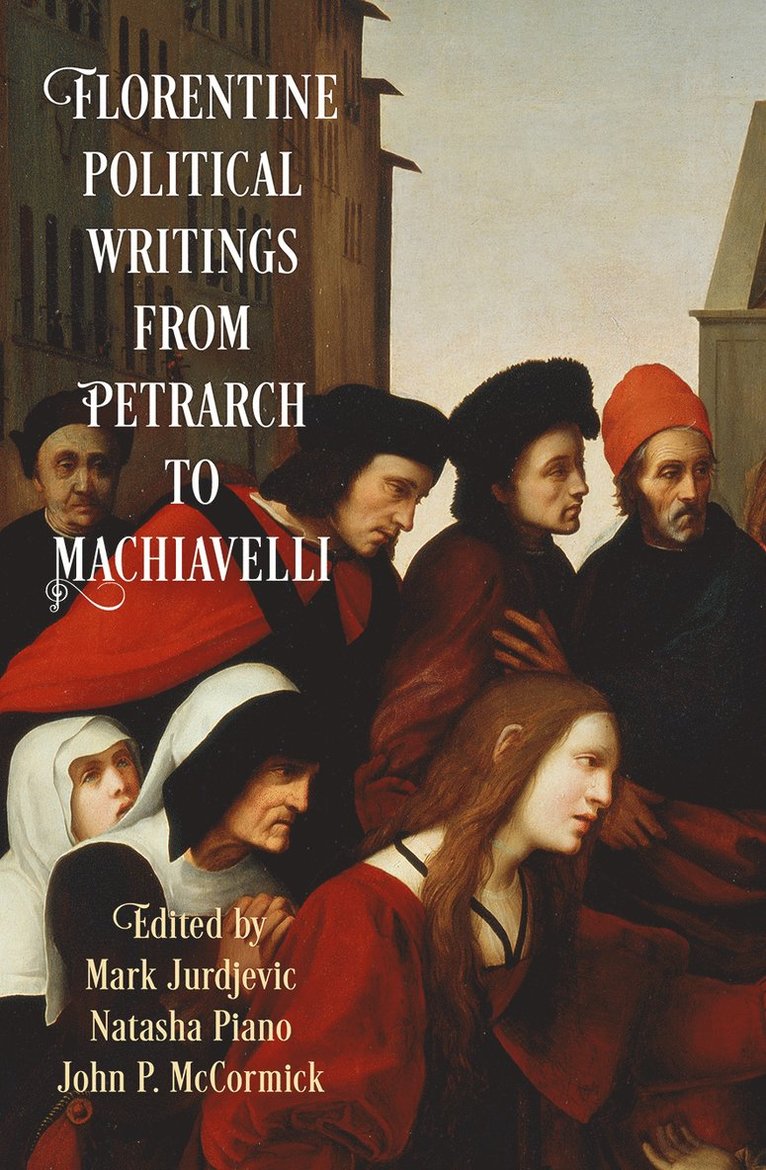
Florentine Political Writings from Petrarch to Machiavelli
Mark Jurdjevic, Natasha Piano, John P. McCormick
Häftad, 2019
569 kr
Hoppa över listan






Du kanske också är intresserad av
- Nyhet
Del 4
- Nyhet
Del 11
Del 7
Del 1
Del 3
- Nyhet
Del 6
Del 2
- Nyhet