
Governing the military
The armed forces under democracy in Chile
Häftad, Engelska, 2026
459 kr
Skickas . Fri frakt för medlemmar vid köp för minst 249 kr.
Finns i fler format (1)
Governing the military combines the study of governance, democratisation, and policymaking to explore how military politics have unfolded since the return to democracy in Chile. The book offers timely research to understand the rocky road to overcome the civil-military tension of the 1990s and the challenges presented by novel security demands in the twenty-first century, including the militarisation of urban crime and pandemics, and its consequences on human rights. The book will also introduce the reader to failed policies, lack of attention to governance, and decaying democratic practices.The volume examines eight themes considered fundamental to understand the modern governance of the armed forces: the state of civil-military relations, political transition and military subordination, roles and missions, military effectiveness, fiscal spending, inter-agency challenges, international engagements, and transparency and corruption.
Produktinformation
- Utgivningsdatum2026-06-23
- Mått156 x 234 x 12 mm
- Vikt327 g
- FormatHäftad
- SpråkEngelska
- Antal sidor232
- FörlagManchester University Press
- ISBN9781526197870
Tillhör följande kategorier
Hoppa över listan
Mer från samma författare
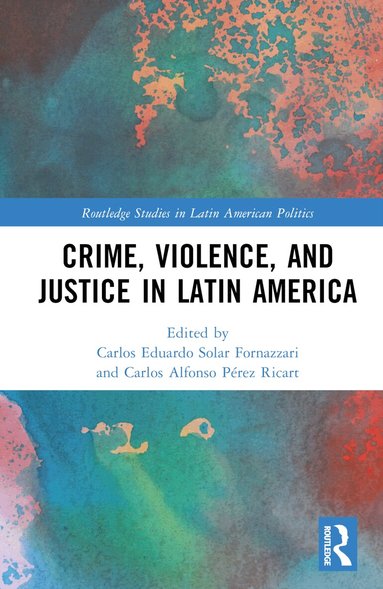
Crime, Violence, and Justice in Latin America
Carlos Solar, Carlos A. Pérez Ricart
Inbunden, 2022
2 559 kr
Hoppa över listan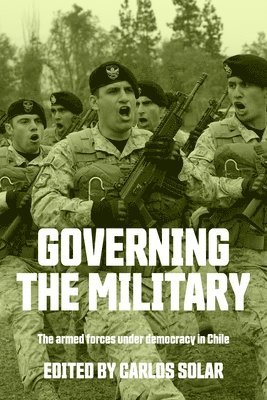


Du kanske också är intresserad av
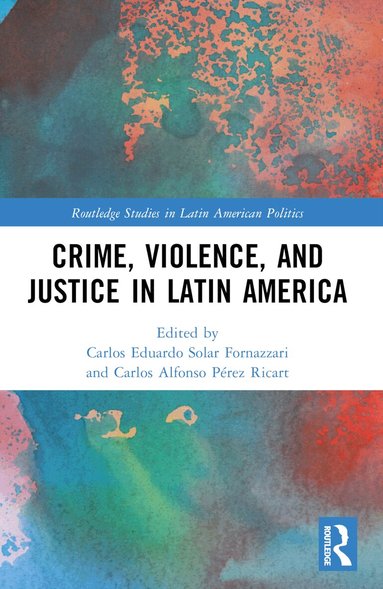
Crime, Violence, and Justice in Latin America
Carlos Solar, Carlos A. Pérez Ricart
Inbunden, 2022
2 559 kr
- Nyhet
Del 3
- Nyhet
Del 6
- Nyhet
Del 11