
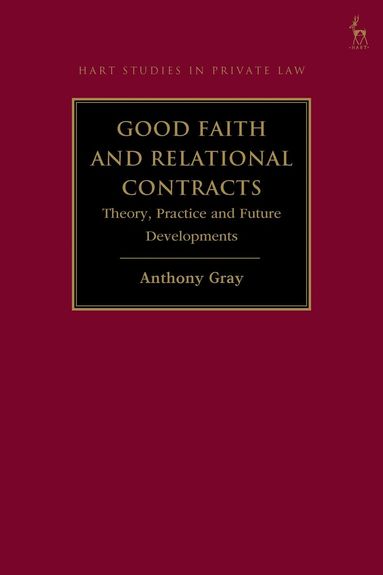
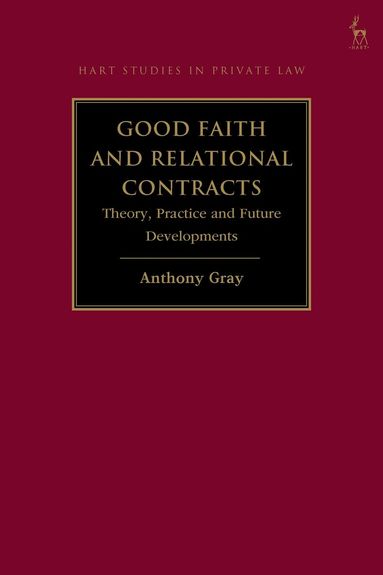
Good Faith and Relational Contracts, Volume 2
Application to Specific Principles
Inbunden, Engelska, 2025
1 539 kr
Beställningsvara. Skickas inom 10-15 vardagar. Fri frakt för medlemmar vid köp för minst 249 kr.
This volume explores in detail the use of the doctrine of good faith in the common law when interpreting contracts and resolving disputes.Building on the findings of Good Faith and Relational Contracts (Hart, 2024) the book discusses the implications of relational contract theory and good faith for issues such as liquidated damages clauses, discretion to terminate a contract, contract forfeiture, employment contracts and contractual remedies. The author discusses the potential for good faith to unite a number of currently disparate contract law and equitable principles into a coherent framework, providing an opportunity to question and jettison some archaic aspects of existing doctrine that are no longer defensible.Ambitious and thoughtful, this is a significant statement on the role of good faith in private law.
Produktinformation
- Utgivningsdatum2025-07-24
- Mått158 x 238 x 20 mm
- Vikt540 g
- FormatInbunden
- SpråkEngelska
- Antal sidor264
- FörlagBloomsbury Publishing PLC
- ISBN9781509980994
Tillhör följande kategorier
Hoppa över listan

Mer från samma författare
Criminal Due Process and Chapter III of the Australian Constitution
Anthony Gray
Inbunden, 2016
1 029 kr
Hoppa över listan
Du kanske också är intresserad av
Criminal Due Process and Chapter III of the Australian Constitution
Anthony Gray
Inbunden, 2016
1 029 kr