
Family, Gender and Kinship in Australia
The Social and Cultural Logic of Practice and Subjectivity
Inbunden, Engelska, 2006
3 379 kr
Beställningsvara. Skickas inom 10-15 vardagar. Fri frakt för medlemmar vid köp för minst 249 kr.
Finns i fler format (1)
This ethnographically-based exploration draws on sociological, historical and demographic data to provide a comprehensive analysis of family, gender and kinship in Australia, which informs modern kinship and gender at large. Allon Uhlmann charts the cultural basis that underlies kinship practices and argues that the Australian family is characterized by deep cultural and social continuities rather than the common view that the family is undergoing substantial change. He further shows how the modern family both shapes, and is shaped by, broad social and economic processes. This analysis provides greater insight into this critical field of practice as well as showcasing a novel analytical approach to practice that is rooted in the sociology of practice and in the anthropology of cognition. The book also suggests changes to the way in which social scientists currently treat family and kinship.
Produktinformation
- Utgivningsdatum2006-08-24
- Mått156 x 234 x 16 mm
- Vikt453 g
- FormatInbunden
- SpråkEngelska
- SerieAnthropology and Cultural History in Asia and the Indo-Pacific
- Antal sidor212
- FörlagTaylor & Francis Ltd
- ISBN9780754646457
Tillhör följande kategorier
Hoppa över listan


Mer från samma serie
Making of Global and Local Modernities in Melanesia
Holly Wardlow, Joel Robbins
Inbunden, 2005
3 379 kr
Hoppa över listan



Du kanske också är intresserad av
Making of Global and Local Modernities in Melanesia
Holly Wardlow, Joel Robbins
Inbunden, 2005
3 379 kr
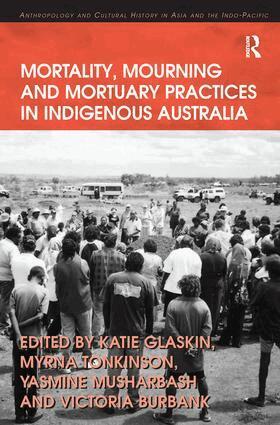
Mortality, Mourning and Mortuary Practices in Indigenous Australia
Myrna Tonkinson, Victoria Burbank, Katie Glaskin
Häftad, 2017
809 kr
- Nyhet
Del 6