
Extruder Principles and Operation
Inbunden, Engelska, 1995
3 049 kr
Beställningsvara. Skickas inom 10-15 vardagar. Fri frakt för medlemmar vid köp för minst 249 kr.
Finns i fler format (1)
This text is concerned with melt processing of thermoplastics and rubbers by means of the screw extruder. It is intended to bridge the gap between the theoretical performance of equipment primarily concerned with numerical design and the practical experience of the operator. Theoretical discussions generally give scant attention to practical aspects such as the conflict between productivity and product quality. The book opens with a description of the processes based on melt extrusions, with an emphasis on their differing requirements from the extruder, followed by a summary of flow and thermal properties relevant to extrusion. The principles of output and energy balance are then developed in a simplified form which is sufficiently accurate for most operational purposes, whilst retaining algebraic equations from which the effects of operational changes can be seen. The overall performance of the single-screw extruder is studied in terms of the separate effects of each controlled variable, the polymer properties and the screw design, followed by a tabulation of the various operational strategies to obtain a desired effect.The principles of operating twin-screw extruders are also examined in relation to screw geometry, and considerations of stability and product quality are followed by suggested control limits for specific processes. Practical information is given on start-up trials, scale-up, product changing, dismantling and cleaning. This book should be of interest to production/development technologists and engineers, quality control managers, plant design engineers, research technologists in plastics and rubber processing companies, and lecturers, researchers and postgraduates in materials processing in universities and technical colleges.
Produktinformation
- Utgivningsdatum1995-10-31
- Mått155 x 235 x 33 mm
- Vikt926 g
- FormatInbunden
- SpråkEngelska
- Antal sidor494
- Upplaga2
- FörlagChapman and Hall
- ISBN9780412635908
Tillhör följande kategorier
Hoppa över listan






Du kanske också är intresserad av
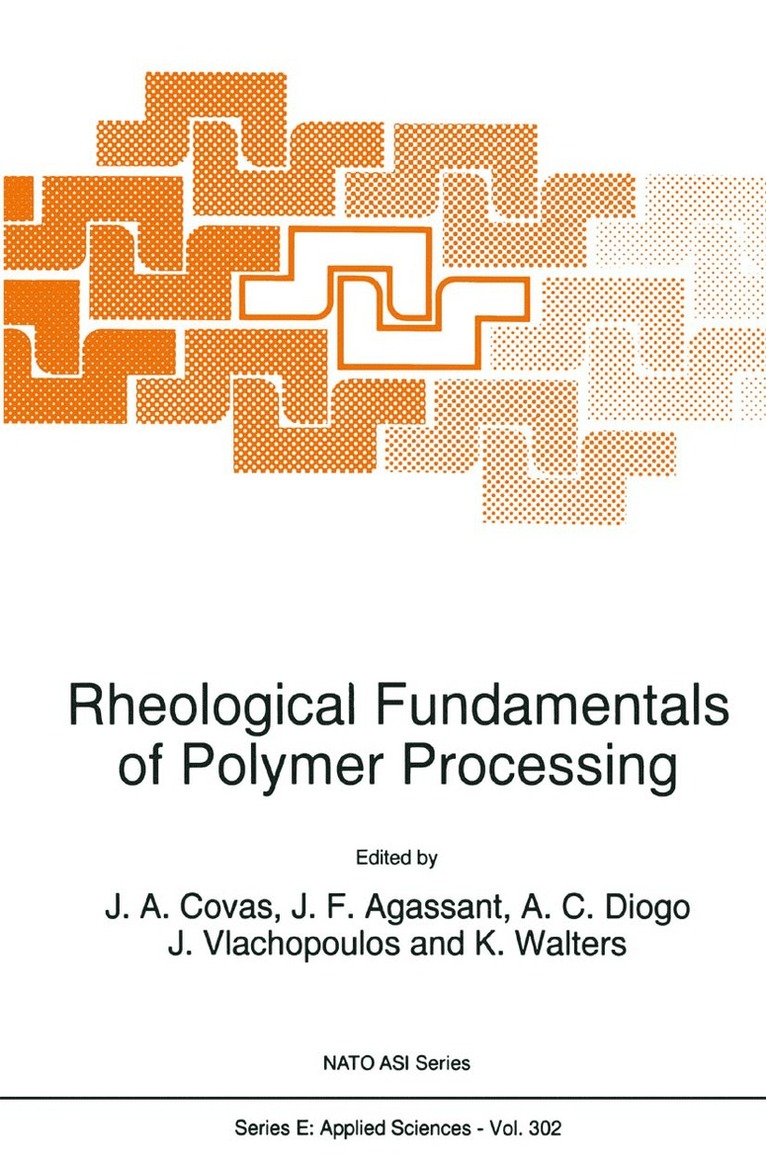
Rheological Fundamentals of Polymer Processing
J.A. Covas, J.F. Agassant, A.C. Diogo, J. Vlachopoulos, K. Walters
Inbunden
6 229 kr
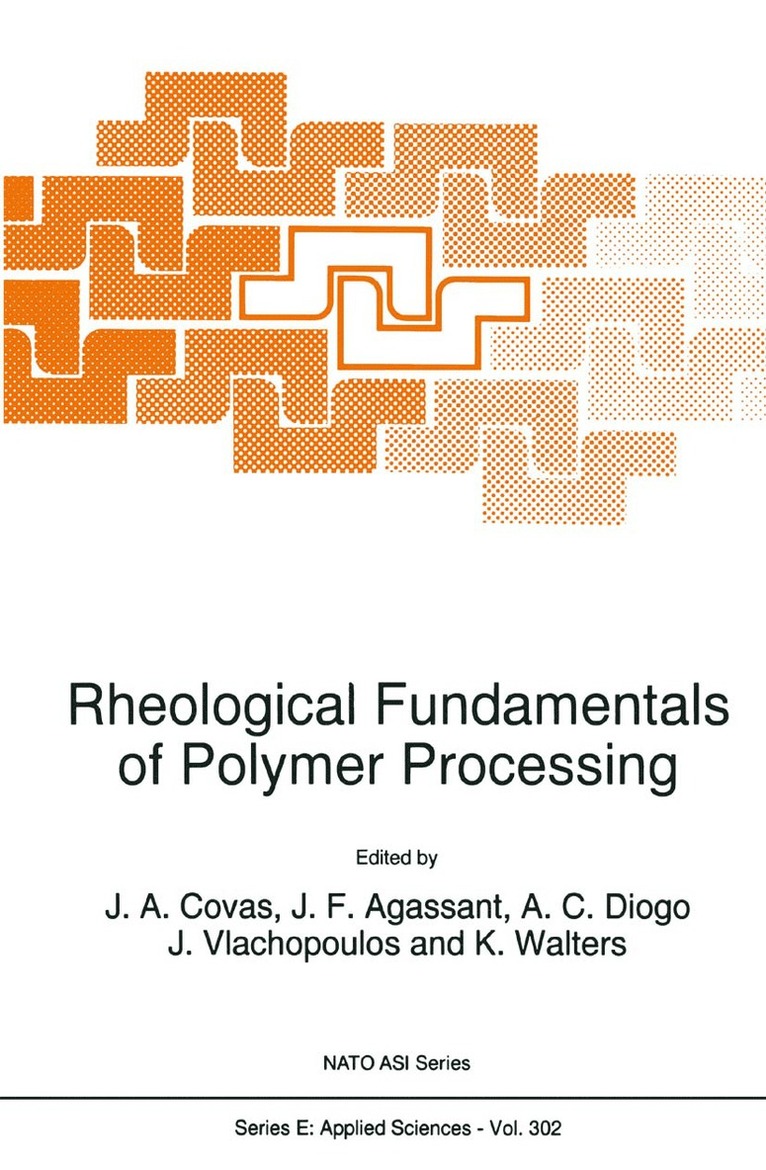
Rheological Fundamentals of Polymer Processing
J.A. Covas, J.F. Agassant, A.C. Diogo, J. Vlachopoulos, K. Walters
Häftad
6 229 kr
- Nyhet
Del 1

- Signerad
Del 1
- Nyhet
- Nyhet
- Nyhet
Del 6
Del 1