
Del i serien Contemporary African Politics
Ethnicity, Democracy and Citizenship in Africa
Political Marginalisation of Kenya's Nubians
Häftad, Engelska, 2017
1 059 kr
Beställningsvara. Skickas inom 10-15 vardagar. Fri frakt för medlemmar vid köp för minst 249 kr.
Finns i fler format (1)
As an ethnic minority the Nubians of Kenya are struggling for equal citizenship by asserting themselves as indigenous and autochthonous to Kibera, one of Nairobi’s most notorious slums. Having settled there after being brought by the British colonial authorities from Sudan as soldiers, this appears a peculiar claim to make. It is a claim that illuminates the hierarchical nature of Kenya’s ethnicised citizenship regime and the multi-faceted nature of citizenship itself. This book explores two kinds of citizenship deficits; those experienced by the Nubians in Kenya and, more centrally, those which represent the limits of citizenship theories. The author argues for an understanding of citizenship as made up of multiple component parts: status, rights and membership, which are often disaggregated through time, across geographic spaces and amongst different people. This departure from a unitary language of citizenship allows a novel analysis of the central role of ethnicity in the recognition of political membership and distribution of political goods in Kenya. Such an analysis generates important insights into the risks and possibilities of a relationship between ethnicity and democracy that is of broad, global relevance.
Produktinformation
- Utgivningsdatum2017-07-13
- Mått156 x 234 x 22 mm
- Vikt370 g
- FormatHäftad
- SpråkEngelska
- SerieContemporary African Politics
- Antal sidor202
- FörlagTaylor & Francis Ltd
- ISBN9781138092860
Tillhör följande kategorier
Hoppa över listan
Mer från samma serie
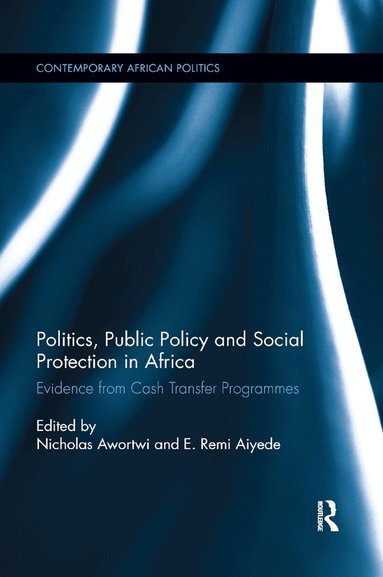
Politics, Public Policy and Social Protection in Africa
Nicholas Awortwi, Emmanuel Aiyede
Häftad, 2019
899 kr