
Empowering Subaltern Voices Through Education
The Chakma Diaspora in Australia
Häftad, Engelska, 2024
769 kr
Beställningsvara. Skickas inom 10-15 vardagar. Fri frakt för medlemmar vid köp för minst 249 kr.
Finns i fler format (1)
Based on a four‐year-long empirical study, this book employs contemporary theories from the Global South to investigate the role of education in the experience of migration and settlement of the Chakma people of Bangladesh in the city of Melbourne, Australia.Exploring the migration opportunities taken up by the Chakma and their efforts to retain, promote, and enrich their ethnic identity in Australia, the book critically examines the importance of education for ethnic, linguistic, and religious minorities and the extent to which education helped the diasporic community in achieving a ‘better’ and ‘more secure’ life. It also positions education as a tool to help revive, maintain, and enrich the importance of culture and tradition, both in the home country and in the place of settlement and offers a theorisation of how the self-directed pursuit of education can create opportunities for minority peoples, to advocate human rights, Indigenous recognition and criticise a state’s failure to provide safety and security.This book will be of interest to academics and postgraduate students researching in the fields of education, diaspora studies, Indigenous studies, and migration studies.
Produktinformation
- Utgivningsdatum2024-10-09
- Mått156 x 234 x 11 mm
- Vikt453 g
- FormatHäftad
- SpråkEngelska
- SerieRoutledge Studies in Asian Diasporas, Migrations and Mobilities
- Antal sidor176
- FörlagTaylor & Francis Ltd
- ISBN9781032354521
Tillhör följande kategorier
Hoppa över listan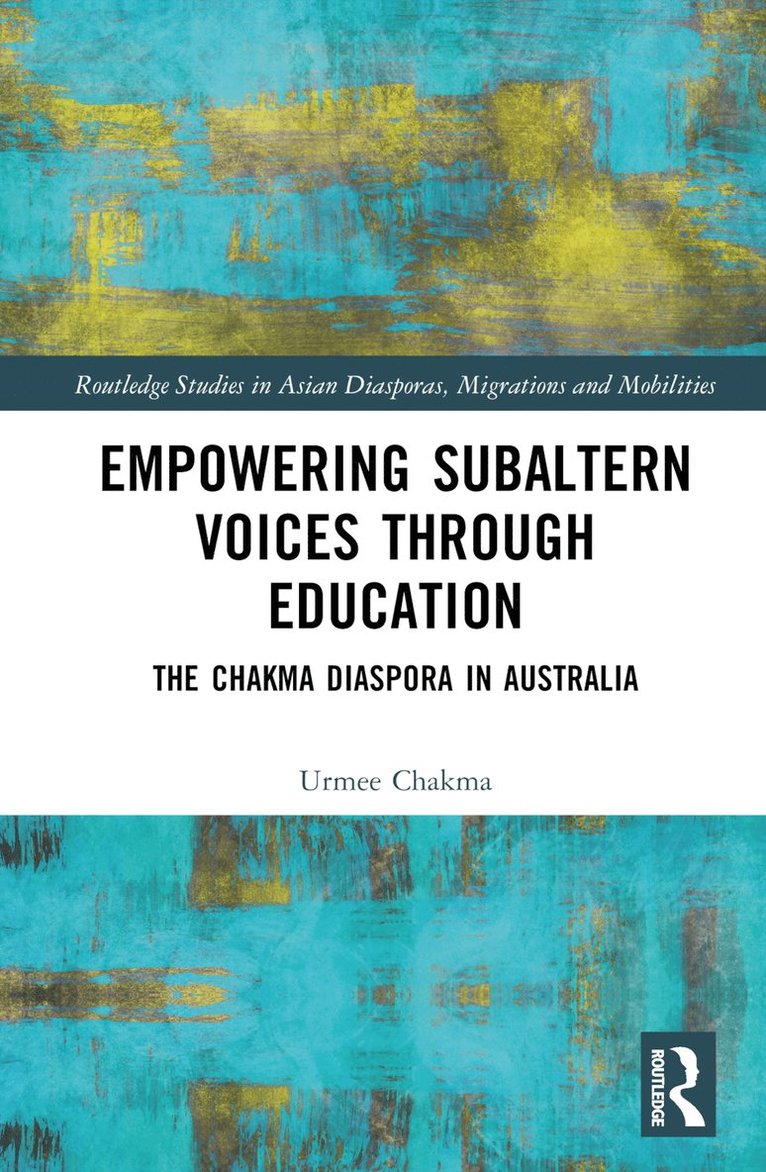
Du kanske också är intresserad av
Chinese Transnational Migration in the Age of Global Modernity
Liangni Sally Liu
Inbunden, 2018
3 229 kr