
Elgar Companion to Herbert Simon
Häftad, Engelska, 2025
849 kr
Beställningsvara. Skickas inom 5-8 vardagar. Fri frakt för medlemmar vid köp för minst 249 kr.
Finns i fler format (1)
Honoring the life and work of Herbert Simon, this illuminating Companion provides an in-depth survey of one of the most prolific social scientists of our age. Mirroring the breadth of Simon’s studies, chapters analyze his contributions to artificial intelligence, economics, entrepreneurship, management, psychology and other fields.The comprehensive book outlines how Herbert Simon came to be the only person to receive both the Nobel Memorial Prize in Economics and the Turing Award in Computer Science. Bounded rationality, satisficing and heuristic search are just a few of his seminal ideas that pioneered behavioral economics and artificial intelligence. Elucidating how Simon freed the study of human behavior from the dictates of subjective expected utility theory and Bayesian theory, chapters discuss how he instead promoted the development of empirically based theories on the behavior of individuals, organizations and machines. Interdisciplinary contributors thoughtfully explore his groundbreaking ideas, examining Simon’s influence on their own work and even their personal outlook on life. This Companion enables the ideas of Herbert Simon to live on. It is a foundational resource for scholars of disciplines such as cognitive science, entrepreneurship, organizational behavior, behavioral and experimental economics, econometrics, economic psychology, industrial organization, and public administration and management.
Produktinformation
- Utgivningsdatum2025-04-11
- Mått156 x 234 x undefined mm
- FormatHäftad
- SpråkEngelska
- FörlagEdward Elgar Publishing Ltd
- ISBN9781035365029
Tillhör följande kategorier
Hoppa över listan






Mer från samma författare
Simple Heuristics That Make Us Smart
Gerd Gigerenzer, Peter M. Todd, ABC Research Group
Häftad, 2000
1 319 kr
Hoppa över listan



Du kanske också är intresserad av
Elgar Companion to Herbert Simon
Gerd Gigerenzer, Shabnam Mousavi, Riccardo Viale
Inbunden, 2024
3 989 kr
Financial Education and Risk Literacy
Riccardo Viale, Umberto Filotto, Barbara Alemanni, Shabnam Mousavi
Inbunden, 2021
2 699 kr
Artificial Intelligence and Financial Behaviour
Riccardo Viale, Shabnam Mousavi, Umberto Filotto, Barbara Alemanni
Inbunden, 2023
2 419 kr
Behavioural Finance Revolution
Riccardo Viale, Shabnam Mousavi, Barbara Alemanni, Umberto Filotto
Inbunden, 2018
2 579 kr
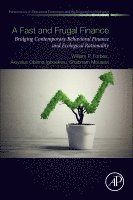
A Fast and Frugal Finance
William P. Forbes, Aloysius Obinna Igboekwu, Shabnam Mousavi
Häftad, 2019
1 329 kr
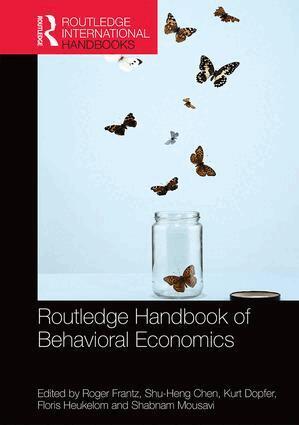
Routledge Handbook of Behavioral Economics
Roger Frantz, Shu-Heng Chen, Kurt Dopfer, Floris Heukelom, Shabnam Mousavi
Inbunden, 2016
5 689 kr
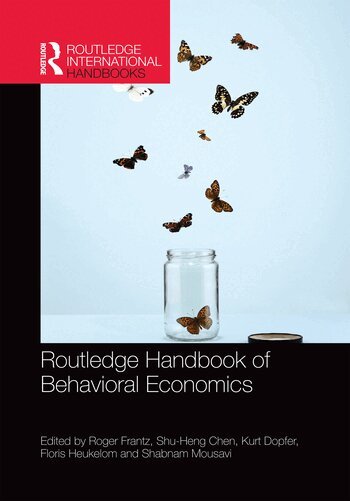
Routledge Handbook of Behavioral Economics
Roger Frantz, Shu-Heng Chen, Kurt Dopfer, Floris Heukelom, Shabnam Mousavi
Häftad, 2019
1 059 kr