
Del i serien Routledge Research in Early Modern History
Deposing Monarchs
Domestic Conflict and State Formation, 1500-1700
Häftad, Engelska, 2023
569 kr
Beställningsvara. Skickas inom 10-15 vardagar. Fri frakt för medlemmar vid köp för minst 249 kr.
Finns i fler format (1)
Deposing Monarchs analyses depositions in Northern Europe between 1500 and 1700 as a type of frequent political conflict which allows to present new ideas on early modern state formation, monarchy, and the conventions of royal rulership. The book revises earlier conceptualizations of depositions as isolated, unique events that emerged in the context of national historiographies. An examination of the official legitimations of depositions reveals that in times of crisis, concepts of tradition, rule of law, and political consensus are much more influential than the divine right of kings. Tracing the similarities and differences of depositions in Northern Europe transnationally and diachronically, the book shows monarchical succession as more non-linear than previously presumed. It offers a transferable model of the different elements needed in depositions, such as opposition to the monarch by multiple groups in a realm, the need for a convincing rival candidate, and a legitimation based on political traditions or religious ideas. Furthermore, the book bolsters our understanding of authority and rule as a constant process of negotiation, adding to recent research on political culture, and on the cultural history of politics.
Produktinformation
- Utgivningsdatum2023-09-25
- Mått152 x 229 x 17 mm
- Vikt453 g
- FormatHäftad
- SpråkEngelska
- SerieRoutledge Research in Early Modern History
- Antal sidor230
- FörlagTaylor & Francis Ltd
- ISBN9780367359812
Tillhör följande kategorier
Hoppa över listan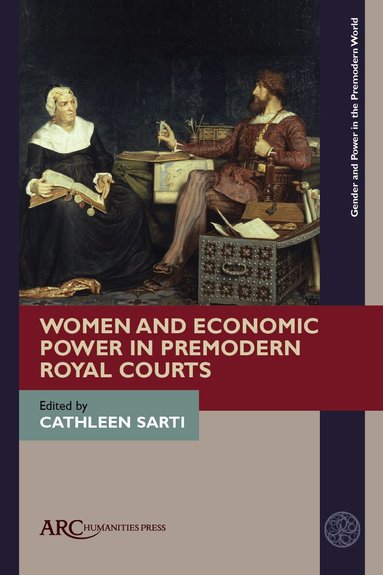


Mer från samma författare
Transnational Histories of the 'Royal Nation'
Milinda Banerjee, Charlotte Backerra, Cathleen Sarti
Inbunden, 2017
2 079 kr
Transnational Histories of the 'Royal Nation'
Milinda Banerjee, Charlotte Backerra, Cathleen Sarti
Häftad, 2018
2 079 kr
Hoppa över listan








Mer från samma serie
Swedish and Finnish Historiographies of the Swedish Realm, c. 1520–1809
Miia Kuha, Petri Karonen
Häftad, 2025
629 kr
Criminal Justice During the Long Eighteenth Century
David Lemmings, Allyson N. May
Inbunden, 2018
3 379 kr
Social and Cultural Relations in the Grand Duchy of Lithuania
Richard Butterwick, Wioletta Pawlikowska
Inbunden, 2019
3 379 kr
Hoppa över listan






Du kanske också är intresserad av
Transnational Histories of the 'Royal Nation'
Milinda Banerjee, Charlotte Backerra, Cathleen Sarti
Häftad, 2018
2 079 kr
Transnational Histories of the 'Royal Nation'
Milinda Banerjee, Charlotte Backerra, Cathleen Sarti
Inbunden, 2017
2 079 kr
- Nyhet
Del 7
- Nyhet
- Nyhet
Del 4
- Nyhet
Del 6
- Nyhet
Del 3
- Nyhet
Del 11