
Cultivating Coffee
The Farmers of Carazo, Nicaragua, 1880–1930
Häftad, Engelska, 2003
439 kr
Beställningsvara. Skickas inom 11-20 vardagar. Fri frakt för medlemmar vid köp för minst 249 kr.
Many scholars of Latin America have argued that the introduction of coffee forced most people to become landless proletarians toiling on large plantations. Cultivating Coffee tells a different story: small and medium-sized growers in Nicaragua were a vital part of the economy, constituting the majority of the farmers and holding most of the land.Alongside these small commercial farmers was a group of subsistence farmers, created by the state's commitment to supplying municipal lands to communities. These subsistence growers became the workforce for their coffee-growing neighbors, providing harvest labor three months a year. Mostly illiterate, perhaps largely indigenous, they nonetheless learned the functioning of the new political and economic systems and used them to acquire individual plots of land.Julie Charlip's Cultivating Coffee joins the growing scholarship on rural Latin America that demonstrates the complexity of the processes of transition to expanded export agriculture in the nineteenth and twentieth centuries, emphasizing the agency of actors at all levels of society. It also sheds new light on the controversy surrounding landholding in Nicaragua during the Sandinista revolution.
Produktinformation
- Utgivningsdatum2003-02-15
- Mått140 x 216 x undefined mm
- FormatHäftad
- SpråkEngelska
- SerieResearch in International Studies, Latin America Series
- Antal sidor312
- FörlagOhio University Press
- ISBN9780896802278
Tillhör följande kategorier
Hoppa över listan



Mer från samma serie
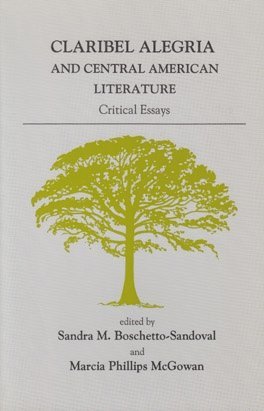
Claribel Alegría and Central American Literature
Sandra M. Boschetto-Sandoval, Marcia Phillips McGowan
Häftad, 1994
469 kr
Theories of Dependent Foreign Policy and the Case of Ecuador in the 1980s
Jeanne A. K. Hey
Häftad, 1995
459 kr
Argentina, the United States, and the Anti-Communist Crusade in Central America, 1977–1984
Ariel Armony
Häftad, 1997
529 kr
Hoppa över listan



Du kanske också är intresserad av
Claribel Alegría and Central American Literature
Sandra M. Boschetto-Sandoval, Marcia Phillips McGowan
Häftad, 1994
469 kr