
Del i serien Studies in Classics
Consensus, Concordia and the Formation of Roman Imperial Ideology
Inbunden, Engelska, 2008
3 289 kr
Beställningsvara. Skickas inom 10-15 vardagar. Fri frakt för medlemmar vid köp för minst 249 kr.
Finns i fler format (1)
This book concerns the relationship between ideas and power in the genesis of the Roman empire. The self-justification of the first emperor through the consensus of the citizen body constrained him to adhere to ‘legitimate’ and ‘traditional’ forms of self-presentation. Lobur explores how these notions become explicated and reconfigured by the upper and mostly non-political classes of Italy and Rome. The chronic turmoil experienced in the late republic shaped the values and program of the imperial system; it molded the comprehensive and authoritative accounts of Roman tradition and history in a way that allowed the system to appear both traditional and historical. This book also examines how shifts in rhetorical and historiographical practices facilitated the spreading and assimilation of shared ideas that allowed the empire to cohere.
Produktinformation
- Utgivningsdatum2008-05-28
- Mått152 x 229 x 23 mm
- Vikt640 g
- FormatInbunden
- SpråkEngelska
- SerieStudies in Classics
- Antal sidor336
- FörlagTaylor & Francis Ltd
- ISBN9780415977883
Tillhör följande kategorier
Hoppa över listan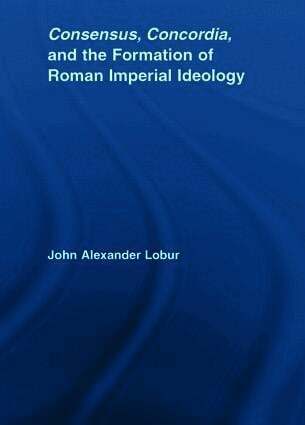
Du kanske också är intresserad av
Consensus, Concordia and the Formation of Roman Imperial Ideology
John Alexander Lobur
Häftad, 2012
1 079 kr