
Del i serien Studies in Major Literary Authors
Conrad's Narratives of Difference
Not Exactly Tales for Boys
Häftad, Engelska, 2014
1 369 kr
Beställningsvara. Skickas inom 10-15 vardagar. Fri frakt för medlemmar vid köp för minst 249 kr.
Finns i fler format (1)
In Joseph Conrad’s tales, representations of women and of "feminine" generic forms like the romance are often present in fugitive ways. Conrad’s use of allegorical feminine imagery, fleet or deferred introductions of female characters, and hybrid generic structures that combine features of "masculine" tales of adventure and intrigue and "feminine" dramas of love or domesticity are among the subjects of this literary study. Many of Conrad’s critics have argued that Conrad’s fictions are aesthetically flawed by the inclusion of women and love plots; thus Thomas Moser has questioned why Conrad did not "cut them out altogether." Yet a thematics of gender suffuses Conrad’s narrative strategies. Even in tales that contain no significant female characters or obvious love plots, Conrad introduces elusive feminine presences, in relationships between men, as well as in men’s relationships to their ship, the sea, a shore breeze, or even in the gendered embrace of death. This book investigates an identifiably feminine "point of view" which is present in fugitive ways throughout Conrad’s canon. Conrad’s narrative strategies are articulated through a language of sexual difference that provides the vocabulary and grammar for tales examining European class, racial, and gender paradigms to provide acute and, at times, equivocal investigations of femininity and difference.
Produktinformation
- Utgivningsdatum2014-06-09
- Mått152 x 229 x undefined mm
- Vikt249 g
- FormatHäftad
- SpråkEngelska
- SerieStudies in Major Literary Authors
- Antal sidor175
- FörlagTaylor & Francis Ltd
- ISBN9780415762625
Tillhör följande kategorier
Hoppa över listan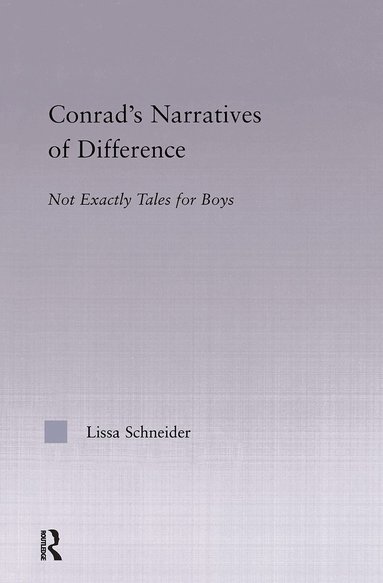





Du kanske också är intresserad av
- Nyhet
Del 7
- Nyhet
Del 11
- Nyhet
Del 4
- Nyhet
Del 6
- Nyhet
Del 3
- Nyhet
- Nyhet