
Del i serien Routledge Communication Series
Communication and Democracy
Exploring the intellectual Frontiers in Agenda-setting theory
Häftad, Engelska, 1997
899 kr
Beställningsvara. Skickas inom 10-15 vardagar. Fri frakt för medlemmar vid köp för minst 249 kr.
Finns i fler format (3)
Exciting intellectual frontiers are open for exploration as agenda-setting theory moves beyond its 25th anniversary. This volume offers an intriguing set of maps to guide this exploration over the near future. It is intended for those who are already reasonably well read in the research literature that has accumulated since the publication of McCombs and Shaw's original 1972 Public Opinion Quarterly article. This piece of literature documented the influence of the news media agenda on the public agenda in a wide variety of geographic and social settings, elaborated the characteristics of audiences and media that enhance or diminish those agenda-setting effects, and cataloged those exogenous factors explaining who sets the media's agenda. In the current volume, a provocative set of maps for explicating new levels of agenda-setting theory have been sketched by a new generation of young scholars, launching an enterprise that has significant implications for theoretical research and for the day-to-day role of mass communication in democratic societies. At the first level of agenda setting are agendas of objects--the traditional domain of agenda setting research--represented by an accumulation of hundreds of studies over the past quarter century. At the second level of agenda setting are agendas of attributes--one of the new theoretical frontiers whose aspects are discussed in detail in the opening chapters. Other chapters offer maps of yet other theoretical frontiers, including political advertising agendas and their impact on behavior, the framing of various agendas in the mass media and the differential impact of print and TV, the theoretical role of individual differences in the agenda-setting influence of the news media on the public agenda, methodological advances for determining cause and effect roles in agenda-setting, and the application of agenda-setting theory to historical analysis. This volume is an invitation to others to become active members of the invisible college of agenda-setting scholarship. As such, the goals of this book are threefold: * to introduce a broad set of ideas about agenda-setting; * to enrich the exploration of these ideas by enhancing scholarly dialogue among the members of this invisible college; and * to enhance the discussion of agenda-setting research in seminars and research groups around the world. Agenda-setting has remained a vital and productive area of communication research over a quarter century because it has continued to introduce new research questions into the marketplace of ideas and to integrate this work with other theoretical concepts and perspectives about journalism and mass communication. Understanding the dynamics of agenda- setting is central to understanding the dynamics of contemporary democracy. This book's set of theoretical essays, grounded in the accumulated literature of agenda- setting theory and in the creative insights of young scholars, will help lead the way toward that understanding.
Produktinformation
- Utgivningsdatum1997-06-01
- Mått152 x 229 x 16 mm
- Vikt530 g
- FormatHäftad
- SpråkEngelska
- SerieRoutledge Communication Series
- Antal sidor288
- FörlagTaylor & Francis Inc
- ISBN9780805825558
Tillhör följande kategorier
Hoppa över listan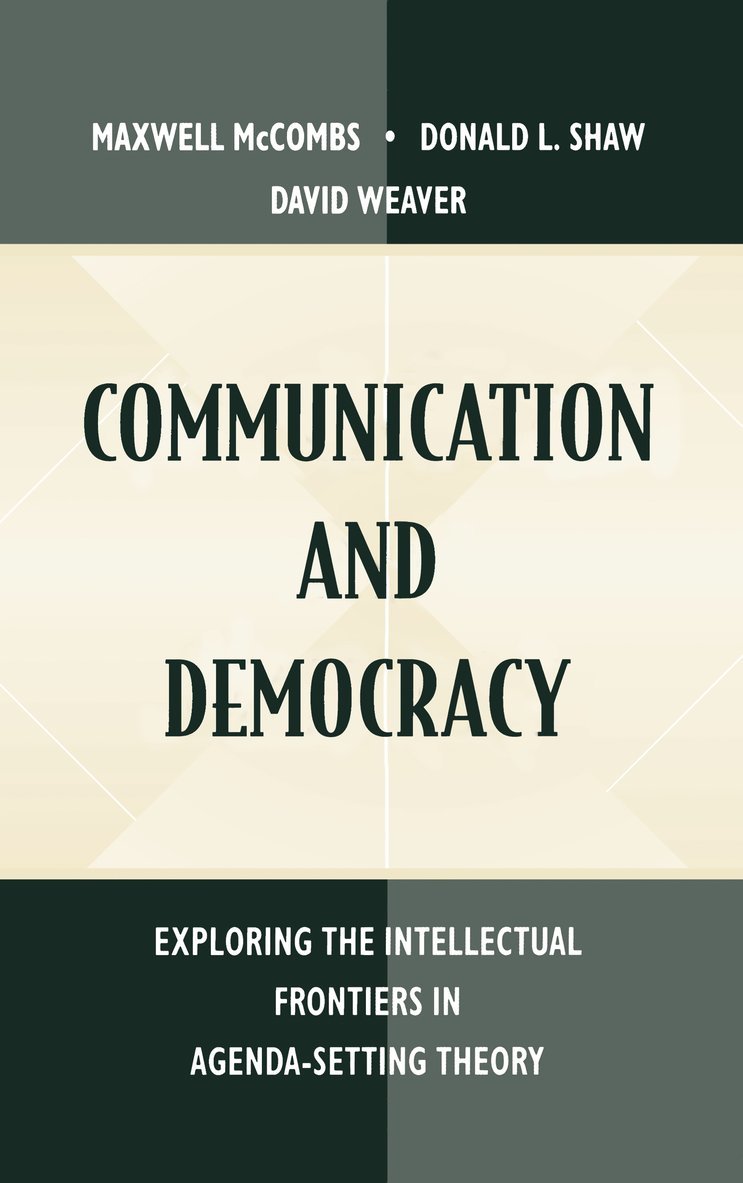




Du kanske också är intresserad av
Communication and Democracy
Maxwell E. McCombs, Donald L. Shaw, David H. Weaver
Inbunden, 1997
3 199 kr
Del 3
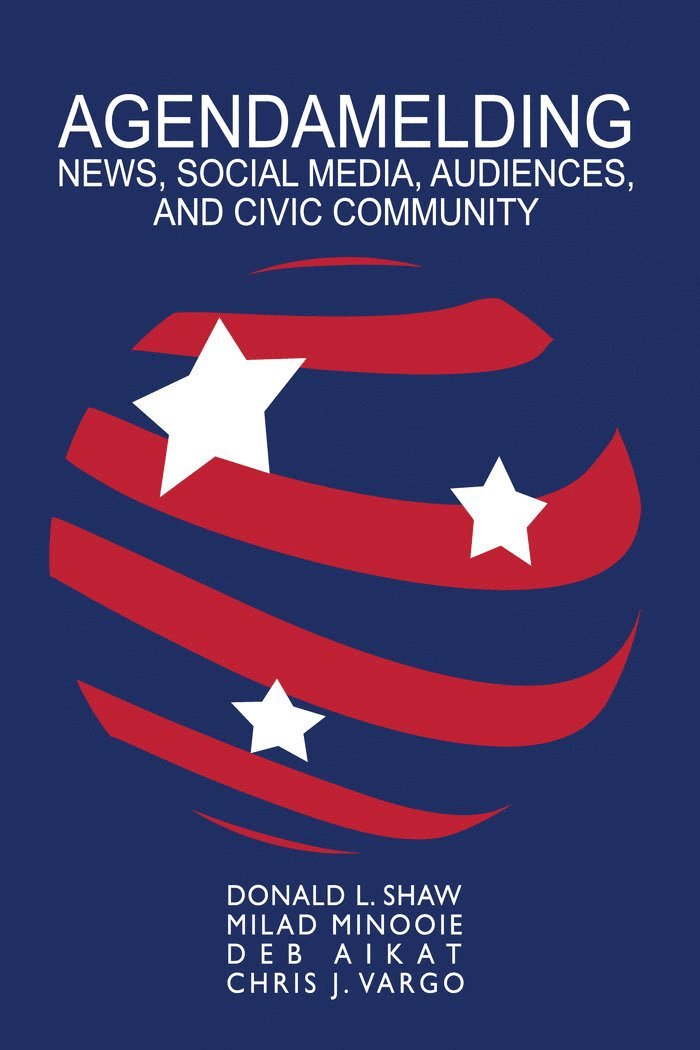
Agendamelding
Donald L. Shaw, Milad Minooie, Deb Aikat, Chris J. Vargo, Paula M. Poindexter, David Perlmutter, Carolyn Bronstein, Richard Waters
Inbunden, 2019
1 549 kr
Del 3
Agendamelding
Donald L. Shaw, Milad Minooie, Deb Aikat, Chris J. Vargo, Paula M. Poindexter, David Perlmutter, Carolyn Bronstein, Richard Waters
Häftad, 2019
579 kr
Del 189
Del 251