
Beowulf and Grettis saga
From England to Iceland, 1016–1219
Inbunden, Engelska, 2026
2 149 kr
Beställningsvara. Skickas inom 5-8 vardagar. Fri frakt för medlemmar vid köp för minst 249 kr.
Investigates the relationship between two texts separated by hundreds of years and nearly two thousand miles.In the saga, Grettir fights a giant who wields a hepti-sax; in the poem, Beowulf uses a hæft-mēce on Grendel's mother. These two unique words for "hafted blade" appear to be related. Can the same be said for the works that surround them? This book says yes, arguing not that the weapons have a common origin, nor that their likeness is a coincidence, but that Grettis saga has borrowed from Beowulf. The case for a textual loan begins in the context of England's connection with Denmark in the reign of Cnut the Great (1016-35). This book argues that Cnut took an interest in Scyld and the Scyldings of Beowulf and that his skalds transformed these names into "Skjǫldr" and the "Skjǫldungar". The Beowulf manuscript is placed in Lichfield in 1017, with the suggestion that it was commissioned by Eadric Streona as a gift for Earl Thorkell of Skåne. It is proposed that in 1159 a copy of Beowulf was brought from Lincoln to Iceland to serve the interests of a family that claimed descent from Skjǫldr, that in the 1180s the poem influenced Skjǫldunga saga, and that in the 1190s Beowulf went north to Þingeyrar abbey, where Oddr the Monk, author of Grettis saga, used it to enhance Grettir's fights with Glámr and the trolls of Bárðardalr. This is a daring book that sheds new light on the circulation of Beowulf, on questions of dating and patronage, and on the authorship of Grettis saga.
Produktinformation
- Utgivningsdatum2026-01-13
- Mått156 x 234 x 26 mm
- Vikt763 g
- FormatInbunden
- SpråkEngelska
- Antal sidor400
- FörlagBoydell & Brewer Ltd
- ISBN9781843847632
Tillhör följande kategorier
Hoppa över listan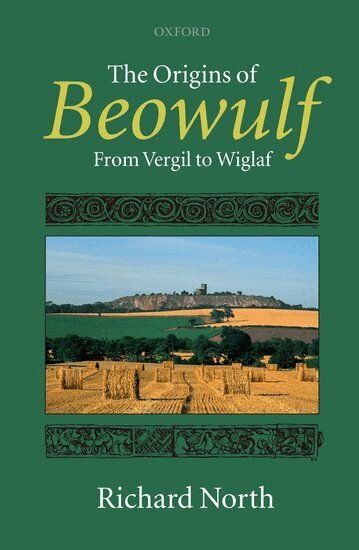
Mer från samma författare
Del 22
Del 22
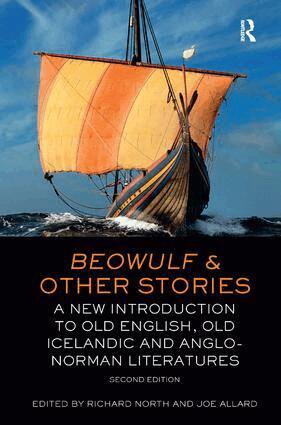
Longman Anthology of Old English, Old Icelandic, and Anglo-Norman Literatures
Richard North, Joe Allard, Patricia Gillies
Inbunden, 2017
5 149 kr
Longman Anthology of Old English, Old Icelandic, and Anglo-Norman Literatures
Richard North, Joe Allard, Patricia Gillies
Häftad, 2011
1 149 kr
Hoppa över listan



Du kanske också är intresserad av
Longman Anthology of Old English, Old Icelandic, and Anglo-Norman Literatures
Richard North, Joe Allard, Patricia Gillies
Häftad, 2011
1 149 kr
Del 22
Del 22