
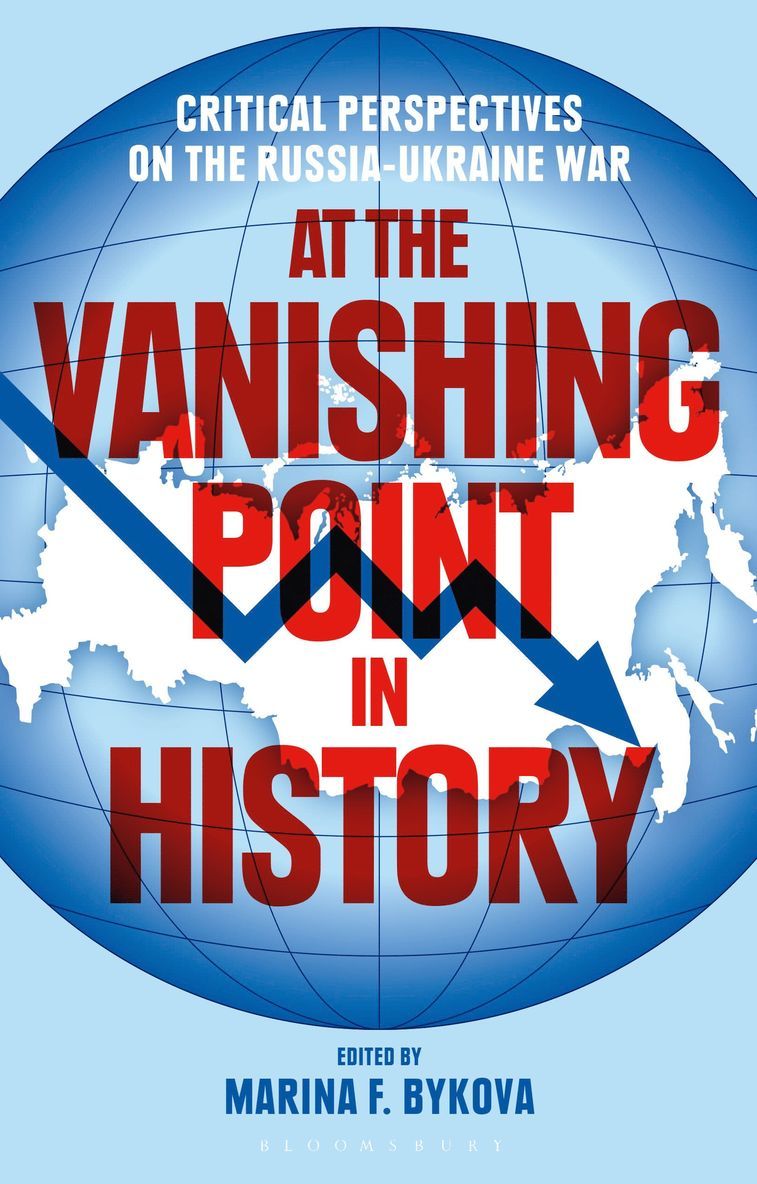
At the Vanishing Point in History
Critical Perspectives on the Russia-Ukraine War
Inbunden, Engelska, 2024
1 269 kr
Beställningsvara. Skickas inom 10-15 vardagar. Fri frakt för medlemmar vid köp för minst 249 kr.
Putin’s war has prompted a deep analysis and reevaluation of the forces driving this deadly confrontation. At the Vanishing Point in History brings together renowned humanities scholars and prominent novelists to explore the roots and causes of the ongoing catastrophe in Eastern Europe.This distinguished group of Russian émigrés, well-versed in Russian culture, history, and philosophy, aims to examine the past to understand the present. Experts in the inner workings of Russian society who have fled the country, they believe it is their responsibility to critically assess the current crisis, reflect on its origins, and outline the agenda for future research in the humanities. In response to this challenge, they present a collection of analytical essays that offer essential background and context for understanding the unfolding events in Europe.Today’s Russia is perhaps the most representative example of the grave threat that tyranny poses to global civilization. In its brutal attack on Ukraine, Putin’s regime holds not only Russians but all of humanity hostage. The atrocities committed in the name of the “Russian world” make it urgent to thoroughly investigate Russia’s current political pursuit in order to uncover its true origins and find a way forward.
Produktinformation
- Utgivningsdatum2024-12-26
- Mått142 x 218 x 24 mm
- Vikt560 g
- FormatInbunden
- SpråkEngelska
- Antal sidor360
- FörlagBloomsbury Publishing PLC
- ISBN9781350438323
Tillhör följande kategorier
Hoppa över listan








Du kanske också är intresserad av
Philosophical Thought in Russia in the Second Half of the Twentieth Century
Vladislav Lektorsky, Marina F. Bykova
Inbunden, 2019
3 259 kr
Palgrave Handbook of Russian Thought
Marina F. Bykova, Michael N. Forster, Lina Steiner
Inbunden, 2021
2 409 kr
Palgrave Handbook of Russian Thought
Marina F. Bykova, Michael N. Forster, Lina Steiner
Häftad, 2022
2 409 kr