
Del i serien Hart Studies in Comparative Public Law
Administrative Law and Judicial Deference
Häftad, Engelska, 2018
689 kr
Beställningsvara. Skickas inom 10-15 vardagar. Fri frakt för medlemmar vid köp för minst 249 kr.
Finns i fler format (1)
In recent years, the question whether judges should defer to administrative decisions has attracted considerable interest amongst public lawyers throughout the common law world. This book examines how the common law of judicial review has responded to the development of the administrative state in three different common law jurisdictions – the United Kingdom, the United States of America and Canada – over the past 100 years. This comparison demonstrates that the idea of judicial deference is a valuable feature of modern administrative law, because it gives lawyers and judges practical guidance on how to negotiate the constitutional tension between the democratic legitimacy of the administrative state and the judicial role in maintaining the rule of law.
Produktinformation
- Utgivningsdatum2018-04-26
- Mått156 x 234 x 14 mm
- Vikt386 g
- FormatHäftad
- SpråkEngelska
- SerieHart Studies in Comparative Public Law
- Antal sidor272
- FörlagBloomsbury Publishing PLC
- ISBN9781509921133
Tillhör följande kategorier
Hoppa över listan
Mer från samma serie
Foundations and Traditions of Constitutional Amendment
Richard Albert, Xenophon Contiades, Alkmene Fotiadou
Inbunden, 2017
2 559 kr
Hoppa över listan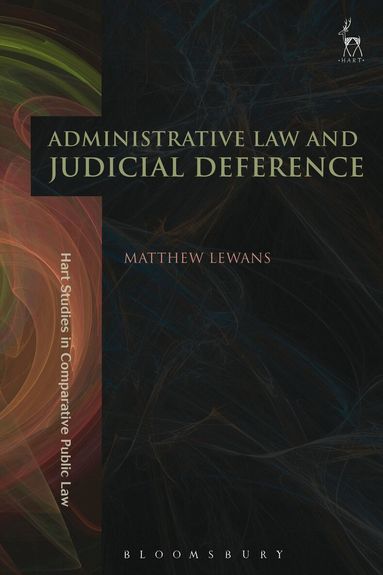






Du kanske också är intresserad av
- Nyhet
Del 7
- Nyhet
Del 11
- Nyhet
Del 4
- Nyhet
Del 6
- Nyhet
Del 3
- Nyhet
- Nyhet
- Nyhet