
Understanding Democracy
Economic and Political Perspectives
Häftad, Engelska, 2008
749 kr
Beställningsvara. Skickas inom 5-8 vardagar. Fri frakt för medlemmar vid köp för minst 249 kr.
Finns i fler format (1)
Democracy has moved to the centre of systemic reflections on political economy, gaining a position which used to be occupied by the debate about socialism and capitalism. Certitudes about democracy have been replaced by an awareness of the elusiveness and fluidity of democratic institutions and of the multiplicity of dimensions involved. This is a book which reflects this intellectual situation. It consists of a collection of essays by well-known economists and political scientists from both North America and Europe on the nature of democracy, on the conditions for democracy to be stable, and on the relationship between democracy and important economic issues such as the functioning of the market economy, economic growth, income distribution and social policies.
Produktinformation
- Utgivningsdatum2008-10-30
- Mått151 x 226 x 16 mm
- Vikt430 g
- FormatHäftad
- SpråkEngelska
- Antal sidor288
- FörlagCambridge University Press
- ISBN9780521088244
Tillhör följande kategorier
Hoppa över listan
Mer från samma författare
Nationalism and Rationality
Albert Breton, Gianluigi Galeotti, Pierre Salmon, Ronald Wintrobe
Häftad, 2010
759 kr
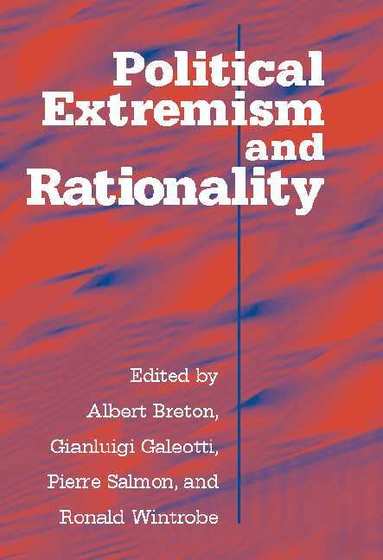
Political Extremism and Rationality
Albert Breton, Gianluigi Galeotti, Pierre Salmon, Ronald Wintrobe
Häftad, 2010
979 kr
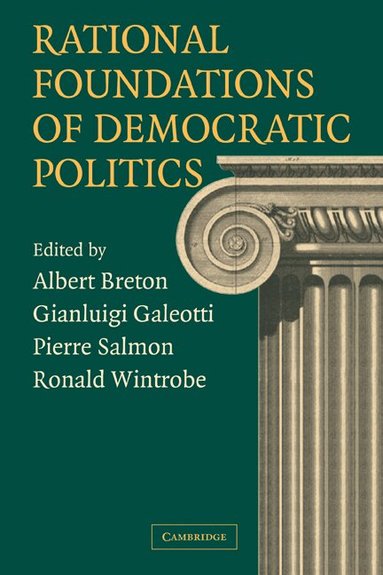
Rational Foundations of Democratic Politics
Albert Breton, Gianluigi Galeotti, Pierre Salmon, Ronald Wintrobe
Häftad, 2010
729 kr
Nationalism and Rationality
Albert Breton, Gianluigi Galeotti, Pierre Salmon, Ronald Wintrobe
Inbunden, 1995
1 439 kr
Political Extremism and Rationality
Albert Breton, Gianluigi Galeotti, Pierre Salmon, Ronald Wintrobe
Inbunden, 2002
1 439 kr
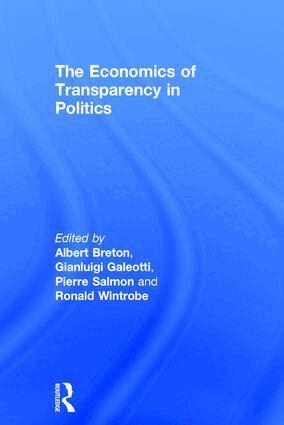
Economics of Transparency in Politics
Gianluigi Galeotti, Ronald Wintrobe, Albert Breton
Inbunden, 2007
3 249 kr
Hoppa över listan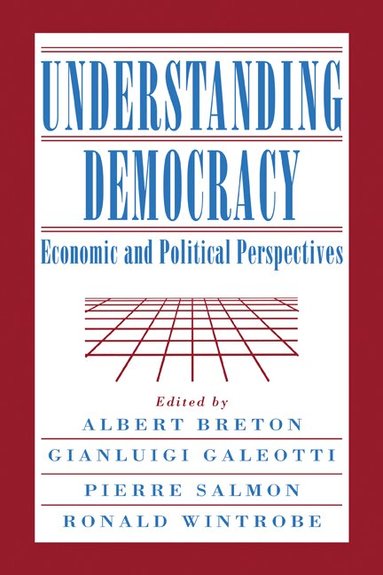
Du kanske också är intresserad av
Understanding Democracy
Albert Breton, Albert Breton, Gianluigi Galeotti, Pierre Salmon, Ronald Wintrobe
Inbunden, 1997
2 259 kr
Nationalism and Rationality
Albert Breton, Gianluigi Galeotti, Pierre Salmon, Ronald Wintrobe
Häftad, 2010
759 kr
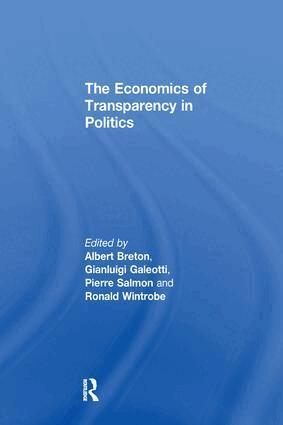
Economics of Transparency in Politics
Gianluigi Galeotti, Ronald Wintrobe, Albert Breton
Häftad, 2017
1 109 kr
Political Extremism and Rationality
Albert Breton, Gianluigi Galeotti, Pierre Salmon, Ronald Wintrobe
Häftad, 2010
979 kr
Competition and Structure
Gianluigi Galeotti, Pierre Salmon, Gianluigi Galeotti, Pierre Salmon, Ronald Wintrobe
Inbunden, 2000
1 699 kr
Nationalism and Rationality
Albert Breton, Gianluigi Galeotti, Pierre Salmon, Ronald Wintrobe
Inbunden, 1995
1 439 kr
Rational Foundations of Democratic Politics
Albert Breton, Gianluigi Galeotti, Pierre Salmon, Ronald Wintrobe
Häftad, 2010
729 kr
Political Extremism and Rationality
Albert Breton, Gianluigi Galeotti, Pierre Salmon, Ronald Wintrobe
Inbunden, 2002
1 439 kr
Economics of Transparency in Politics
Gianluigi Galeotti, Ronald Wintrobe, Albert Breton
Inbunden, 2007
3 249 kr