Beställningsvara. Skickas inom 5-8 vardagar. Fri frakt för medlemmar vid köp för minst 249 kr.
This book adopts a knowledge-based perspective that sees the firm as a store of knowledge resources and capabilities. The firm's knowledge base includes the expertise and experience of individuals, the routine and processes that define the distinctive way of doing things inside the organization, as well as the knowledge of customer needs and supplier strengths. To the extent that the knowledge and capabilities are unique and difficult to imitate, they confer sustainable competitive advantage on the firm. Unlike traditional products, knowledge-based products and services can enjoy increasing returns, so the firm developing an early advantage has a better chance of growing market share through network externalities and customer familiarity effects.
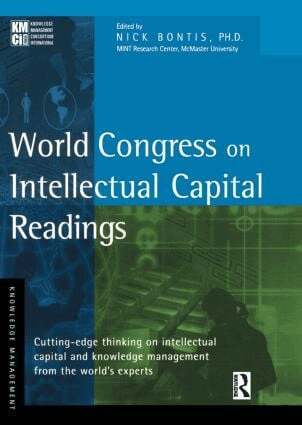
Contributors 1: Chun Wei Choo & Nick Bontis: Knowledge, Intellectual Capital, and Strategy: Themes and Tensions Part I: Knowledge in Organizations 2: Paul S. Adler: Market, Hierarchy, and Trust: The Knowledge Economy and the Future of Capitalism 3: Frank Blackler: Knowledge, Knowledge Work, and Organizations: An Overview and Interpretation 4: Max Boisot: The Creation and Sharing of Knowledge 5: Chun Wei Choo: Sensemaking, Knowledge Creation, and Decision Making: Organizational Knowing as Emergent Strategy 6: Charles Despres & Daniele Chauvel: Knowledge, Context, and the Management of Variation Part II: Knowledge-Based Perspectives of the Firm 7: Kathleen R. Conner & C. K. Prahalad: A Resource-Based Theory of the Firm: Knowledge versus Opportunism 8: Robert M. Grant: The Knowledge-Based View of the Firm 9: J.-C. Spender: Knowledge, Uncertainty, and an Emergency Theory of the Firm 10: Georg von Krogh & Simon Grand: From Economic Theory Toward a Knowledge-Based Theory of the Firm: Conceptual Building Blocks 11: Ard Huizing & Wim Bouman: Knowledge and Learning, Markets and Organizations: Managing the Information Transaction Space Part III: Knowledge Strategies 12: Sidney G. Winter & Gabriel Szulanski: Replication of Organizational Routines: Conceptualizing the Exploitation of Knowledge Assets 13: Ron Sanchez: Modular Product and Process Architectures: Frameworks for Strategic Organizational Learning 14: Raghu Garud & Arun Kumaraswamy: Technological and Organizational Designs for Realizing Economies of Substitution 15: Michael H. Zack: Developing A Knowledge Strategy 16: Paul Bierly III & Paula Daly: Aligning Human Resource Management Practices and Knowledge Strategies: A Theoretical Framework 17: Chong Ju Choi & Anastasios Karamanos: Knowledge and the Internet: Lessons from Cultural Industries Part IV: Knowledge Strategy in Practice 18: Constance E. Helfat & Ruth Raubitschek: Product Sequencing: Coevolution of Knowledge, Capabilities, and Products 19: Anne Marie Knott: Exploration and Exploitation as Complements 20: Vincent Barabba, John Pourdehnad & Russell L. Ackoff: Above and Beyond Knowledge Management 21: William H. Starbuck: Keeping a Butterfly and an Elephant in a House of Cards: The Elements of Exceptional Success 22: Mihnea Moldoveanu: Epistemology in Action: A Framework for Understanding Organizational Due Diligence Processes 23: Youngjin Yoo & Ben Torrey: National Culture and Knowledge Sharing in a Global Learning Organization: A Case Study Part V: Knowledge Creation 24: Ikujiro Nonaka: A Dynamic Theory of Organizational Knowledge Creation 25: Katsuhiro Umemoto: Managing Existing Knowledge Is Not Enough: Knowledge Management Theory and Practice in Japan 26: Kazuo Ichijo: Knowledge Exploitation and Knowledge Exploration: Two Strategies for Knowledge Creating Companies 27: Dorothy Leonard & Sylvia Sensiper: The Role of Tacit Knowledge in Group Innovation 28: Seija Kulkki: Knowledge Creation of Global Companies Part VI: Knowledge Across Boundaries 29: Harald M. Fischer, Joyce Brown, Joseph F. Porac, James B. Wade, Michael DeVaughn & Alaina Kanfer: Mobilizing Knowledge in Interorganizational Alliances 30: Melissa M. Appleyard: How Does Knowledge Flow? Interfirm Patterns in the Semiconductor Industry 31: Will Mitchell, Joel A. C. Baum, Jane Banaszak-Holl, Whitney B. Berta & Dilys Bowman: Opportunity and Constraint: Chain-to-Component Transfer Learning in Multiunit Chains of U.S. Nursing Homes, 1991-1997 32: Claudio U. Ciborra & Rafael Andreu: Knowledge across Boundaries: Managing Knowledge in Distributed Organizations 33: Deborah Sole & Amy Edmondson: Bridging Knowledge Gaps: Learning in Geographically Dispersed Cross-Functional Development Teams 34: Sharon F. Matusik: Managing Public and Private Firm Knowledge within the Context of Flexible Firm Boundaries Part VII: Managing Intellectual Capital 35: Nick Bontis: Managing Organizational Knowledge by Diagnosing Intellectual Capital: Framing and Advancing the State of the Field 36: Nick Bontis: Intellectual Capital: An Exploratory Study That Develops Measures and Models 37: Steve Pike, Anna Rylander & Göran Roos: Intellectual Capital Management and Disclosure 38: Janine Nahapiet & Sumantra Ghoshal: Social Capital, Intellectual Capital, and the Organizational Advantage 39: Donna Marie De Carolis: The Role of Social Capital and Organizational Knowledge in Enhancing Entrepreneurial Opportunities in High Technology Environments 40: Mary Crossan & John Hulland: Leveraging Knowledge through Leadership of Organizational Learning Appendix 41: Brian Hackett: Beyond Knowledge Management: New Ways to Work Index
A well-balanced illustration of the concepts that surround the strategic management of intellectual capital and knowledge, with interesting and relevant papers arranged into logical sections chapters throughout the book.