
The Later Novels of Victor Hugo
Variations on the Politics and Poetics of Transcendence
Inbunden, Engelska, 2012
3 239 kr
Beställningsvara. Skickas inom 7-10 vardagar. Fri frakt för medlemmar vid köp för minst 249 kr.
This study places the last three novels of Victor Hugo's maturity - Les Travailleurs de la mer (1866), L'Homme qui rit (1869), and Quatrevingt-Treize (1874) - within the context of his artistic development after the success of Les Misérables (1862). By situating these historical narratives in relation to each other, to all of Hugo's previous fiction, and to a number of poetic and critical works published in exile and in the initial years of the Third Republic, it illuminates the final structural and thematic shifts from a poetics of harmony to one of transcendence. As in Les Misérables, the disharmony associated with social tumult, apocalyptic vision, and oxymoronic tensions provides an essential component of the later Hugo's Romantic sublime. Instead of merely capitalizing on the runaway success of Les Misérables by recycling its prominent features, however, each novel makes an original contribution to the political and aesthetic trajectory inscribed by the entire oeuvre. Each testifies as well to the wizardry of Hugo's own 'special effects' that contribute to his story-telling genius. Such effects, especially the dizzying spatial optics and manipulation of temporal dimensions, function not as mere playful gimmicks or novelistic flourishes but as strategies for figuring and communicating the ideal, both political and artistic. The unique interplay of poetic and historical discourse in each text reconfigures our disordered experience of the world into something far more coherent: a construction of meaning that strives to change perceptions and to promote social action.
Produktinformation
- Utgivningsdatum2012-03-29
- Mått220 x 144 x 23 mm
- Vikt506 g
- FormatInbunden
- SpråkEngelska
- Antal sidor298
- FörlagOUP OXFORD
- ISBN9780199642953
Tillhör följande kategorier
Hoppa över listan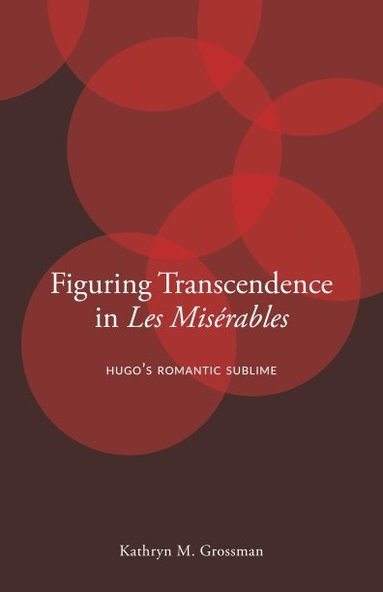







Du kanske också är intresserad av
Del 197
- Nyhet
Del 3
- Nyhet
- Nyhet
Del 6
- Nyhet
Del 7
- Nyhet
Del 4