
Del i serien Cambridge Studies in Film
The Cinema of Satyajit Ray
Between Tradition and Modernity
Häftad, Engelska, 2000
509 kr
Beställningsvara. Skickas inom 5-8 vardagar. Fri frakt för medlemmar vid köp för minst 249 kr.
Finns i fler format (1)
Satyajit Ray is India's greatest filmmaker and his importance in the international world of cinema has long been recognised. Darius Cooper's study of Ray is the first to examine his rich and varied work from a social and historical perspective, and to situate it within Indian aesthetics. Providing analyses of selected films, including those that comprise The Apu Trilogy, Chess Players, and Jalsaghhar, among others, Cooper outlines Western influences on Ray's work, such as the plight of women functioning within a patriarchal society, Ray's political vision of the 'doubly colonised', and his attack and critique of the Bengali/Indian middle class of today. The most comprehensive treatment of Ray's work, The Cinema of Satyajit Ray makes accessible the oeuvre of one of the most prolific and creative filmmakers of the twentieth century.
Produktinformation
- Utgivningsdatum2000-01-13
- Mått153 x 228 x 19 mm
- Vikt433 g
- FormatHäftad
- SpråkEngelska
- SerieCambridge Studies in Film
- Antal sidor276
- FörlagCambridge University Press
- ISBN9780521629805
Hoppa över listan


Mer från samma serie
Recycled Culture in Contemporary Art and Film
Vera Dika, William Rothman, Dudley Andrew
Häftad, 2003
809 kr
Hoppa över listan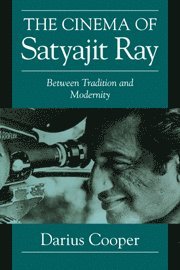
Du kanske också är intresserad av
Recycled Culture in Contemporary Art and Film
Vera Dika, William Rothman, Dudley Andrew
Häftad, 2003
809 kr