
Spirituality, Organization and Neoliberalism
Understanding Lived Experiences
Inbunden, Engelska, 2020
2 369 kr
Beställningsvara. Skickas inom 5-8 vardagar. Fri frakt för medlemmar vid köp för minst 249 kr.
This book brings together analyses from across the social sciences to develop an interdisciplinary approach to understanding spiritualities and neoliberalism. It traces the lived experience of social actors as they engage with new and alternative spiritualities in neoliberal contexts.An international group of authors in anthropology, sociology, religious studies, political science, critical management studies explore the contemporary flourishing of subjectivities centred on a variety of spiritual practices and imaginaries. The book analyses the social and organisational mechanisms that underlie the generation of 'enterprising' and 'competitive' subjectivities engaged in transforming inner selves and social environments in accordance with prevailing neoliberal economic rationalities. Contributions draw on a wide range of empirical settings around the world to discuss the role of subjectivities in organizations. The purpose of the book is to provide specific insights into how neoliberalism is resisted, contested or reproduced through a transformative ethic of spiritual self-realization.Researchers, academics and Masters level students in a range of social science disciplines, including anthropology, sociology, human geography, and organization studies will find this book relevant reading.Contributors include: I. Abraham, E. Bell, L. Cortois, S. Gog, A.-R. Kaupinnen, J.D. LoRusso, D. Miller, K. Navazhylava, A. Peticca-Harris, G. Shanahan, A. Simionca, S. Taylor, K. Valaskivi, T. Vine, A. Yankellevich
Produktinformation
- Utgivningsdatum2020-07-09
- Mått156 x 234 x undefined mm
- FormatInbunden
- SpråkEngelska
- FörlagEdward Elgar Publishing Ltd
- ISBN9781788973298
Tillhör följande kategorier
Hoppa över listan

Mer från samma författare
Organization of Craft Work
Emma Bell, Gianluigi Mangia, Scott Taylor, Maria Laura Toraldo
Häftad, 2019
969 kr
Empowering Methodologies in Organisational and Social Research
Emma Bell, Sunita Singh Sengupta
Inbunden, 2021
3 279 kr
Empowering Methodologies in Organisational and Social Research
Emma Bell, Sunita Singh Sengupta
Häftad, 2021
819 kr
Routledge Companion to Visual Organization
Emma Bell, Samantha Warren, Jonathan E. Schroeder
Inbunden, 2013
4 959 kr
Routledge Companion to Visual Organization
Emma Bell, Samantha Warren, Jonathan E. Schroeder
Häftad, 2021
1 209 kr
Handbook of Feminist Research Methodologies in Management and Organization Studies
Saija Katila, Susan Meriläinen, Emma Bell
Häftad, 2025
929 kr
Hoppa över listan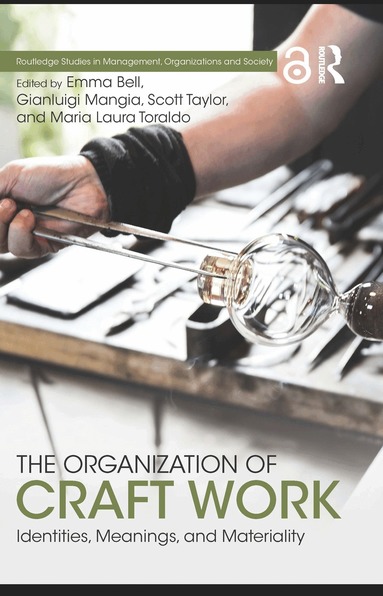



Du kanske också är intresserad av
Organization of Craft Work
Emma Bell, Gianluigi Mangia, Scott Taylor, Maria Laura Toraldo
Inbunden, 2018
3 279 kr
Organization of Craft Work
Emma Bell, Gianluigi Mangia, Scott Taylor, Maria Laura Toraldo
Häftad, 2019
969 kr
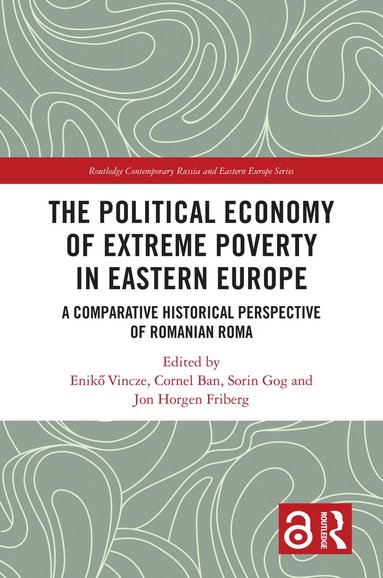
Political Economy of Extreme Poverty in Eastern Europe
Enikő Vincze, Cornel Ban, Sorin Gog, Jon Horgen Friberg
Häftad, 2026
919 kr
Political Economy of Extreme Poverty in Eastern Europe
Enikő Vincze, Cornel Ban, Sorin Gog, Jon Horgen Friberg
Inbunden, 2024
3 279 kr
Routledge Companion to Visual Organization
Emma Bell, Samantha Warren, Jonathan E. Schroeder
Häftad, 2021
1 209 kr
Empowering Methodologies in Organisational and Social Research
Emma Bell, Sunita Singh Sengupta
Häftad, 2021
819 kr
Empowering Methodologies in Organisational and Social Research
Emma Bell, Sunita Singh Sengupta
Inbunden, 2021
3 279 kr