
Social Constructionist Coaching
The InterActional Edge
Häftad, Engelska, 2026
609 kr
Kommande
This book provides an accessible exploration of Social Constructionist philosophy, and a user-friendly guide to the practice of InterActional Coaching. It also introduces Reflective and Deliberate Practice methodologies, guiding readers on how to grow themselves as coaches and achieve mastery within the professional coaching landscape.The authors offer developmental opportunities and practice options for coaches that are mindful of the diversity of clients’ experiences, contexts, and desired outcomes and benefits. They offer insights into the application of InterActional coaching in a variety of coaching niches and contexts, including leadership, executive, and life coaching. A chapter is also devoted to how coaches aspiring or needing to secure coaching accreditation can navigate the application and renewal processes with accreditation agencies such as the International Coaching Federation (ICF) and the European Mentoring and Coaching Council (EMCC). Readers can actively engage with practical exercises, case studies, and reflective activities to connect the abstract worlds of philosophy, epistemology and methodology with the concrete worlds of everyday coaching practice. Attention is given to continuous professional and personal development (CPPD) in general, as well as learning about InterActional coaching. The compatibility of Social Constructionist InterActional coaching with mainstream coaching accreditation agencies’ requirements is made transparent and hence navigable.This book is a must have for coaches seeking an ethical, inclusive coaching approach that focuses on collaboration and interaction and responds to the worlds that coaching clients navigate in their daily lives. It invites a diverse audience including coaches, allied professionals, academics and researchers to find their place and contribute to the evolving professional coaching landscape.
Produktinformation
- Utgivningsdatum2026-11-16
- Mått156 x 234 x undefined mm
- FormatHäftad
- SpråkEngelska
- Antal sidor234
- FörlagTaylor & Francis Ltd
- ISBN9781041208525
Tillhör följande kategorier
Hoppa över listan
Mer från samma författare
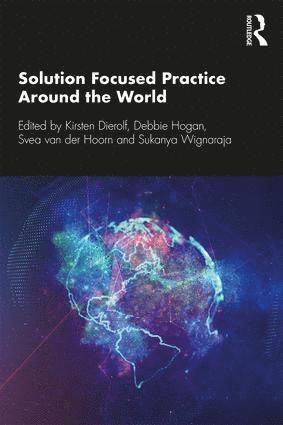
Solution Focused Practice Around the World
Kirsten Dierolf, Debbie Hogan, Svea van der Hoorn, Sukanya Wignaraja
Häftad, 2020
669 kr
Solution Focused Practice Around the World
Kirsten Dierolf, Debbie Hogan, Svea van der Hoorn, Sukanya Wignaraja
Inbunden, 2020
2 739 kr
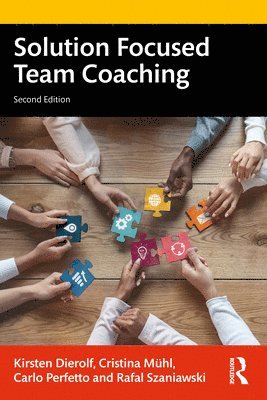
Solution Focused Team Coaching
Kirsten Dierolf, Cristina Mühl, Carlo Perfetto, Rafal Szaniawski
Häftad, 2023
689 kr
Solution Focused Team Coaching
Kirsten Dierolf, Cristina Mühl, Carlo Perfetto, Rafal Szaniawski
Inbunden, 2023
2 759 kr
Solution Focused Coaching Supervision
Kirsten Dierolf, Svea van der Hoorn, Debbie Hogan, Jane Tuomola
Häftad, 2024
739 kr
Solution Focused Coaching Supervision
Kirsten Dierolf, Svea van der Hoorn, Debbie Hogan, Jane Tuomola
Inbunden, 2024
3 239 kr
Becoming a Coaching Supervisor and Coach Mentor
Jonathan Passmore, Judit Abri von Bartheld, Daniela Aneva, Jory Stillman, Kirsten Dierolf
Häftad, 2026
379 kr
Hoppa över listan

Du kanske också är intresserad av
Social Constructionist Coaching
Kirsten Dierolf, Svea van der Hoorn, Elfie J. Czerny, Dominik Godat, Roy Marriott
Inbunden, 2026
3 089 kr
Solution Focused Practice Around the World
Kirsten Dierolf, Debbie Hogan, Svea van der Hoorn, Sukanya Wignaraja
Inbunden, 2020
2 739 kr
Solution Focused Coaching Supervision
Kirsten Dierolf, Svea van der Hoorn, Debbie Hogan, Jane Tuomola
Inbunden, 2024
3 239 kr
Solution Focused Practice Around the World
Kirsten Dierolf, Debbie Hogan, Svea van der Hoorn, Sukanya Wignaraja
Häftad, 2020
669 kr
Solution Focused Coaching Supervision
Kirsten Dierolf, Svea van der Hoorn, Debbie Hogan, Jane Tuomola
Häftad, 2024
739 kr
Becoming a Coaching Supervisor and Coach Mentor
Jonathan Passmore, Judit Abri von Bartheld, Daniela Aneva, Jory Stillman, Kirsten Dierolf
Häftad, 2026
379 kr