
Sins against Science
The Scientific Media Hoaxes of Poe, Twain, and Others
Häftad, Engelska, 2007
639 kr
Beställningsvara. Skickas inom 5-8 vardagar. Fri frakt för medlemmar vid köp för minst 249 kr.
Recounts the fake news stories, written from 1830 to 1880, about scientific and technological discoveries, and the effect these hoaxes had on readers and their trust in science.Lynda Walsh explores a provocative era in American history-the proliferation of fake news stories about scientific and technological discoveries from 1830 to 1880. These hoaxes, which fooled thousands of readers, offer a first-hand look at an intriguing guerilla tactic in the historical struggle between arts and sciences in America. Focusing on the hoaxes of Richard Adams Locke, Edgar Allan Poe, Mark Twain, and Dan De Quille, the author combines rhetorical hermeneutics, linguistic pragmatics, and reader-response theory to answer three primary questions: How did the hoaxes work? What were the hoaxers trying to accomplish? And-what is a hoax?
Produktinformation
- Utgivningsdatum2007-06-01
- Mått152 x 229 x 18 mm
- Vikt431 g
- FormatHäftad
- SpråkEngelska
- SerieSUNY series, Studies in Scientific and Technical Communication
- Antal sidor308
- FörlagState University of New York Press
- ISBN9780791468784
Tillhör följande kategorier
Hoppa över listan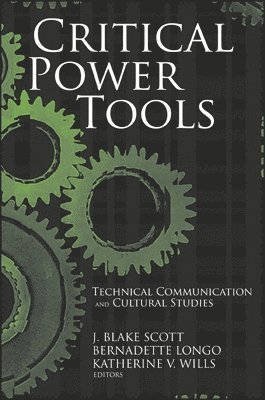
Mer från samma serie
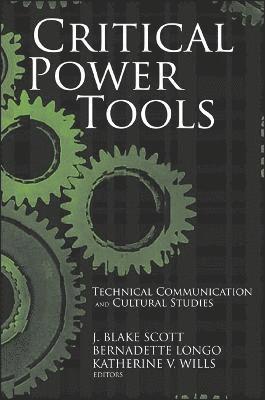
Critical Power Tools
Bernadette Longo, J. Blake Scott, Katherine V. Wills, Bernadette Longo
Häftad, 2007
639 kr
Hoppa över listan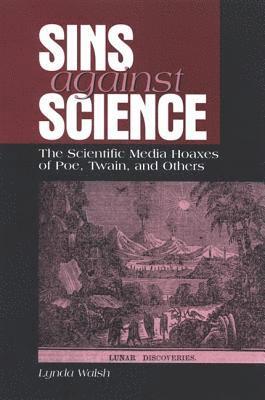
Du kanske också är intresserad av
Critical Power Tools
Bernadette Longo, J. Blake Scott, Katherine V. Wills, Bernadette Longo
Häftad, 2007
639 kr