
Del 1
Del 42 i serien Studies in Early Modern Cultural, Political and Social History
Royalism, Religion and Revolution: Wales, 1640-1688
Inbunden, Engelska, 2021
1 749 kr
Beställningsvara. Skickas inom 5-8 vardagar. Fri frakt för medlemmar vid köp för minst 249 kr.
Analyses the role of long-term continuities in the political and religious culture of Wales from the eve of the Civil War in 1640 to the Glorious Revolution of 1688In Royalism, Religion and Revolution: Wales, 1640-1688, Sarah Ward Clavier provides a ground-breaking analysis of the role of long-term continuities in the political and religious culture of Wales from the eve of the Civil War in 1640 to the Glorious Revolution. A final chapter also extends the narrative to the Hanoverian succession. The book discusses three main themes: the importance of continuities (including concepts of Welsh history, identity and language); religious attitudes and identities; and political culture. As Ward Clavier shows, the culture of Wales in this period was not frozen but rather dynamic, one that was constantly deploying traditional cultural symbols and practices to sustain a distinctive religious and political identity against a tide of change. The book uses a wide range of primary research material: from correspondence, diaries and financial accounts, to architectural, literary and material sources, drawing on both English and Welsh language texts. As part of the 'New Regional History' this book discusses the distinctively Welsh alongside aspects common to English and, indeed, European culture, and argues that the creative construction of continuity allowed the gentry of North-East Wales to maintain and adapt their identity even in the face of rupture and crisis.
Produktinformation
- Utgivningsdatum2021-08-13
- Mått156 x 234 x 24 mm
- Vikt506 g
- FormatInbunden
- SpråkEngelska
- SerieStudies in Early Modern Cultural, Political and Social History
- Antal sidor284
- FörlagBoydell & Brewer Ltd
- ISBN9781783276400
Tillhör följande kategorier
Hoppa över listan


Du kanske också är intresserad av
Del 17
Del 18
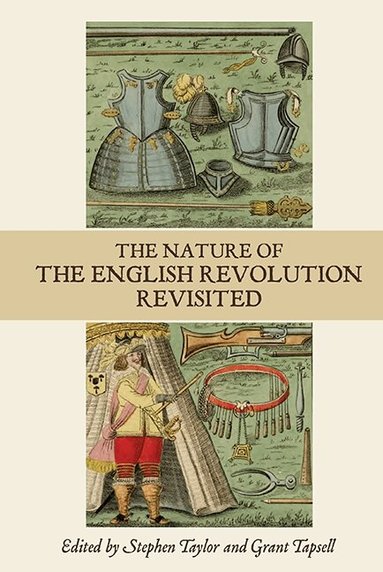
Nature of the English Revolution Revisited
Stephen Taylor, Stephen C Taylor, Grant Tapsell
Inbunden, 2013
1 749 kr
Del 6
- Nyhet
Del 7
Del 20
Del 33
Del 53
Religion, Politics and the Public Sphere, 1500-1850
David R. Como, Michael Questier
Inbunden, 2025
2 219 kr
Del 14
Del 10
Commune, Country and Commonwealth: The People of Cirencester, 1117-1643
David Rollison
Inbunden, 2011
1 749 kr
Del 30