
Del i serien Topics in Safety, Risk, Reliability and Quality
Risk Engineering
Bridging Risk Analysis with Stakeholders Values
Inbunden, Engelska, 1999
2 159 kr
Beställningsvara. Skickas inom 10-15 vardagar. Fri frakt för medlemmar vid köp för minst 249 kr.
Finns i fler format (1)
This volume attempts to link the science of risk analysis with the currently ongoing movement on the use of stakeholders' processes. It is intended to assess the current practice of risk engineering, and to address the potential interactions with stakeholders' processes. New type models for risk screening and prioritisation at plant and regional levels are presented using fuzzy sets. The advent of integrated risk assessment Decision Support Systems in connection with stakeholders' processes, and their interactions, are put into a practice perspective for today's developments in risk engineering.
Produktinformation
- Utgivningsdatum1999-03-31
- Mått155 x 235 x 21 mm
- Vikt606 g
- FormatInbunden
- SpråkEngelska
- SerieTopics in Safety, Risk, Reliability and Quality
- Antal sidor273
- Upplaga1999
- FörlagKluwer Academic Publishers
- ISBN9780792355748
Tillhör följande kategorier
Hoppa över listan
Mer från samma författare
Del 4
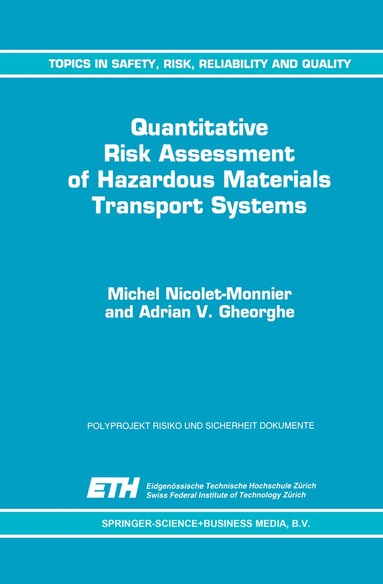
Quantitative Risk Assessment of Hazardous Materials Transport Systems
M. Nicolet-Monnier, A.V. Gheorghe
Inbunden, 1996
3 699 kr
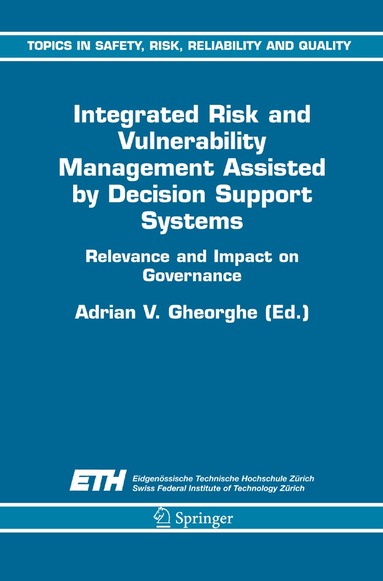
Integrated Risk and Vulnerability Management Assisted by Decision Support Systems
A.V. Gheorghe
Inbunden, 2005
2 229 kr
Del 9
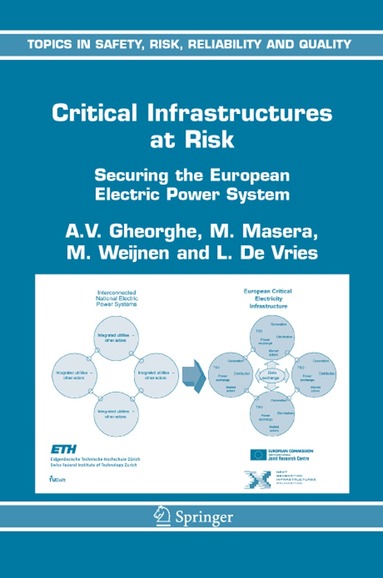
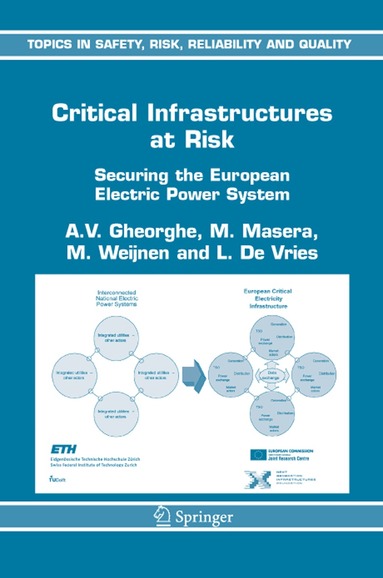
Critical Infrastructures at Risk
A.V. Gheorghe, M. Masera, M. Weijnen, L.J. De Vries, A.V. Gheorghe, M. Masera
Inbunden, 2006
2 159 kr
Del 5
Quantitative Risk Assessment of Hazardous Materials Transport Systems
M. Nicolet-Monnier, A.V. Gheorghe
Häftad, 2010
3 589 kr
Del 8
Integrated Risk and Vulnerability Management Assisted by Decision Support Systems
A.V. Gheorghe
Häftad, 2011
2 159 kr
Del 9
Critical Infrastructures at Risk
A.V. Gheorghe, M. Masera, M. Weijnen, L.J. De Vries
Häftad, 2010
2 159 kr
Hoppa över listan

Mer från samma serie
Quantitative Risk Assessment of Hazardous Materials Transport Systems
M. Nicolet-Monnier, A.V. Gheorghe
Inbunden, 1996
3 699 kr
Del 7
Integrated Risk and Vulnerability Management Assisted by Decision Support Systems
A.V. Gheorghe
Inbunden, 2005
2 229 kr
Del 9
Critical Infrastructures at Risk
A.V. Gheorghe, M. Masera, M. Weijnen, L.J. De Vries, A.V. Gheorghe, M. Masera
Inbunden, 2006
2 159 kr
Del 10
Del 12
Del 13
Del 14
Quality Decision Management -The Heart of Effective Futures-Oriented Management
E.G. Frankel
Inbunden, 2008
1 439 kr
Hoppa över listan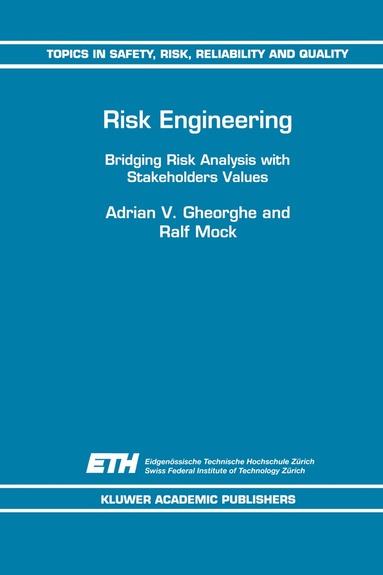
Du kanske också är intresserad av
Del 6
Integrated Risk and Vulnerability Management Assisted by Decision Support Systems
A.V. Gheorghe
Inbunden, 2005
2 229 kr
Del 5
Quantitative Risk Assessment of Hazardous Materials Transport Systems
M. Nicolet-Monnier, A.V. Gheorghe
Häftad, 2010
3 589 kr
Quantitative Risk Assessment of Hazardous Materials Transport Systems
M. Nicolet-Monnier, A.V. Gheorghe
Inbunden, 1996
3 699 kr
Del 9
Critical Infrastructures at Risk
A.V. Gheorghe, M. Masera, M. Weijnen, L.J. De Vries, A.V. Gheorghe, M. Masera
Inbunden, 2006
2 159 kr
Del 4