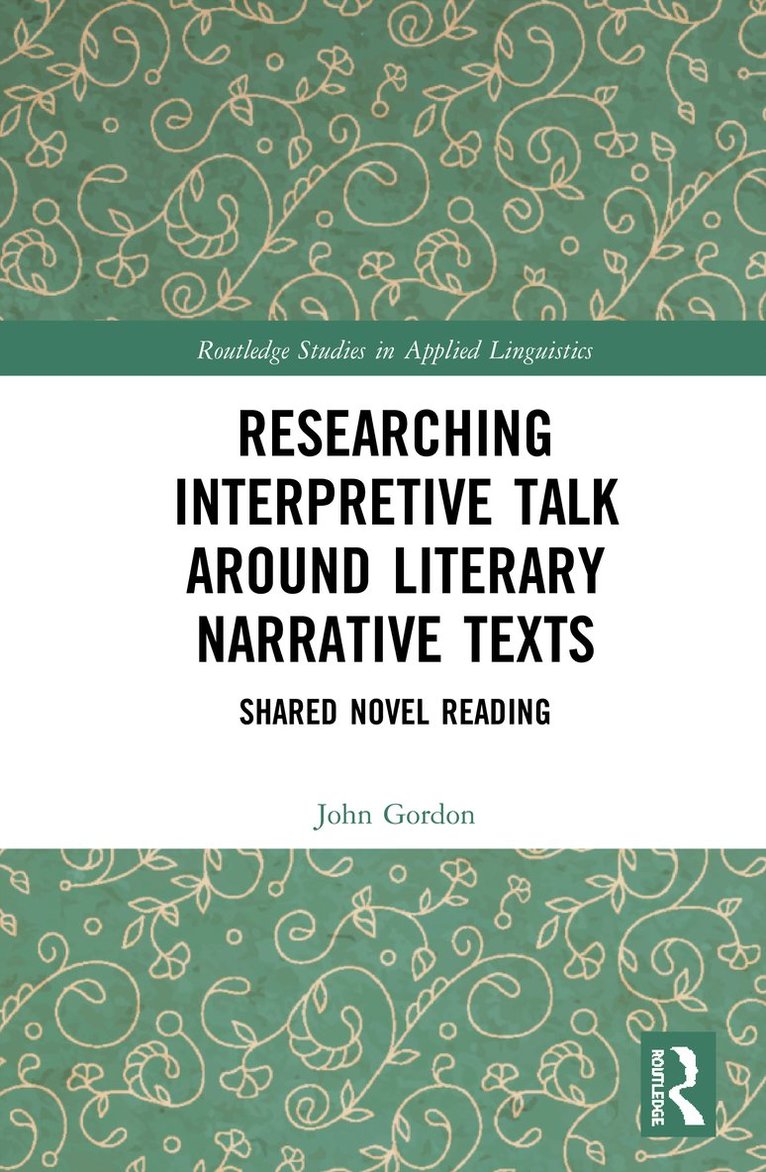
Researching Interpretive Talk Around Literary Narrative Texts
Shared Novel Reading
929 kr
Beställningsvara. Skickas inom 10-15 vardagar. Fri frakt för medlemmar vid köp för minst 249 kr.
Finns i fler format (1)
Produktinformation
- Utgivningsdatum2022-05-06
- Mått152 x 229 x 20 mm
- Vikt358 g
- FormatHäftad
- SpråkEngelska
- SerieRoutledge Studies in Applied Linguistics
- Antal sidor260
- FörlagTaylor & Francis Ltd
- ISBN9780367564599
Tillhör följande kategorier
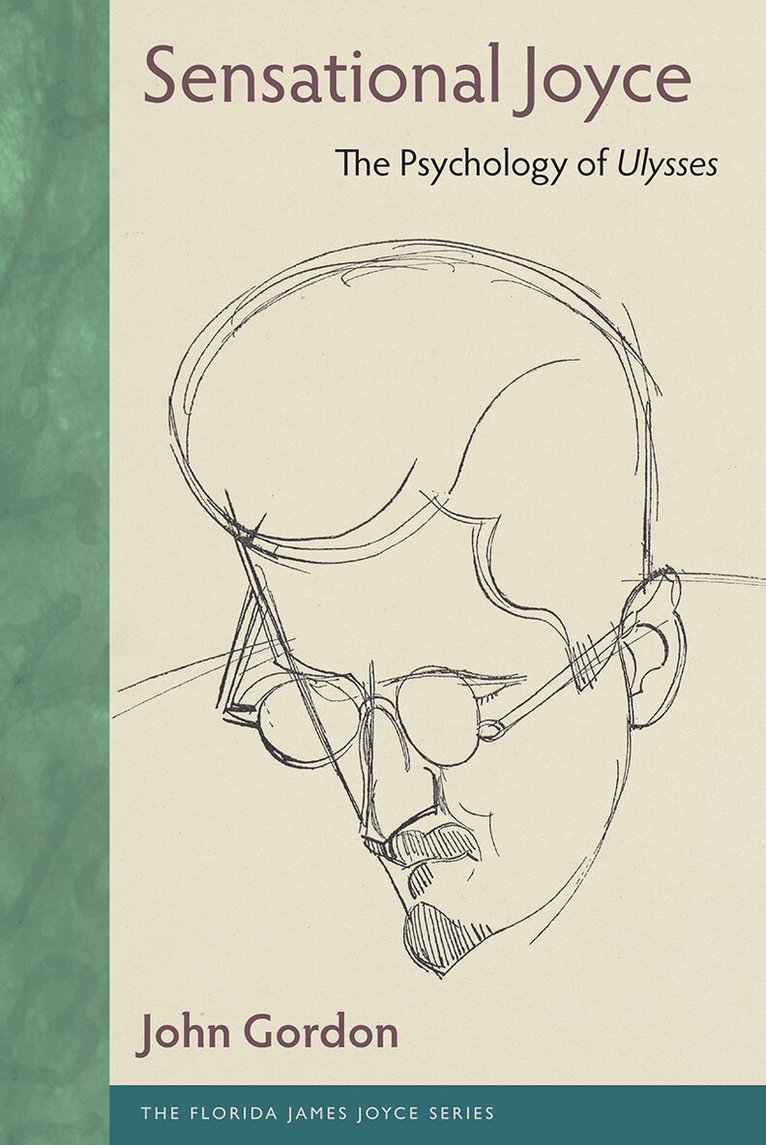
John Gordon is Senior Lecturer in Education at the School of Education and Lifelong Learning at the University of East Anglia, UK.
- ContentsChapter 1:Literary study and shared novel reading in education 1.0 Introduction 1.1 Shared literary reading 1.2 Literary study in education: an overview 1.2.1 Literary pedagogy for supporting students’ comprehension of texts 1.2.2 Conceptualisations of reading1.2.3 The role of classroom talk in reading 1.3 Shared novel reading 1.4 Readers’ experiences of shared novel reading in education 1.4.1 Questionnaire design and questions 1.4.2 Survey results1.4 SummaryChapter 2:Researching conversations about literature in schools and universities 2.0 Introduction2.1 Research in the discipline of literary study: some examples2.1.1 Practical Criticism as research-informed practice2.1.2 Louise Rosenblatt: ‘Reader Text Poem’2.1.3 Systematic Functional Linguistics and the verbal arts2.2 Researching learning conversations2.3 Researching how voices mediate texts for literary study 2.4 SummaryChapter 3:Novels, narratives and narratology3.0 Introduction3.1 Key terms3.1.1 Narrative3.1.2 Narration3.1.3 Narratology / narratologies3.2 The novel as a narrative form: the literary studies perspective3.3 Novels in education3.4 Classical narratologies and their use in school English3.4.1 Propp’s morphology of narrative3.4.2 Narrative analysis: Labov and Waletzy3.4.3 Genette and narrative voice3.4.4 Narrative time: Ricoeur3.5 New narratologies and their use in researching literary study3.6 SummaryChapter 4Theorising Pedagogic Literary Narration: towards a new narratology of literary study conversations4.0 Introduction4.1 Pedagogic Literary Narration4.1.1 Pedagogic Literary Narration as narration-in-interaction4.2 Adapting the resources of conversation analysis to literary study contexts4.3 A three-way view of context for literary study4.3.1 View 1: institutional contexts for literary study interaction4.3.2 View 2: Pedagogic Literary Narration as classroom context 4.2.3 View 3: the micro context of Pedagogic Literary Narration in action4.4 Data sources, settings and participants for this research4.4.1 Observing shared novel reading in action4.5 Adapting conversation analysis to Pedagogic Literary Narration4.6 Reducing and coding conversational literary study data4.6.1 Stage one: the classroom context of Pedagogic Literary Narration4.6.2 Stage two: the microcontext of Pedagogic Literary Narration4.7 An approach to analysing examples of Pedagogic Literary Narration4.8 Summary4.8.1 Pedagogic Literary Narration as a classroom context realised in teacher exposition4.8.2 Towards Pedagogic Literary Narration as micro context: teacher-quoted narrationChapter 5:Pedagogic Literary Narration in action 5.0 Introduction5.1 The focal text: an extract from The Strange Case of Dr Jekyll and Mr Hyde5.2 An extract from The Strange Case of Dr Jekyll and Mr Hyde discussed in the transcript5.3 Pedagogic Literary Narration as micro context5.3.1 Narrating, demonstrating and analysing suspense in teacher exposition5.3.2 Orchestrating narration, review and analysis through talk 5.4 Theorising narratives and narrative analysis for literary pedagogy5.4.1 Reviewing Pedagogic Literary Narration in the three-way view of literary study5.4.2 The nature of narration in Pedagogic Literary Narration5.4.3 Heteroglot teacher exposition5.4.4 Recognising some limitations of Pedagogic Literary Narration and these research methods5.5 SummaryChapter 6:Spoken quotation in Pedagogic Literary Narration: Introducing QuoTE Analysis6.0 Introduction6.0.1 Focal texts: Jekyll and Hyde, and The Boy in the Striped Pyjamas6.0.2 Examples of spoken quotation in shared novel reading 6.1 Reader positioning around quotations in literary study6.1.1 Quotation in literary study6.1.2 Positioning theory for literary pedagogy6.2 Quotations: From page to talk6.3 The turn of the page: Study text as participant in literary-critical talk 6.4 The third turn or mini-lecture in classroom interaction6.5 QuoTE analysis6.6 Spoken quotation in shared literary reading6.6.1 Spoken quotation in teacher exposition, senior classroom6.6.2 Spoken quotation in on-going read-aloud talk, junior classroom6.7 Spoken quotations in literary-critical talk 6.8 SummaryChapter 7:Elaborating characters through conversation7.0 Introduction7.1 Elaborating character development together in primary school7.1.1 Establishing character development as a focus7.1.2 Accounting for character development together7.1.3 Indexing a psychological character trait7.1.4 Elaborating character development together in Pedagogic Literary Narration7.2 Conceptualising character together in secondary school7.3 Analysing character through intertexts in higher education7.3.1 The focal text: Tom Jones by Henry Fielding7.3.2 Discussing characterisation in Tom Jones 7.4 SummaryChapter 8:Discussing literary narratives in higher education: intertextuality and tethering8.0 Introduction8.1 A university seminar in a Contemporary Fiction module of literary study8.2 The focal text: Pond, by Claire-Louise Bennett8.3 Critical intertexts influencing seminar discussion8.3.1 An online review of Pond8.3.2 A published interview with Pond’s author, Claire-Louise Bennet8.4 Intertextuality, positioning theory and interaction8.4.1 What is intertextuality?8.4.2 Positioning theory and intertextuality8.5 Intertexuality in seminar discussion8.5.1 Invoking texts and invocations8.5.2 Call codes: identifying the many voices of intertexts8.5.3 Lemke’s categories of intertextual relationship 8.6 Discussing ‘Pond’ together: Conversation analysis 8.6.1 Discussing ‘Pond’ together: transcript8.6.2 How do participants enact intertextual literary analysis in conversation? 8.6.3 How are intertextual voices introduced?8.6.4 How do intertextual voices relate to focal texts and position readers’ orientations to them?8.7 Tethering intertextual talk8.8 Summary Chapter 9: Building themes together: Talk about literary novels in and beyond formal education 9.0 Introduction9.0.1 Shared reading in an informal book group9.0.2 Focal text: Life after Life by Kate Atkinson9.03 Finding an analytic approach suited to informal shared literary reading9.1 Framing shared literary reading of Life after Life 9.1.0 Participants frame conversation about Life after Life: an informal agenda9.1.1 Framing book group conversation for analysis9.2 Life after Life: extended plain text transcripts9.2.1 Plain transcript 1: representing parallel life stories, and catalyst events9.2.2 Plain transcript 2: chance and the ‘what if’ conceit 9.2.3 Plain transcript 3: form and Life after Life as a ‘what if’ book9.2.4 Plain transcript 4: Constant Izzie and déjà vu – ‘time is not linear’9.3 Discussing Life after Life: Conversation analysis 9.3.0 Repetition as a resource in conversation9.4.0 Annotated transcript 1: maintaining diffuse text topics through repetition - ‘in Germany’ 9.3.2 Annotated transcript 2: collective text analysis through categorisation statements – ‘the what if scenario’9.3.3 Annotated transcript 3: considering the novel’s form by proxy - ‘difficult to film’9.3.4 Annotated transcript 4: deictic analysis - ‘time is not linear’9.4 SummaryChapter 10Discussing and navigating narrative form: How texts shape talk10.0 Introduction10.1 The epistolary form of Daddy Long-legs and genre theory10.1.1 The epistolary novel10.1.2 Genre theory 10.2 Positioning theory and short stories10.3 Short storying to position reading and readers of Daddy Long-legs 10.3.1 Short storying to express and invite reading positions to Daddy Long-legs 10.3.2 Reporting the focal text narrative: short story summaries10.4 Orienting to analytic reading positions around Daddy Long-legs10.4.1 Reader positioning arising from focal text form 10.4.2 Reader positioning oriented to focal text as a generic object10.5 SummaryChapter 11Developing Pedagogic Literary Narration for teaching literature11.0 Introduction11.1 Literary classroom discourse as pedagogic device11.1.1 The pedagogic device11.1.2 Public language11.1.3 Language codes11.1.4 The value of ‘restricted’ shared reading conversations11.2 Connecting reading group conversations with formal education11.2.1 Extra-narration in reading groups relative to formal literary education11.2.2 Paraphrased narrative in reading group conversations11.2.3 Intertextual text invocation in reading group conversations11.2.4 ‘Talkable texts’: repetition and synecdochic indexing in reading group talk11.3 Reviewing shared literary reading in formal education11.3.1 Involvement, narration and positioning11.3.2 Turn-taking patterns and the collective achievement of literary analysis11.3.3 Initiate-response-evaluate, teacher exposition and the pedagogic device of literary study11.3.4 Spoken quotation: an essential feature of spoken literary discourse?11.3.5 How and how much texts enter talk11.4 SummaryChapter 12:Interpretive talk around literary narrative texts: an overview12.0 An overview12.1 The analytic resources generated by this study12.2 A narratology for interpretive talk around literary narrative texts12.2.1 The significance of this narratology for education research12.2.2 The significance of shared novel reading and Pedagogic Literary Narration for education12.3 New stories for teachers of literature12.3.1 Eavesdropping on shared novel reading in teacher education12.3.2 Teacher-researchers: shared literary reading in a Masters-level programme12.4 SummaryTablesTable 4.1 Shared novel reading: observed examplesTable 4.2 Focal class data, The Strange Case of Dr Jekyll and Mr HydeTable 4.3 Teacher exposition, teacher-quoted narrative comprising multi-quotation turnsTable 6.1 Positioning affordances of spoken quotation in literary pedagogyTable 8.1 Call codes – voices of human agentsTable 8.2 Call codes - verbal text voicesTable 10.1 Three levels of positioning questions, after Rattansi & PhoenixTable 12.1 Key terms for researching interpretive talk around literary narrative texts during shared novel readingFiguresFigure 12.1 A post-classical narratology for interpretive talk around literary narrative textsFigure 12.2 Shared novel reading: observing other teachers / evaluating your own teaching ReferencesAppendix
Mer från samma författare
Blood Cell Biochemistry
J. Gordon, Anthony D. Whetton, John Gordon, Anthony D Whetton
2 789 kr
Ecosystems
Kristiina Vogt, John Gordon, John Wargo, Daniel Vogt, Heidi Asbjornsen, Peter A. Palmiotto, Heidi J. Clark, Jennifer L. O'Hara, William S. Keeton, Toral Patel-Weynand, Evie Witten
1 509 kr
Ecosystems
Kristiina Vogt, John Gordon, John Wargo, Daniel Vogt, Heidi Asbjornsen, Peter A. Palmiotto, Heidi J. Clark, Jennifer L. O'Hara, William S. Keeton, Toral Patel-Weynand, Evie Witten, Kristiina A. Vogt
2 029 kr
Preparing to Teach
Jeff Battersby, John Gordon, UK) Battersby, Jeff (University of East Anglia, UK) Gordon, John (University of East Anglia
429 kr
Preparing to Teach
Jeff Battersby, John Gordon, UK) Battersby, Jeff (University of East Anglia, UK) Gordon, John (University of East Anglia
1 719 kr
Mer från samma serie
Referring in a Second Language
Jonathon Ryan, Peter Crosthwaite, New Zealand) Ryan, Jonathon (University of Waikato, Australia) Crosthwaite, Peter (University of Queensland
2 609 kr
Online Education for Teachers of English as a Global Language
Hyun-Sook Kang, Dong-shin Shin, Tony Cimasko, Dong-Shin Shin
2 609 kr
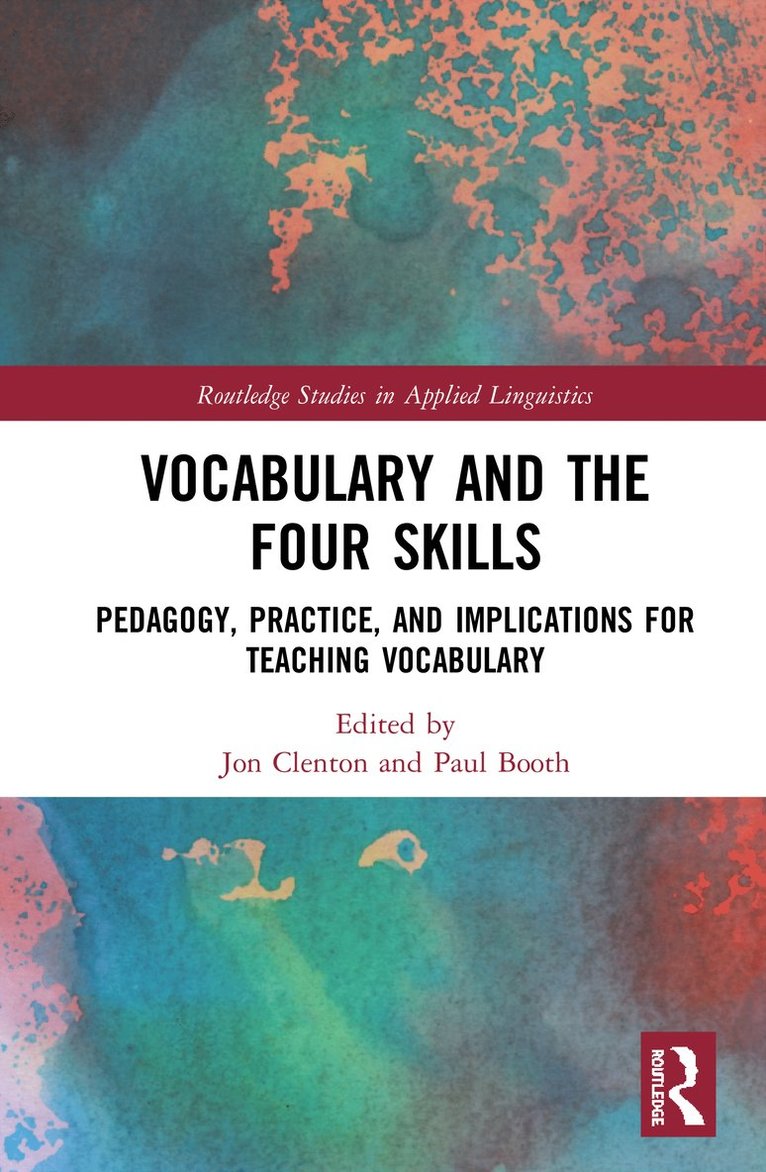
Vocabulary and the Four Skills
Jon Clenton, Paul Booth, Japan) Clenton, Jon (Hiroshima University, UK) Booth, Paul (Kingston University
2 609 kr
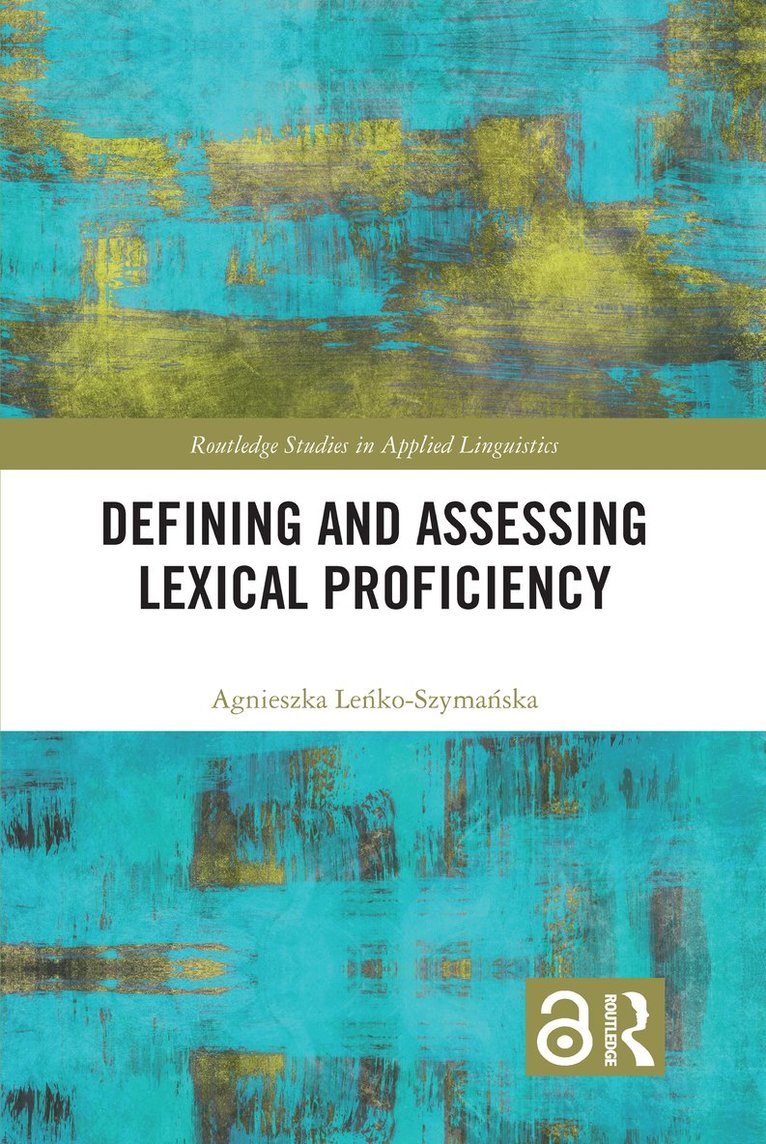
Defining and Assessing Lexical Proficiency
Agnieszka Leńko-Szymańska, Agnieszka Lenko-Szymanska, Agnieszka Leńko-Szymańska, Agnieszka Le¿ko-Szyma¿ska
2 759 kr
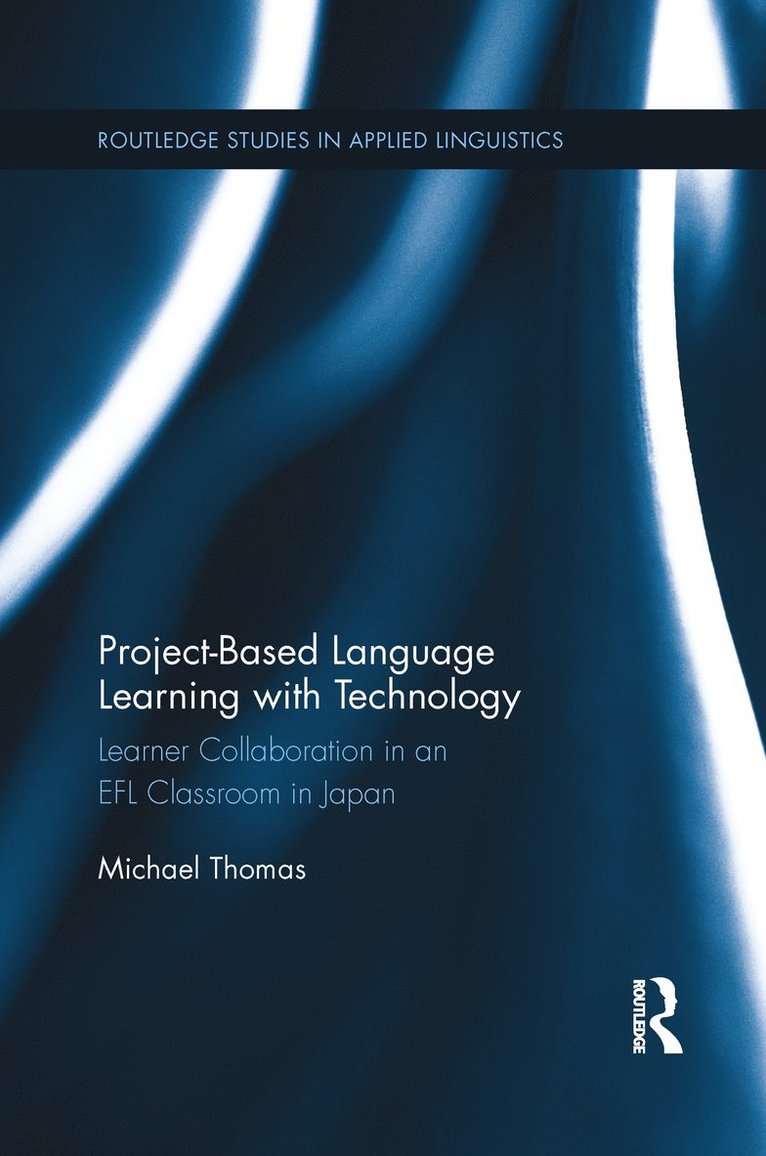
Project-Based Language Learning with Technology
Michael Thomas, UK) Thomas, Michael (University of Central Lancashire
869 kr
Grounded Theory in Applied Linguistics Research
Gregory Hadley, Japan) Hadley, Gregory (Niigata University of International and Information Studies
769 kr
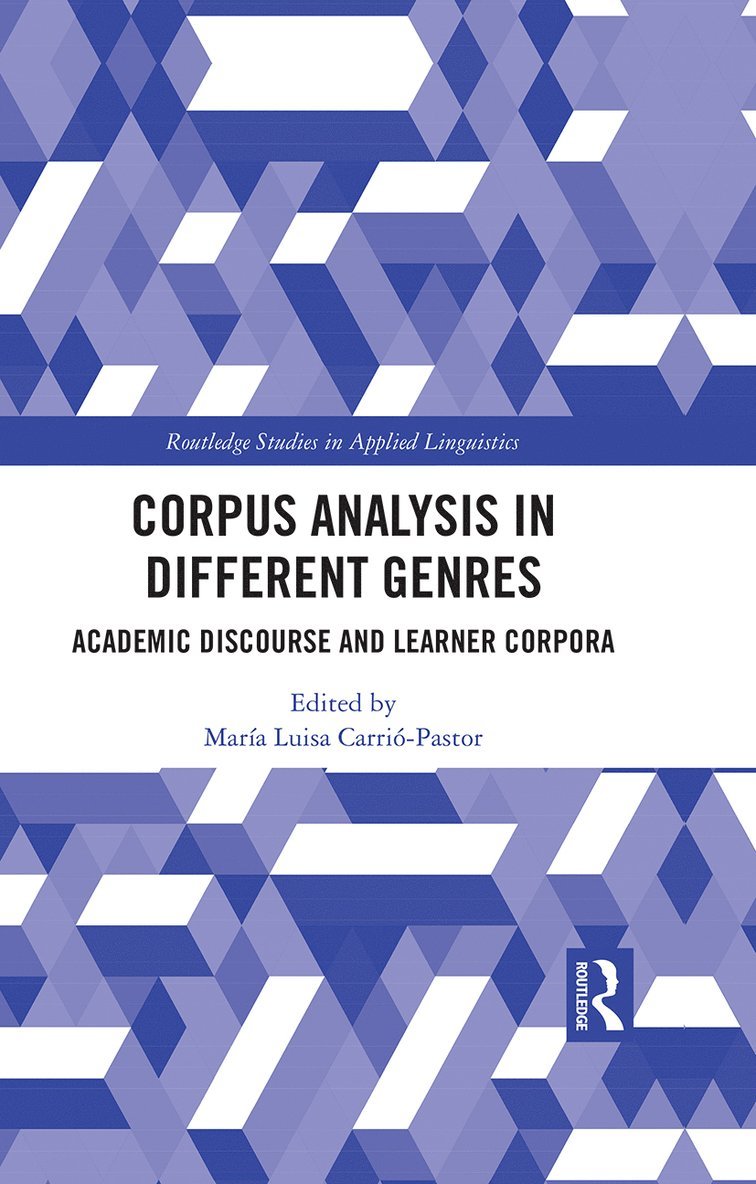
Corpus Analysis in Different Genres
María Luisa Carrió-Pastor, Maria Luisa Carrio-Pastor
2 759 kr